
Hillsborough Meteorite: A Cosmic Discovery of Life's Building Blocks
A meteorite that crashed into a house in New Jersey reveals traces of liquid water and amino acids, providing insight into the early solar system's chemistry.
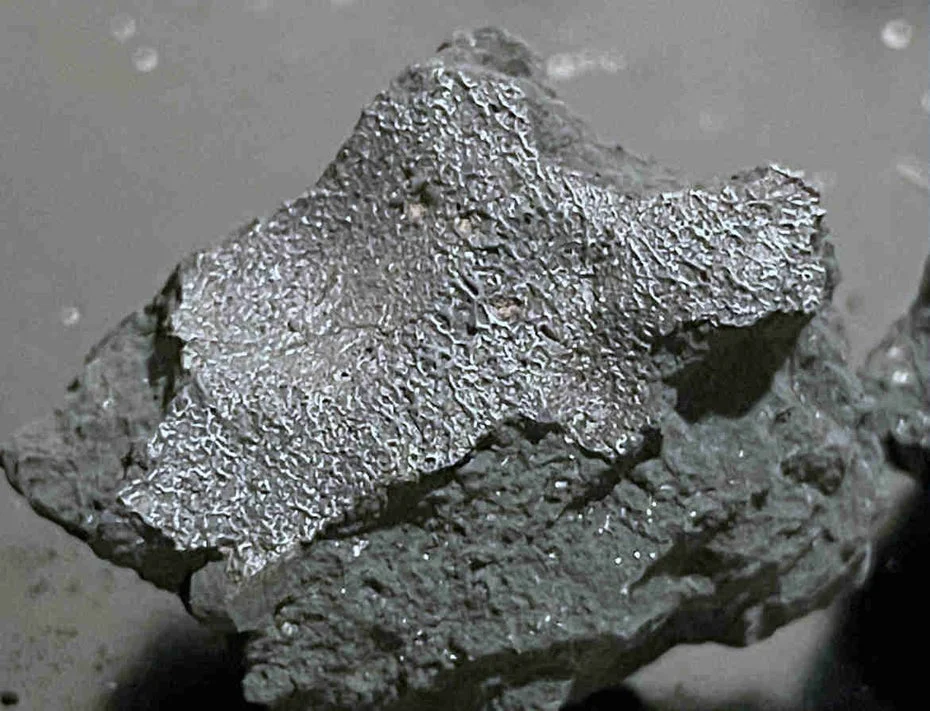
On July 16, 2024, a meteor weighing approximately 1.35 kilograms crashed through the roof of a house in Hillsborough, New Jersey. This celestial rock has since been identified as a significant scientific find, according to a study published in the journal Science Advances, following analyses conducted by the SETI Institute based in Mountain View, California.
The meteor entered the Earth's atmosphere at a remarkable speed of about 52,000 kilometers per hour, creating a pressure wave that was captured on camera. Thanks to the quick actions of the homeowner, who secured the fragments using gloves and aluminum foil, the meteorite remained largely uncontaminated by terrestrial elements.
Peter Jenniskens, a leading astronomer, noted, "Thanks to the rapid response of the homeowner, these are the most intact CM1/2 meteorites we know of." According to Mike Zolensky, a researcher involved in the study from NASA's Johnson Space Center in Houston, this meteorite represents only the second observed case of its transitional class worldwide.
Saline Brines Within the Meteorite
Examinations under an electron microscope revealed an unusual structure within the Hillsborough meteorite, which appears to have been altered by liquid water in the past. Researchers discovered tiny sodium-rich fragments and small dolomite crystals, where characteristic salts had accumulated in fine cracks.
This specific type of aqueous alteration indicates that saline liquids once circulated on the parent asteroid of the meteorite, leaving behind these mineral traces as the fluids gradually evaporated. Such clear evidence of circulating brines had previously been found almost exclusively in extraterrestrial soil samples from the Hayabusa2 space probe.
The fact that a comparable geochemical finding could be directly obtained from a meteorite crash in a private bedroom highlights the immense value of this accidental discovery. The isolated brines within the rock likely played a crucial role as a chemical catalyst for more complex reactions on the original celestial body.
Organic Molecules as Prebiotic Foundations
The instrumental analysis of the organic components within the meteorite proved particularly enlightening for astrobiology. The samples contained 1.76 percent carbon and measurable amounts of nitrogen. The pulverized meteorite revealed a complex mixture of soluble amino acids and specific carboxylic acids, recognized as essential building blocks for the emergence of life.
Queenie Chan, a geochemist from Royal Holloway, University of London, speculated that this organic matter formed deep within the asteroid under the influence of the saline brines. Such concrete laboratory findings support the established theory that the chemical inventory necessary for biological life was significantly delivered to Earth through asteroid impacts during its tumultuous early years.
The essential molecular chains required for life may not have formed solely in the primordial oceans but were likely present in the cosmic materials of the inner solar system. Therefore, the impact in New Jersey provides further measurable evidence for the functioning theory of prebiotic chemical evolution in the weightlessness of space.
Limitations of the Remarkable Discovery
Despite the undeniable importance of this find, the presented analytical data must be viewed with the necessary caution inherent in serious research. The mere instrumental detection of amino acids within the meteorite does not imply that biological life ever existed on the celestial body, as these organic molecules can also arise through abiotic processes.
Moreover, the authors of the publication emphasize that, despite the exemplary securing methods employed by the finder, minor terrestrial contamination cannot be entirely ruled out. Spectrometer data revealed traces of melted nylon fiber material from the impacted house insulation, which had to be mathematically filtered out from the final mass spectrometry measurements.