Protect Your Garden: Simple Watering Hacks to Deter Pests
Adjusting your watering routine can protect your garden from slugs, snails, and squirrels. Discover effective tips to deter these pests and strengthen your plants.
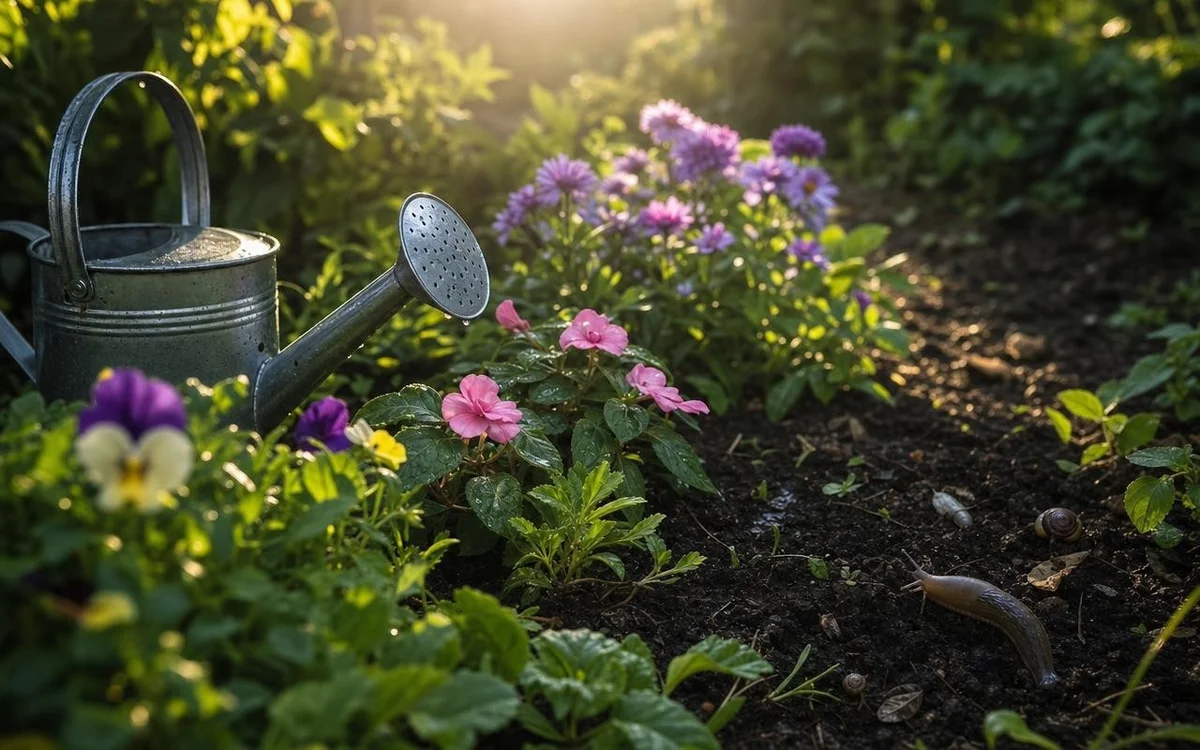
As night falls, slugs, snails, and squirrels can wreak havoc in your garden, especially after evening watering. By adjusting the timing and frequency of your watering routine, you can shift the balance in your favor.
Picture this: a perfect morning in your garden, with intact dahlias and whole salads, free from the signs of slug damage. You might think the heat has finally put these pests at bay—until you discover that, after a thorough evening watering, your garden has become a buffet for slugs, snails, and even squirrels.
The common thread in these nightly invasions often lies in your watering habits. Waterlogged soil in the evening creates a smooth path for slugs, weakens plants, and provides squirrels with tender young shoots to dig up. Switching to morning watering can dramatically change the scenario without the need for chemicals or traps.
Watering in the Morning: A Strategy to Block Slugs and Snails
Slugs are composed of over 80% water. When temperatures soar above 30°C, these creatures burrow into the dry surface, entering a state of estivation until humidity returns. An evening watering session, occurring between 8 PM and 4 AM, turns your garden into a smorgasbord: water pooling on the ground, juicy leaves, and easy movement.
According to gardening expert Kayleigh Dray, "it is always better to water plants early in the morning" after a heatwave. Watering between 6 AM and 9 AM allows moisture to penetrate deeply, drying the surface throughout the day. By nightfall, slugs and snails must navigate a dry area, making it difficult for them to reach your young plants.
Spacing Out Watering: Strengthening Plants and Reducing Pest Attraction
Professional gardener Jane Dobbs emphasizes that well-established plants only need watering every 2 to 3 days during hot periods. In a typical garden soil, this can extend to every 4 to 5 days, and even 6 to 8 days in clay soil. Watering every night keeps the ground saturated, weakens roots, and provides slugs with a constant source of moisture.
Before grabbing your watering can, Kayleigh Dray suggests a simple test: stick your finger into the soil up to the joints. If it’s dry almost everywhere, water deeply at the base; otherwise, wait. A light, dry mulch on the surface helps retain moisture below without giving slugs a damp layer clinging to the stems.
What About Squirrels? Small Adjustments That Make a Big Difference
During summer, squirrels often raise a second litter and scavenge for food. They are known to dig up bulbs and seedlings or rummage through freshly planted pots. Watering more deeply and less frequently minimizes the stress on young plants, reducing the areas that attract these critters. However, some targeted barriers can also help.
Garden furniture specialists Chic Teak recommend placing fine mesh under bulbs and young plants, then covering pots with a layer of gravel or stones to deter digging. Regularly sweeping away fallen seeds and nuts, moving feeders away from garden beds, and providing water points and piles of wood can attract hedgehogs, frogs, and birds that feast on slugs and snails.