Choosing the Right Shoes for Your Photoshoot
Discover essential tips for choosing the right shoes for your photoshoot, focusing on comfort, style, and the impact on your overall look.
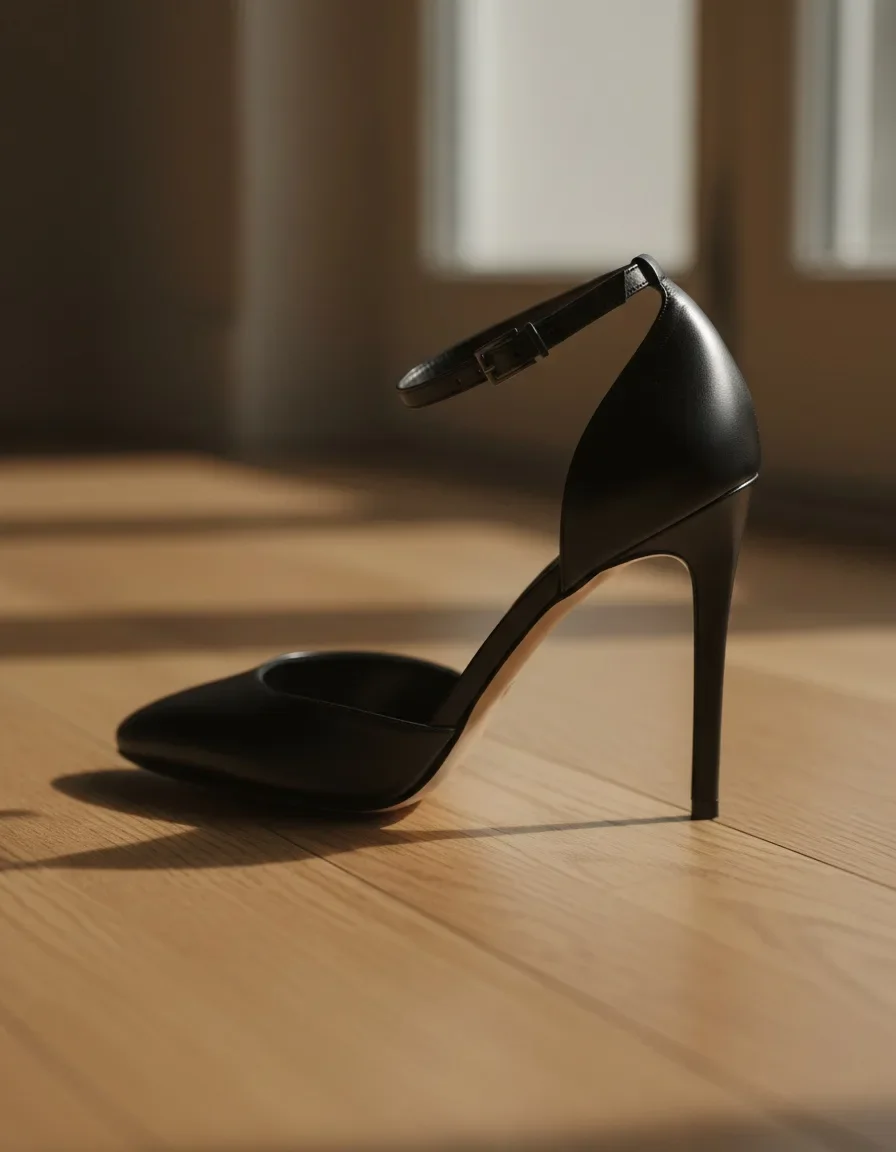
When preparing for a photoshoot, the topic of footwear often gets overlooked, yet it plays a crucial role in the overall outcome of your images. As a photographer, I’ve learned that the shoes you wear can significantly impact not just your look, but also your posture and confidence in front of the camera.
In essence: Shoes are pivotal in a photoshoot, influencing your body tension more than your appearance. A heel height of about five to eight centimeters tilts the pelvis slightly forward, elongates the leg line, and straightens the upper body — just the right balance for an hour of standing comfortably. Higher heels may look stunning in still images but can hinder the relaxed movement needed for dynamic shots.
The Impact of Shoes on Your Photos
There are three key factors to consider regarding how shoes affect your appearance in photos. First, the leg line is crucial; heels visually extend the lower leg and create a continuous line from the ankle to the foot, which is why they are a staple in fashion photography — it’s all about geometry, not just allure.
Second is posture. When your foot tilts slightly forward, your body naturally engages: calves tighten, hips align, and shoulders pull back. This change is immediately noticeable in the camera viewfinder, making your upper body appear more alert. This is why heels can enhance images even when the shoes themselves are not visible.
Third, consider your movement. Wearing heels that are too high can make you cautious and small in your movements. I need fluidity in poses — the step to the window, the turn, or the shift onto a chair. If you’re hesitant to walk in your shoes, it limits my creative options for capturing you.
Finding the Right Heel Height
After numerous photoshoots, my recommendation is simple: bring a pair of shoes you can comfortably stand in for an extended period, and a second pair that’s more stylish. Most of our shots will be taken in the first pair, while the second will be reserved for a few standout images.
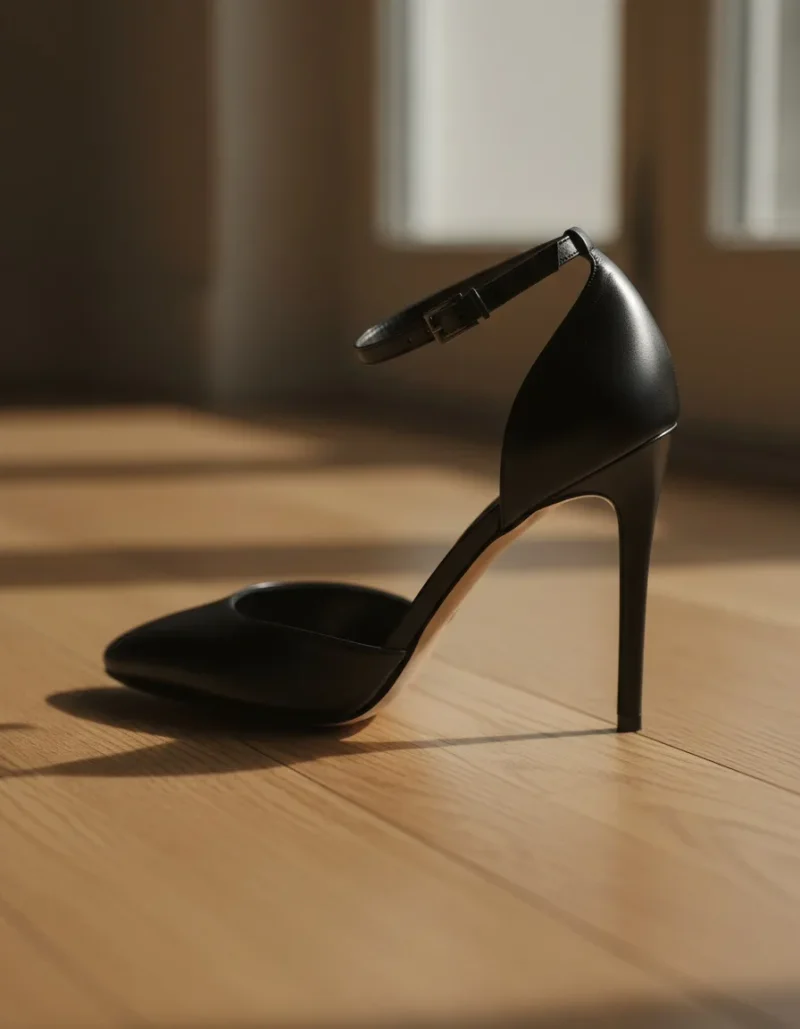
Block heels often provide a better option than stilettos. They offer the same pelvic tilt but provide more stability on various surfaces. For the camera, the angle of your foot is what matters, not the thickness of the heel, unless I’m photographing the shoe itself in detail, where a delicate heel has a more elegant outline.
A pair of shoes with ankle straps is a must-have; they keep your foot secure in the shoe when you lift or angle your leg. Open-toed shoes can cause your foot to slide forward in these poses, creating an unsightly gap at the heel in the final images.
High Heels in the Studio: Comfort is Key
In the studio, I often work with clients sitting, leaning, or lying down, which means that shoes can afford to be a bit less comfortable since they bear less weight. However, I always check two things before we begin.
First, I look for pressure points. A strap that digs into the skin can leave a red mark that is visible in prints, and red spots are notoriously difficult to retouch. Second, the sole of the shoe must be considered. New shoes often have smooth, shiny soles that can be slippery on studio floors. A few rounds on carpet or asphalt before the shoot can help provide traction. The camera can also pick up on brand-new shoes by their pristine soles, which can create an unnatural look in seated poses.
The Return of Over-the-Knee Boots
Looking ahead to Fall and Winter 2026, fashion trends are leaning heavily toward over-the-knee boots, as reported by fashion publications. Designers like Burberry, Altuzarra, and Acne Studios are showcasing sleek and patent leather styles, while Stella McCartney features shiny finishes and Balmain presents softly falling shafts in vibrant colors. Additionally, patterns like snakeskin and leopard print are making a comeback, along with slouchy styles that have a relaxed fit.
From a photographer's perspective, over-the-knee boots create a seamless leg line, eliminating the transition between leg and shoe, which is particularly striking in full-body shots. However, this effect diminishes in half-body images, so we plan these looks for wider shots.
It’s worth noting that a line can form above the boot shaft. If the leg above is bare, the light can create a harsh edge. Wearing something semi-transparent underneath softens this transition, resulting in a more tranquil image — the same principle applies to stockings.
Going Barefoot: A Common Choice
In boudoir and sensual photography, going barefoot is often preferred, not for comfort, but because the naked foot creates the softest line. Shoes can create a hard stop at the end of the leg; without them, the line flows more gently, adding intimacy to the image.
When we shoot barefoot, we pay attention to two details: the position of the foot — a pointed toe rather than a flat foot — and the condition of the nails and heels, as these areas can appear prominently in close-ups. This attention to detail is crucial; often, it’s the reason a beautiful image is left out of the final selection.
Outdoor Shoots: Consider the Terrain
When photographing outdoors in locations like the Amper or the fields around Olching, the terrain dictates shoe choice. Wet grass can absorb suede, cobblestones can destabilize thin heels, and gravel is nearly impossible to navigate in stilettos.
My usual approach is to have you wear flat shoes to the location, then change into the appropriate footwear on-site. I always keep a blanket in the trunk for comfortable changing without getting muddy. Many outdoor locations in our region have been detailed in my previous writings, and I’ve found that rain often enhances the quality of images rather than detracting from them.
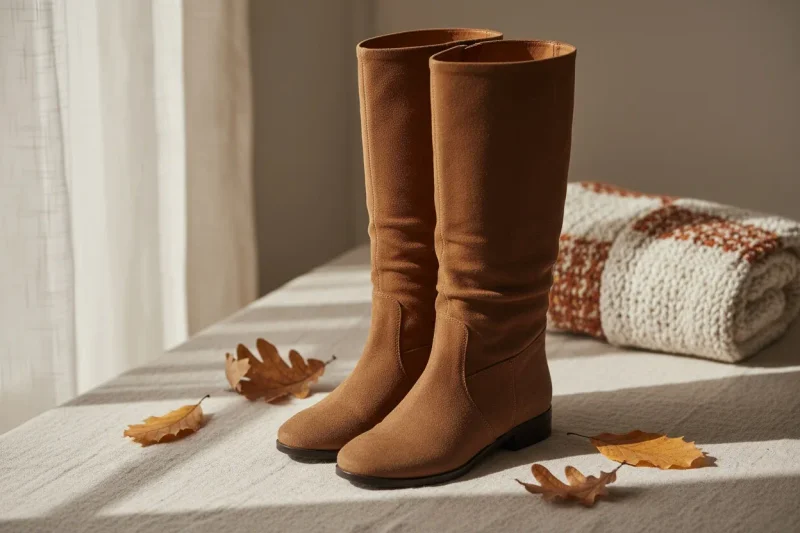
For outdoor autumn shoots, I recommend a practical combination: boots with a grippy sole and a low block heel. They provide stability on wet leaves while still looking intentional in photos.
Essential Items to Bring
If there’s one takeaway from this discussion, it’s this: bring two pairs of shoes — one safe and one stylish, and make sure both have been worn beforehand. Additionally, depending on the shoot:
- A pair with ankle straps for poses that involve lifting a leg.
- Flat shoes for walking between locations.
- For over-the-knee boots, consider wearing something semi-transparent on the leg to soften the edge.
- Band-aids — not for the shoot, but for your comfort. A blister after twenty minutes can ruin the second half of our session.
And what you don’t need: new shoes bought specifically for the shoot. They can pinch, have slippery soles, and appear out of place in images. The best photos come from wearing something you feel comfortable and confident in — this applies to both shoes and the overall color palette of your outfit.
Frequently Asked Questions
What shoes should I bring for a photoshoot?
Bring two pairs: one secure shoe with a five to eight-centimeter heel for standing and walking comfortably, and a more stylish pair for standout images. For outdoor shoots, add flat shoes for travel between locations. Ensure all shoes have been worn before to avoid slipping.
What is the ideal heel height for photos?
A height of five to eight centimeters is optimal. This height tilts the pelvis slightly forward, elongates the leg line, and straightens the upper body while allowing for normal movement. Higher heels may look stunning in still shots but can restrict the relaxed movement necessary for great portraits.
Are block heels worse than stilettos for photos?
Not at all. The angle of the foot is what matters for the visual effect, not the type of heel. A block heel provides the same pelvic tilt while offering more stability on various surfaces. Only when the shoe is photographed as a detail does a delicate heel provide a more elegant contour.
Can I go barefoot during the shoot?
Absolutely! In boudoir and sensual photography, going barefoot is often the best option, as it allows for a softer line at the end of the leg. Just be sure to check your nails and heels, as these will be prominent in close-up shots.
How should I photograph over-the-knee boots?
Over-the-knee boots are most impactful in full-body images because they create a continuous line from the knee to the ground. In half-body shots, this effect diminishes. A line can form above the boot shaft; if the leg above is bare, the light can create a harsh edge. Wearing semi-transparent stockings underneath softens this transition.
Do I need to buy new shoes for a photoshoot?
No, and I actually advise against it. New shoes can pinch, their smooth soles can slip on studio floors, and they can look sterile in seated poses. Worn shoes that you can move comfortably in will yield the best results.