
Creating a Low-Maintenance Front Garden: A Complete Guide
Discover how to create a beautiful, low-maintenance front garden that stays vibrant year-round with the right plants and design strategies.
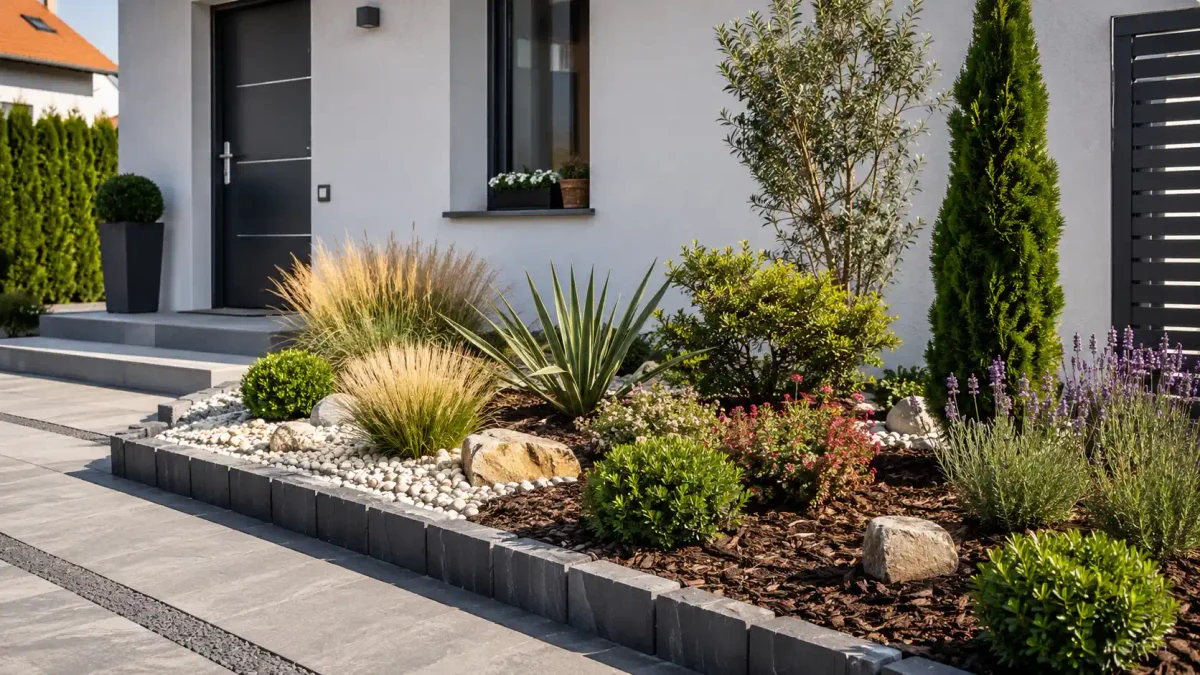
Are you tired of spending your weekends mowing, weeding, and trimming just to see your garden wilt within weeks? You’re not alone. A poorly planned front garden can lead to countless hours of work each year and a façade that looks dull as soon as you ease up on your efforts.
The good news is that with the right plants, a solid mulch layer, and a well-thought-out design, you can achieve a low-maintenance front garden that looks beautiful year-round, without dedicating your Sundays to upkeep. Here’s how to do it step by step.
Criteria for Choosing Truly Low-Maintenance Plants
Before rushing to the garden center, keep three simple rules in mind. A plant labeled as "easy" may not be suitable for your garden if it doesn’t match your soil conditions.
Hardiness is Key
Select species that are well-suited to your local climate, capable of withstanding frost, heatwaves, and prolonged dry spells without your intervention. Avoid plants that are sensitive to cold, as they will require winter protection each year.
Evergreen Foliage is Your Best Ally
Evergreen shrubs maintain their structure in winter, unlike deciduous perennials that leave a bare and sad space for months. This is essential for a modern front garden that remains presentable throughout the year.
Slow to Moderate Growth
Fast-growing plants require trimming every couple of months. Aim for slow or compact varieties that maintain a tidy appearance without frequent maintenance.
Adaptation to Existing Soil
There’s no need to amend the entire area if you choose plants that thrive in your current soil. Whether it’s calcareous, clay, sandy, or well-draining, each species has its preferences, allowing you to avoid unnecessary watering and fertilizing.
Recommended Plants and Shrubs Based on Your Soil
Your choices will primarily depend on two factors: sunlight exposure (full sun, partial shade, shade) and soil type. Here are reliable options tested in many French gardens.
Full Sun, Well-Drained Soil
- Cistus (Cistus): Drought-resistant once established, blooms all summer.
- Rosemary: An evergreen, aromatic shrub that thrives in poor, dry soil.
- Nandina domestica (sacred bamboo): Offers colorful foliage year-round, requiring minimal care.
- Lavender: Ideal for borders, but dislikes excessive winter moisture.
Partial Shade
- Photinia: Bright red foliage in spring, easy to shape into hedges or use as a standalone.
- Mahonia aquifolium: Features yellow blooms in winter and tolerates both gentle sun and light shade.
- Sarcococca confusa: A discreet evergreen, perfect for filling shady corners near an entrance.
Dense Shade
- Euonymus fortunei: Requires almost no maintenance, thrives in dry or shaded areas.
- Ground Cover Ivy: Fills difficult spots where other plants struggle to grow.
- Creeping Juniper (Juniperus): Evergreen, hardy, and adapts to most soil types.
For Structuring a Flower Bed in Front of the House
- Common Boxwood: Ideal for low hedges and neat borders, requiring one to two trims a year.
- Japanese Holly (Ilex crenata): A resilient alternative to boxwood, more disease-resistant.
- Hebe: Offers a long flowering period and withstands drought in cool, partially shaded soil.
Summary Table: Low-Maintenance Plants to Remember
| Plant | Exposure | Maintenance | Blooming | |--------------------------|--------------------|-----------------------------|----------------------| | Rosemary | Full sun | Very low, 1 pruning/year | Blue, spring-summer | | Cistus | Full sun | Low, no watering once established | White/pink, summer | | Lavender | Full sun | Low, 1 pruning post-bloom | Purple, summer | | Photinia | Partial shade | Low, occasional shaping | White, spring | | Mahonia aquifolium | Partial shade to shade | Very low | Yellow, winter | | Sarcococca confusa | Shade | Very low | Discreet white, winter| | Euonymus fortunei | Shade to partial shade | Nearly none | Minimal flowering | | Creeping Juniper | Sun to partial shade| Very low | No notable bloom | | Common Boxwood | Partial shade to sun | 1 to 2 prunings/year | Minimal flowering | | Japanese Holly | Partial shade to sun | Low, 1 pruning/year | Discreet, spring | | Hebe | Partial shade, cool soil | Low | Long, spring to autumn |
Design Ideas for a Modern Front Garden
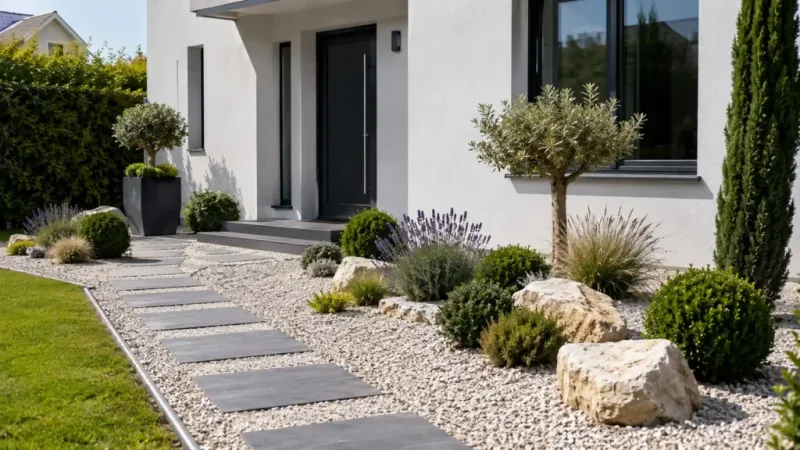
Style is just as important as plant selection. Here are some popular trends for a modern front garden.
The Mineral-Vegetal Mass
Combine light gravel, pebbles, and a few grasses or cistus plants. This is currently the most sought-after front garden design: sleek, contemporary, and easy to maintain since the mineral elements don’t grow.
Linear Plant Bands
Plant in parallel strips leading to the entrance, using 2 to 3 repeating evergreen species. This creates a graphic effect, resulting in a modern front garden where each plant has a clear role.
Tiered Masses
For sloped façades, create tiered structures with corten steel or natural stone borders. This retains soil, facilitates mulching, and provides a tidy appearance.
Minimalist Green Entry
Use a maximum of three or four varieties, repeated in compact masses rather than scattered species. This is the simplest and most maintainable front garden design to replicate.
Mulching and Anti-Chore Solutions: The Key to Zero Maintenance
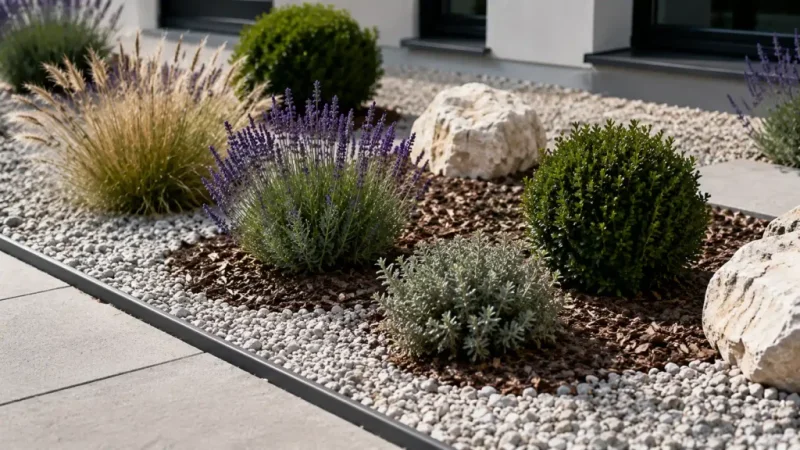
Mulching literally cuts your maintenance time by three or four times. Without it, no garden can truly remain low-maintenance.
Thickness and Application
Spread a layer of 5 to 10 cm of organic mulch (wood chips, bark, straw) or mineral mulch (pouzzolane, gravel). Less than 6 cm allows weeds to easily break through. Leave a few centimeters clear around the base of each plant to prevent rot.
Organic or Mineral: Which to Choose?
- Organic Mulch: Nourishes the soil as it decomposes, needs replenishing annually (1 to 3 cm top-up).
- Mineral Mulch (gravel, pouzzolane): Does not decompose, lasts 2 to 3 years, perfect for a modern and mineral look.
Is a Geotextile Fabric Necessary?
With a sufficiently thick organic mulch, it’s not essential. However, under decorative gravel, a micro-perforated fabric significantly limits regrowth and simplifies long-term maintenance.
Other Anti-Chore Tips
- Install a programmable drip irrigation system for the first two years to help establish roots.
- Create a physical border (steel, stone, wood) between the garden bed and lawn to prevent grass from invading.
- Group plants with similar water needs together to avoid unnecessary watering in certain areas.
Common Mistakes to Avoid
- Mixing too many different species: The more varieties you have, the more divergent their needs, leading to increased maintenance time.
- Neglecting the soil initially: Planting in compacted or poorly drained soil can hinder your shrubs’ growth or even cause them to die.
- Ignoring the actual exposure: A north-facing façade is vastly different from a south-facing one, even a few meters apart.
- Planting too closely together: This forces constant trimming to prevent plants from suffocating each other.
- Skipping the mulch: This is the number one mistake. Without it, weeding becomes a weekly chore as soon as spring arrives.
- Choosing based solely on photos at the garden center: Always check for hardiness and growth rate on the label before purchasing.
Budget and Minimal Maintenance Expectations
Budget Considerations
- Small shrubs in pots: Expect to pay between €5 and €15 each, depending on the species.
- Mulch: Costs range from €3 to €8 per square meter depending on the material (bulk organic is cheaper, decorative mineral is pricier).
- Borders (corten steel, stone): Starting at €20 per linear meter for basic options.
For a 15 m² garden bed, budget between €300 and €800 depending on the desired finish level, excluding labor if hiring a landscaper.
Annual Maintenance Expectations
- 1 to 2 prunings per year for structural shrubs (boxwood, holly).
- A top-up of mulch in spring to maintain thickness.
- Quick weeding once a month, largely manageable thanks to the mulch.
- Occasional watering during extreme drought in the first year only, until the roots are established.
In summary: a few hours spread throughout the year versus several weekends each month for a poorly planned traditional garden.
Frequently Asked Questions
What are the easiest plants for a low-maintenance front garden? Rosemary, cistus, creeping euonymus, and common boxwood are among the safest choices. They tolerate drought, retain their foliage year-round, and require only an annual trim.
Should I use mineral or organic mulch for a modern front garden? Mineral mulch (gravel, pouzzolane) is better suited for a contemporary look and lasts longer. Organic mulch nourishes the soil but needs annual replenishment. Both significantly reduce weeding.
How long before a low-maintenance garden becomes truly self-sufficient? Expect 1 to 2 years for the roots of shrubs to establish. After that, watering becomes infrequent, with maintenance limited to pruning and annual mulching.
What exposure should I prioritize for a flower bed in front of the house? Observe your façade throughout the day before planting. Full sun: cistus, lavender, rosemary. North or shaded areas: euonymus, ivy, sarcococca. This factor determines 80% of the garden’s success.