Explore the Cosmos: Interactive Black Hole Simulation Now Available
Explore the Black Hole Playground, an interactive web tool that visualizes a rotating black hole, blending education with engaging visuals.
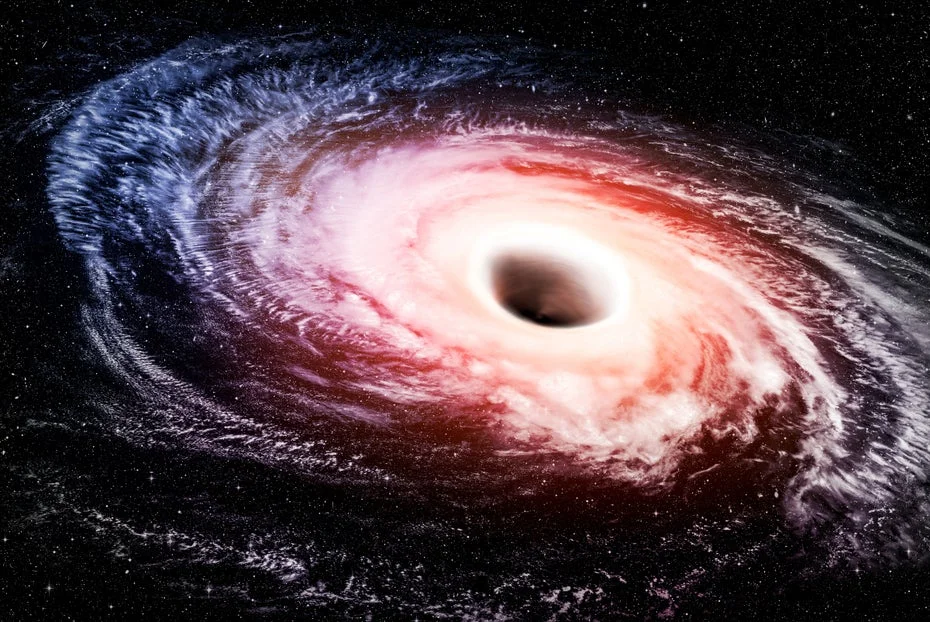
Astronomy has always captivated humanity, often stretching our imagination to its limits. A new web project is bringing the boundaries of physics closer to home, igniting lively discussions among enthusiasts and experts alike.
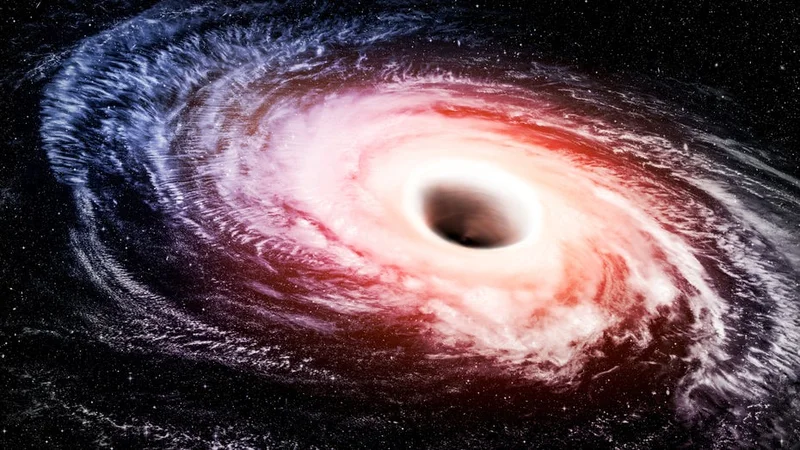
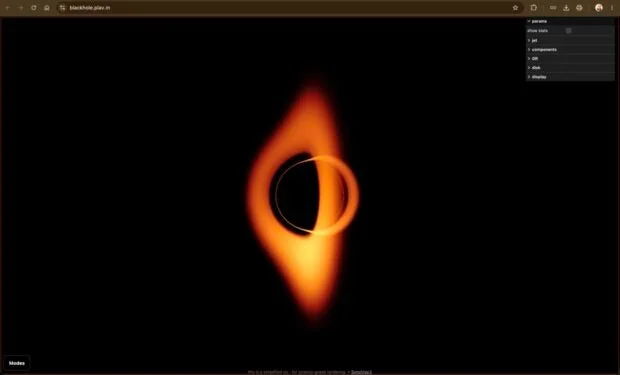
Alexander Plavin has introduced the "Black Hole Playground," a web application that allows users to interactively visualize a rotating black hole. This specific type of black hole, known as a Kerr vacuum, appears to float freely in the simulation. The tool operates seamlessly in modern web browsers, making it accessible to a broad audience.
Users can access the developer's website to explore device-specific variants of a three-dimensional representation of this fascinating cosmic object. An intuitive side menu features sliders that adjust various physical parameters in real-time. Users can modify the angular momentum of the singularity and tilt the entire object within the virtual space. The properties of the streams of matter falling rapidly into the black hole change visibly with each adjustment. The rendering engine continuously recalculates the gravitational distortions of light in the background, turning complex mathematics into an engaging interactive experience.
Unleashing Augmented Reality with Synchray.jl
Plavin employs the rendering engine Synchray.jl, built on the high-performance programming language Julia, to create the visual effects. By integrating standardized WebXR interfaces, the application allows for a seamless transition into augmented reality. Users can project the singularity and its glowing accretion disk into their living rooms using their phone cameras. In virtual reality, the three-dimensional model reveals unexpected spatial depth, with some testers experiencing megalophobia due to the immense optical presence of these colossal objects.
The simulation's visual style inevitably brings to mind the stunning imagery from the science fiction film Interstellar. Plavin positions his creation within the developer community on Hacker News as a physically accurate visualization. A glowing, reddish accretion disk surrounds the absolute darkness at the center, with light from simulated stars bending dramatically around the black core due to gravitational lensing. This striking visual effect captivates viewers at first glance, creating a powerful impression.
The Reality vs. Fiction of Black Holes
However, the claimed physical realism of the simulation has its drawbacks. In reality, a black hole would appear quite different. The accretion disk, formed by matter swirling at nearly the speed of light, would not be red due to extreme temperatures; instead, it would emit a bright blue light due to intense frictional heating. The choice of red in the simulation merely caters to established visual expectations, deeply rooted in Hollywood's portrayal of black holes.
Critical observers on Hacker News have pointed out physical inaccuracies in the calculations. For instance, the simulation significantly oversimplifies the relativistic Doppler effect. The software overlooks the precise camera position needed to calculate the Lorentz shift, which would cause the side of the rotating disk approaching the observer to appear much brighter than the opposite side. The intricate transformation of light waves for accurate color perception is entirely absent from the code architecture, leading to a purely optical compromise.
Despite these limitations in color and light calculations, the project offers substantial educational value. The web application translates complex astronomical models into an accessible format, allowing users to visualize the curvature of spacetime without any installations. While the correct physics may take a backseat to user experience, Plavin's engine serves as an excellent entry point into the wonders of the universe.