
Germany's Fusion Power Plan: A Questionable Approach
Germany is set to launch the world’s first commercially viable fusion power plant by the late 2030s, backed by a government investment of 2.4 billion euros. However, the plan raises concerns about its feasibility and underlying assumptions.
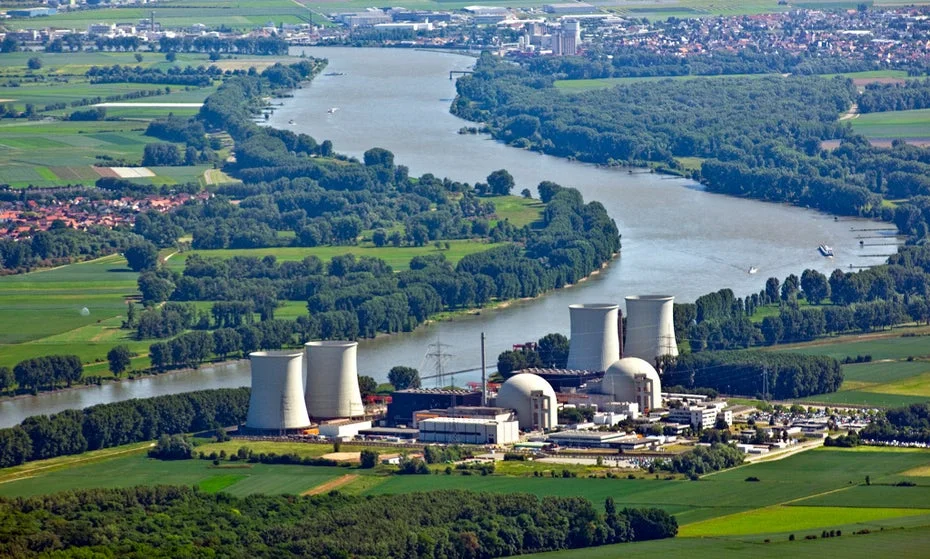
Germany is gearing up to launch the world’s first commercially viable fusion power plant by the end of the 2030s, with a government commitment of 2.4 billion euros by 2029. While this investment may seem modest compared to funding for military or AI infrastructure, it raises serious questions about its efficacy in delivering clean and affordable energy.
{{img:123}}
However, skepticism surrounds the initiative. Critics argue that the plan is more about the ideological satisfaction of the government than the genuine advancement of energy technology. This raises concerns that the project may not achieve its ultimate goal of establishing a fusion power plant and could instead benefit a few companies financially.
Understanding the Government's Fusion Action Plan
What leads to this conclusion? To explore this, we must examine the underlying assumptions of the government’s fusion action plan. Key beliefs include:
- Companies can develop technology faster and more effectively than research institutions.
- Previous technology funding has failed due to a lack of openness to various technologies.
- Technical advancements will render ecological transformation of the economy unnecessary.
{{img:123}}
Looking closely at these premises, the advancements reported by fusion startups worldwide seem to lend them some credibility. For instance, several of these companies are developing coils made from high-temperature superconductors, which can generate extremely strong magnetic fields, enabling the creation of compact reactors. Smaller prototypes can be built and improved upon more rapidly than large-scale facilities like the international ITER research reactor.
Despite this progress, startups benefit significantly from decades of government-funded foundational research, a trend that is likely to continue. For example, Proxima Fusion would not exist without the insights gained from the Wendelstein 7-X research reactor.
The Role of Fusion Startups
In the future, these research startups will remain reliant on scientific advancements. In their rush to secure investor confidence, they often postpone addressing various technical and scientific challenges that must be resolved to harness energy from fusion effectively. One major issue is determining the material for the reactor vessel’s wall, which must withstand both extreme temperatures and intense neutron bombardment. To tackle these challenges, companies will again depend on state-supported foundational research, allowing them to privatize the profits while leaving the public to bear the costs.
{{img:123}}
The second premise, often used to justify the continued use of combustion engines or gas heating, is that all developments must be technology-neutral. In the context of fusion energy, this argument pertains to laser fusion. For decades, igniting nuclear fusion with extremely powerful lasers was considered academically intriguing but practically irrelevant. The National Ignition Facility in the U.S. has been attempting this with the world’s strongest laser since 2009, but only achieved a breakthrough in 2022, where they recorded more energy output from fusion than the energy input from the laser.
Focus on Laser Fusion
However, transforming this breakthrough into a power plant that generates more energy than it consumes is still a long and costly journey. The development of ultrafast high-performance lasers requires substantial funding. Two German companies are keen to pursue this path, but investors in Germany tend to be more risk-averse than their American counterparts.
Fortunately, there are alternative funding sources. Unlike magnetic fusion, the laser fusion sector has not received government support in Germany until now. The action plan now allocates expensive infrastructure to laser fusion companies. Interestingly, the former Minister of Research, Bettina Stark-Watzinger, now works for one of the funded companies, Focused Energy. This connection raises eyebrows, especially since states like Hesse, which are investing in these companies alongside direct subsidies, stand to benefit from future returns. However, given that the technology is still in its infancy, they must first shoulder the associated risks.
{{img:123}}
The Misplaced Hope in Fusion Energy
This situation might not be alarming if funds were abundant. However, reallocating money from the special fund for infrastructure and climate neutrality to this initiative can only be justified by a firm belief in the third premise: that technological progress will save us from climate change. Unfortunately, this belief often clashes with reality. Even optimistic experts agree that significant electricity generation from fusion power plants is unlikely before 2050, assuming everything goes smoothly. This timeline is far too late to make a meaningful impact on climate change.
While I find the concept of utilizing nuclear fusion as an energy source scientifically and technically fascinating, and recognize that many technologies developed along the way could benefit sectors beyond energy—such as superconducting coils that may revolutionize medical imaging—the government’s approach appears misguided. Instead of directly promoting scientific advancement and allowing technical expertise to guide development, the government seems focused on commercializing technology, a strategy that does not always lead to success.
{{img:14645}}