The Billion-Dollar Miss: How 40 Investors Rejected Amazon's First Funding Round
In the founding phase of a company, raising startup capital is often a frustrating endeavor. Even the world's most valuable companies faced similar challenges. A look back reveals surprising parallels to the present.
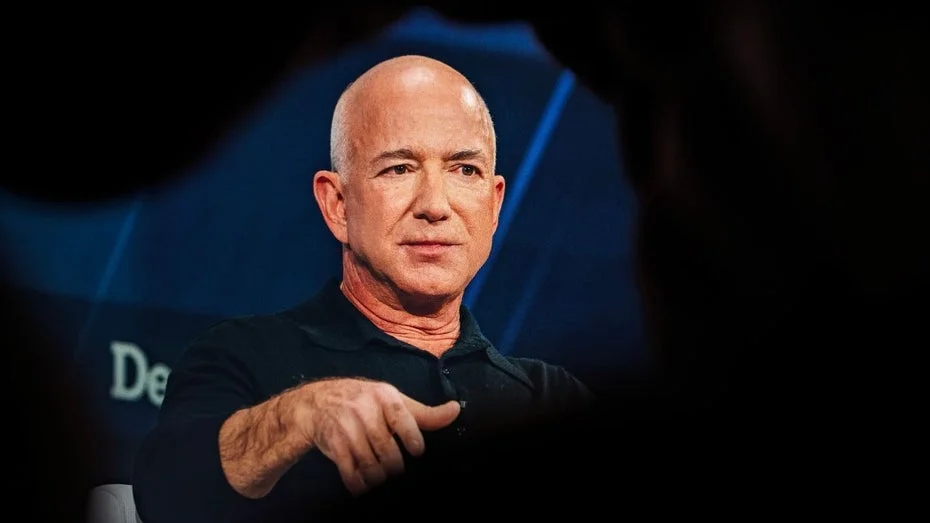
In the early days of a startup, securing initial funding can often be a daunting process. This was especially true for Jeff Bezos, who faced significant challenges while trying to raise capital for Amazon, the online bookstore he founded in Seattle.
During a recent interview at the DealBook Summit hosted by The New York Times, Bezos recounted the arduous journey he undertook to secure his first substantial funding. To raise a million dollars, he held approximately 60 meetings with potential investors, a process that proved to be far from smooth. {{img:123}}
Out of those 60 discussions, around 40 ended in outright rejections. Bezos described these refusals as particularly tough, noting that they often came after multiple follow-up meetings and extensive discussions. Despite the setbacks, he persevered, eventually attracting the interest of about 22 angel investors in 1995. Each investor contributed around $50,000, collectively valuing the company at a mere five million dollars at that time.
A significant hurdle in these negotiations was the general unfamiliarity of investors with the emerging technology of the internet. Bezos recalled, "The first question was always, what is this internet, anyway?" This lack of understanding made it difficult for investors to grasp the potential of the business model he was proposing.
Moreover, Bezos was candid about the substantial risks associated with his untested business model. He estimated a 70% chance that investors could lose their entire investment, a prediction he later admitted might have been overly pessimistic, as it suggested he was underestimating his own chances of success. He believes this tendency to overemphasize risks while undervaluing opportunities is a common human bias, one that entrepreneurs should actively combat.
In discussing the American venture capital landscape, Bezos highlighted a unique advantage in the U.S. system that allows for funding even when the likelihood of success is as low as 10%. This willingness to invest in high-risk ventures has been a crucial factor in the success of the technology sector in the U.S., a model that other regions have struggled to replicate.
For the few investors who took the plunge with Amazon, the rewards were significant. A 1% stake in the company, valued at today's market capitalization, could potentially be worth around $25 billion. However, this calculation simplifies the reality, as it does not account for the dilution of shares that occurred after Amazon went public in 1997, which would reduce the value for those early investors.
Ultimately, the story of Amazon's early days serves as a stark reminder that extraordinary returns often come with equally extraordinary uncertainties in the startup phase. Those who opted against investing at the time were acting rationally, given the difficulty of evaluating such a nebulous concept.
Today, as noted by Yahoo Finance, Bezos observes similar challenges emerging in future technologies. Fields like artificial intelligence and robotics are raising questions among investors that echo those faced by the internet in 1995. {{img:14643}}