Innovative Cooling Solution Using 3D-Printed Ceramic Cubes
A research team from Graz University of Technology has developed a cooling solution using 3D-printed ceramic cubes, achieving significant temperature reductions for indoor and urban environments.
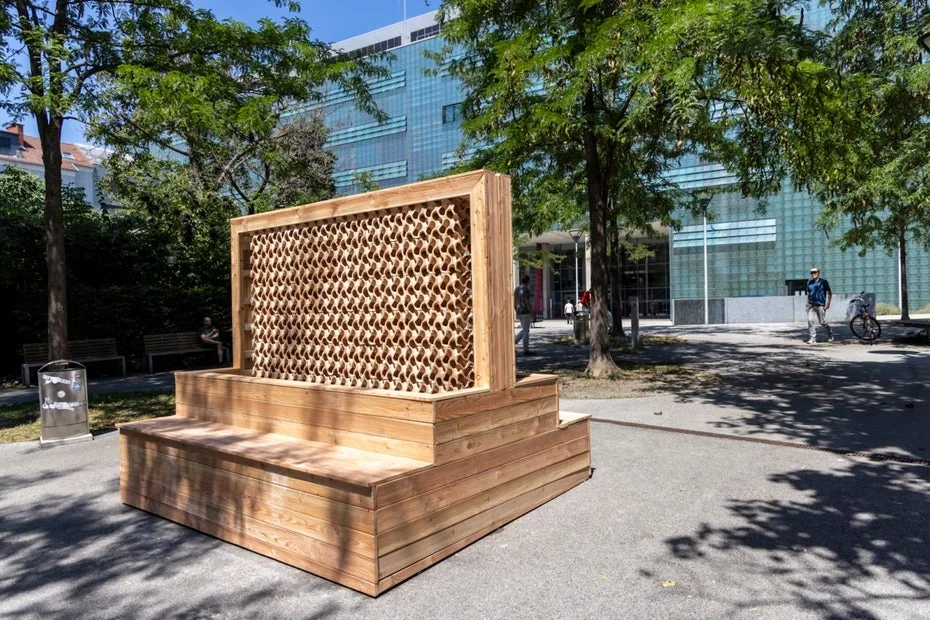
A research team from Graz University of Technology has developed an innovative cooling technology utilizing 3D-printed ceramic cubes. This method can achieve indoor temperature reductions of up to seven degrees Celsius, providing relief not only for indoor spaces but also for overheated urban areas.
As Europe braces for extreme heat waves in the summer of 2026, with temperatures exceeding 40 degrees Celsius in parts of Germany and Austria, this groundbreaking solution could prove vital. The consequences of such heat are severe, with thousands of lives lost due to the extreme conditions.
Cooling for Indoor and Outdoor Spaces
The new cooling solution, developed by researchers from the Institute of Architecture and Media at TU Graz, leverages a well-known physical principle: evaporative cooling. This method involves the evaporation of water, which extracts heat from the surrounding environment, leading to a drop in air temperature. Milena Stavric from TU Graz states, "This has been effective for centuries, as seen with clay pots and traditional wind towers."
Large Evaporative Surface Area
Instead of traditional clay pots, Stavric and her team utilize complex, porous geometries made from clay mixtures, which are produced through 3D printing. "These specialized structures store water exceptionally well and create a vast evaporative surface area with minimal volume," explains Stavric.
Additionally, the ceramic clay mixture incorporates mushroom cultures and wood shavings as a nutrient medium before 3D printing. The filamentous fungal network, known as mycelium, integrates into the material, resulting in a network of micro and macropores after printing and firing. This structure allows water to distribute effectively within the cubes.
Significant Cooling Effect
The ceramic cubes, each measuring approximately 23 centimeters on each side, demonstrated a temperature reduction of nearly seven degrees Celsius during practical tests conducted in a hot attic at TU Graz. The cooling effect was reported to be significantly felt throughout the entire room.
When integrated into a cooling wall equipped with a controllable water circulation system, these ceramic cubes could also mitigate heat islands in urban settings. Stavric emphasizes, "Our goal is to provide cooling where people suffer most from heat, particularly in cities where natural cooling from trees is often insufficient."
Prototype of the Cooling Wall in Graz
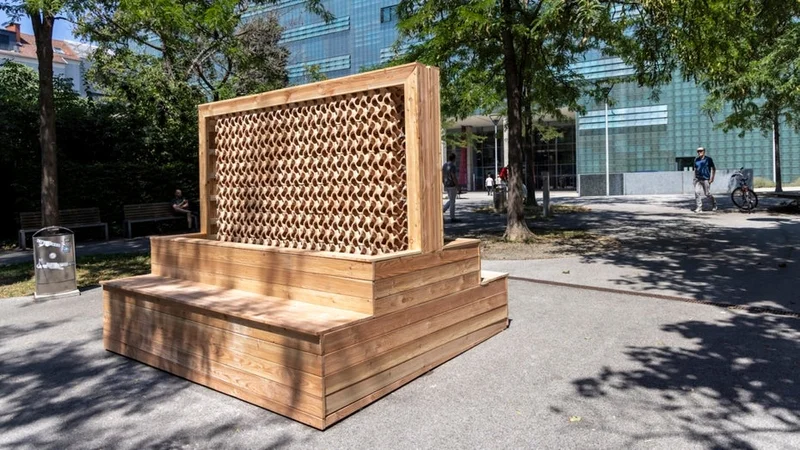
Currently, this cooling solution exists as a demonstration wall measuring two by two meters at the Campus Neue Technik of TU Graz. The timeline for when this energy-efficient alternative to conventional air conditioning will be widely available remains uncertain.