The Urgent Need for Europe to Enhance Its AI Capabilities
Explore the implications of the 'Europe 2031' scenario and the urgent need for Europe to bolster its AI capabilities to avoid economic decline.
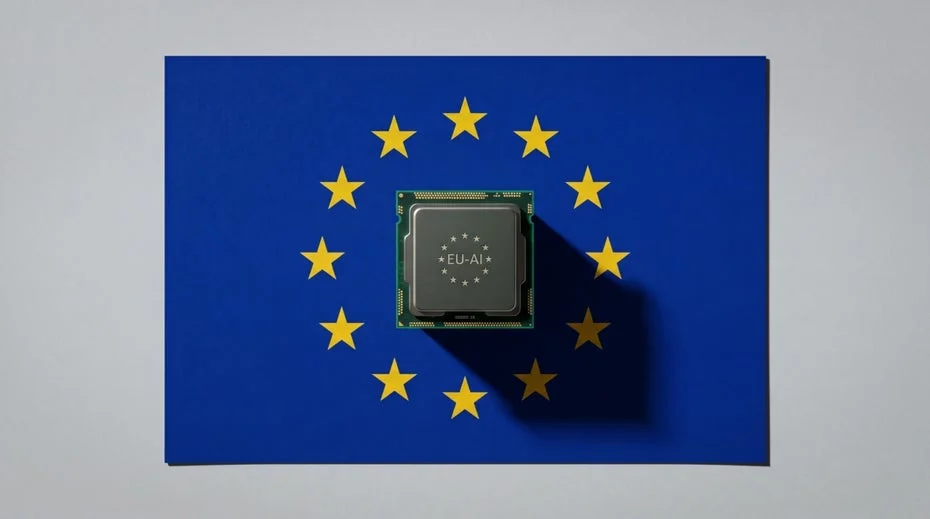
A recent fictional scenario titled "Europe 2031" has sparked discussions about the potential downfall of Europe in the realm of artificial intelligence (AI) and technological sovereignty. The narrative paints a grim picture of economic irrelevance, prompting questions about its inevitability. To delve deeper, we spoke with Maximilian Negele, one of the authors behind this thought-provoking piece.
Negele, an economist with experience at the Rand Corporation and in Silicon Valley, currently serves as a Research Affiliate at the Oxford Martin AI Governance Initiative. His focus lies on Europe’s position within the geopolitical landscape of AI, particularly regarding competitiveness and security. In an interview with MIT Technology Review, Negele expressed a collective frustration among the authors, stating, "It’s just that we all have had enough because the AI policy in Europe is heading towards disaster."
The scenario has gained traction, particularly due to its eerie accuracy in predicting current events, such as the blocking of the platform Fable for European companies. However, the critical question remains: Is the decline depicted in their scenario truly unavoidable?
Negele explained that the scenario is fundamentally based on Europe’s insufficient development of AI data centers. He elaborated, "We believe that AI systems are advancing rapidly, and the trends we’ve observed over the past five years are likely to continue. It’s plausible that within the next five years, we could see the emergence of Artificial General Intelligence (AGI), a form of AI with capabilities at least on par with humans. Soon after, as robotics come online, we might witness a complete automation of physical labor."
He emphasized the importance of computational capacity in this context. "The extent to which we can employ AI—whether for agents or scientific research—is directly proportional to our computational resources. If one country has ten times more computing capacity than we do, it can deploy AI ten times more effectively, leading to greater economic value and geopolitical influence."
Despite the alarming projections, Negele acknowledged that the efficiency gains from AI are still a topic of considerable debate. "Currently, there are many discussions about how much can actually be achieved with AI, especially given its present state. I find the argument about the speculative nature of these gains quite compelling," he noted.
The conversation highlighted the critical challenges Europe faces in harnessing AI technology effectively. Negele pointed out missed opportunities and weaknesses in Europe’s approach, while also suggesting that there is still a chance for the continent to turn things around.
As Europe navigates this complex landscape, the need for strategic investments in AI infrastructure and policies becomes increasingly clear. The outcomes of these decisions will not only shape the technological landscape but will also define Europe’s role on the global stage in the coming years.