
Amateur Astronom's Google Maps Discovery Unveils Massive Meteorite Crater
A Canadian amateur astronomer discovers a massive meteorite crater using Google Maps, leading to a significant geological validation and recognition of the site as Uhackatik.
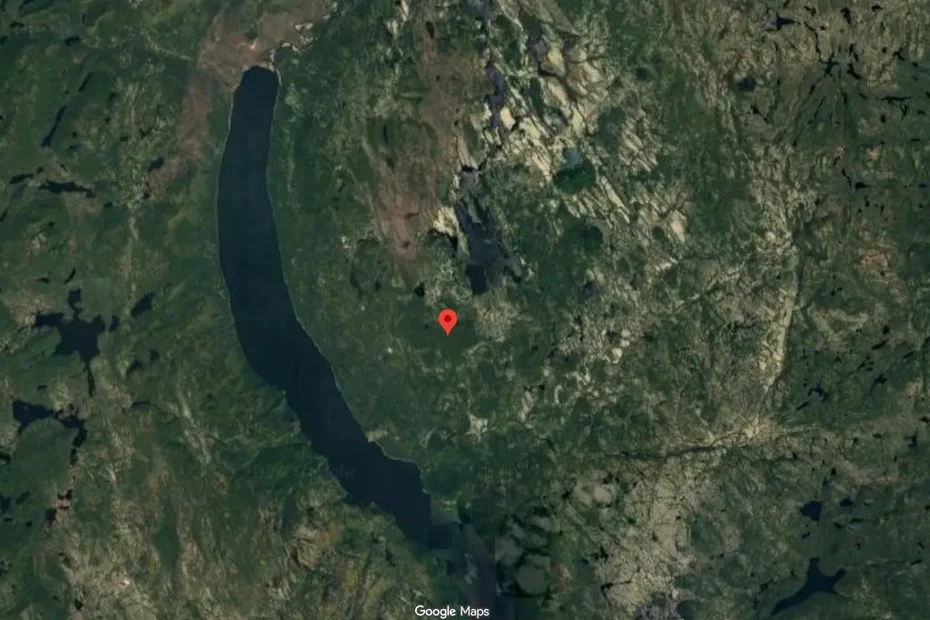
In an unexpected turn of events, Canadian amateur astronomer Joël Lapointe made a groundbreaking discovery while planning a trip to the rugged wilderness of Côte-Nord, Canada, using Google Maps. His keen observation led him to a striking, nearly perfect circular depression measuring approximately 25 kilometers in diameter, a finding that has been described as a geological sensation by sources including the Smithsonian Magazine.
Lapointe's curiosity was piqued when he noticed this unusual geological feature, which was absent from any recognized impact crater databases. To confirm his suspicions, he reached out to planetary geologist Gordon Osinski from Western University in London, Canada. This led to a challenging expedition to the site, where researchers ultimately validated Lapointe's initial hypothesis: the formation was indeed a massive meteorite crater.
Scientific Validation of the Meteorite Crater
Initially, Osinski, who manages the international reporting platform Impact Earth, suspected that the satellite images might be an optical illusion or a common geological structure. However, in October 2025, he and a specialized team, which included French geologist Jérôme Gattacceca, embarked on a water plane to the remote area, characterized by dense forests and swarming insects.
Surprisingly, the geologists discovered cone-shaped structures known as shock cones in the exposed rock at the impact site just two days into their demanding mission. These specific fracture patterns are exclusively formed by extreme shock waves, which only occur during significant asteroid impacts or underground nuclear tests.
The team also encountered extensive cliffs composed of impact melt rock at the formation's edge, providing further irrefutable evidence of a meteorite strike. Such rock formations occur when the intense heat and pressure from a cosmic impact cause the Earth's crust to melt abruptly, as explained by CTV News.
Subsequent radiometric analysis of the meticulously collected rock samples from European and North American laboratories revealed that the catastrophic impact event occurred approximately 390 million years ago. This discovery indicates that the newly confirmed crater in Quebec is significantly older than the researchers initially estimated based on the weathered terrain.
Global Significance of the Rare Find in Quebec
Globally, just over 200 meteorite craters have been officially recognized in geological records, with a considerable and stable portion located on the North American continent, particularly in Canada. A new crater with a diameter of 25 kilometers is considered an absolute rarity in modern science, as detailed by the esteemed science portal Live Science.
While this incident highlights the immense potential of modern digital mapping services for significant citizen science discoveries, most amateur reports typically turn out to be false alarms without scientific value. Osinski remarked to the Canadian Broadcasting Corporation (CBC), "It simply shows that even if nine out of ten or 99 out of 100 cases are not impact craters, there can still be that one that surprises."
After extensive consultations with the Innu Council of Ekuanitshit, which politically and culturally represents the local Indigenous population, the striking geological formation has been officially named Uhackatik. The research team is set to present their detailed findings at the 88th Annual Meeting of the Meteoritical Society in Germany in August 2026.
Lapointe expressed his excitement over the rapid developments and views the incident as a remarkable success for the observational skills of an amateur. He encouraged interested observers worldwide to trust their instincts and report anomalies, even if the subject matter falls outside their academic expertise.