Essential Tips for Tattoo Portrait Photography: Capturing Ink with Style
Explore essential tips for capturing tattoo portraits, from composition to lighting and the unique impact tattoos have on photography.
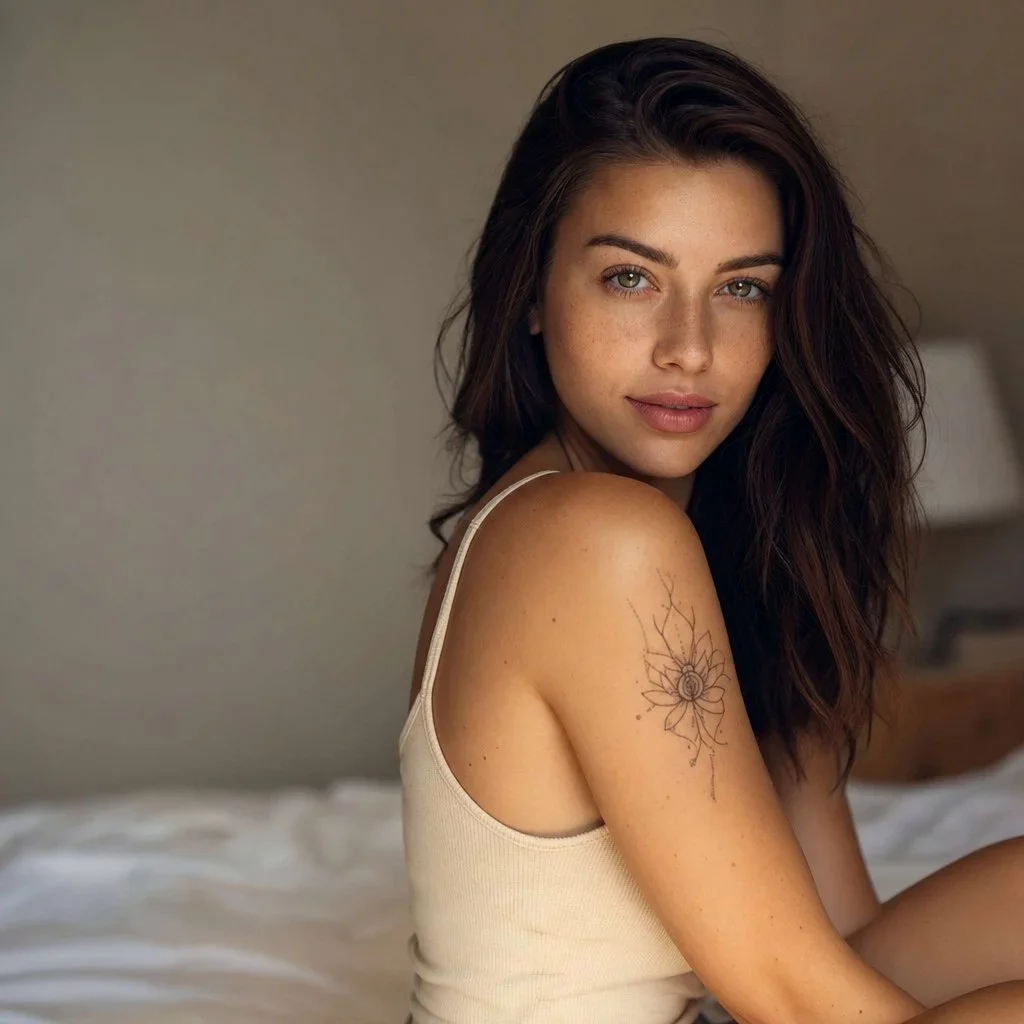
Note: The featured image is an AI-generated symbolic image.
A tattoo is more than just body art; it represents a decision often tied to a date, an occasion, or a personal story. For those planning a photoshoot while tattooed, a common question arises: "How much should we reveal? Will the tattoo overshadow the images? What about areas I prefer not to show because of the tattoo?"
These concerns are valid and deserve attention. With years of experience guiding tattooed women through portrait, boudoir, and nude shoots, I understand that the focus should not be on whether to show or hide tattoos, but rather on how to present them in a way that enhances your image without overshadowing your identity.
The Impact of Tattoos on Portraits
Tattoos fundamentally alter the visual language of a portrait. Areas of skin that were once neutral—such as shoulders, forearms, and hips—transform into striking visual elements. This shift can be neither good nor bad; it simply changes the dynamics of the image. Here are three effects to consider:
First, visual weight. A large tattoo can draw significant attention. In a traditionally composed image, it may overshadow the subject’s face unless the composition is thoughtfully adjusted. This is manageable but requires intentional planning.
Second, limitations in visual language. Colored tattoos can lose much of their impact in black-and-white photography. A vibrant red poppy on the shoulder may be reduced to a gray spot in monochrome. If you prefer a classic black-and-white style, it’s worth discussing whether the tattoo will be included or intentionally excluded from the frame.
Third, interaction with outfits. Tattoos peeking through spaghetti straps or loose necklines can either look stunning or overpowering, depending on the outfit, framing, and lighting. A well-planned tattoo shoot anticipates these factors rather than leaving them to chance.
Key Questions to Address Before the Shoot
Before diving into specific images, we need to clarify three essential questions, which are often more critical than pose selection:
Question 1: Which tattoos do you want to include, and which do you want to hide?
Some women have tattoos they cherish but prefer not to display in photos—perhaps one on the inner thigh or near the chest that holds personal significance. If you wish to keep certain tattoos out of sight while still incorporating them into your look, we’ll discuss what will be visible and what won’t.
Sometimes, the answer is straightforward: specific outfits or framing can help. Other times, it may be more complex—we might create two sets of images: one featuring the tattoo and another where it’s deliberately concealed.
Question 2: Should the tattoo be the focal point or a secondary element?
There are two primary approaches. If the tattoo is the main focus, we will plan images that highlight it, adjusting composition, lighting, and exposure accordingly. For instance, a woman with a chest tattoo might wear an open white shirt that reveals her shoulder, allowing the tattoo to contribute to the narrative of the image.
Conversely, if the tattoo is secondary, it will be present but not emphasized. This often feels more authentic—the tattoo is part of your body rather than a banner dominating the image.
Question 3: How much post-processing is desired?
Tattoos can appear differently in photos than in real life. Ink fades over time, and the lines may look different under direct light. During our pre-shoot discussion, we’ll determine if you prefer enhanced contrast and color saturation in post-processing or a natural look that reflects the current state of your tattoo.
Effective Visual Styles for Tattoo Portraits
Here are three visual styles that work particularly well with tattoos:
Reduced color palette with accents. Use outfits in muted earth tones (cream, linen, beige) with a neutral background and soft lighting. This allows the tattoo to serve as a visual anchor without overwhelming the composition, creating an honest look for richly tattooed individuals.
High black-and-white contrast. Tattoos with clear lines (often traditional styles, black & grey, or Sailor Jerry) benefit from strong black-and-white contrasts. The ink transforms into graphic elements, while the face becomes a soft sculpture, complementing each other. This approach is less effective for colorful tattoos.
Editorial visual style with intentional composition. If your tattoo tells a story (like a name, date, or meaningful symbol), we can center the shoot around that narrative. For example, a woman from Olching who has her mother’s name tattooed on her wrist posed with her tattoo prominently featured, conveying the message of “memory” rather than just being “a woman with a tattoo.”
Considerations for Nude and Semi-Nude Shoots
Tattoos can significantly influence nude and semi-nude photography, often in exciting ways. Traditional nude photography relies on skin as a canvas, but a tattoo adds narrative depth to that canvas. However, it can also be overwhelming.
What works: strategic lighting that models the tattoo against the background. A shoulder tattoo can look dramatic in side lighting, while frontal lighting may create a chaotic appearance. Careful framing—showing or deliberately omitting the tattoo—avoids the compromise of having the tattoo awkwardly half-visible.
What rarely works: classic fine-art nude photography with heavily tattooed bodies. Fine art typically employs a minimalist visual language, while tattoos tend to add complexity. Exceptions exist for very fine, pale tattoos, but generally, they don’t align well with this style.
Setup Recommendations for Tattoo Shoots
From my experience with 40 tattoo shoots, here are three popular concepts that resonate:
1. Hand detail with a story. Capture a tattoo on the wrist, finger, or forearm, along with a glimpse of the face (sometimes just a profile or eyes). This approach feels personal and narrative-driven without being overt.
2. Shoulder and neck. A classic setup for shoulder tattoos involves a woman in an open shirt or spaghetti straps, positioned sideways with the tattoo illuminated by side lighting. This style works exceptionally well in black-and-white or warm earth tones.
3. Back composition. Tattoos on the back can be among the most striking, yet they present challenges since the face is often excluded. A strong visual concept is necessary—perhaps using a mirror in the background to hint at the face or a pose that conveys more than just a “back pose.”
Lighting and Location for Tattoo Shoots
Tattoos respond dramatically to lighting. Direct frontal light can flatten them, while side lighting enhances their dimensionality. Here’s what I typically use:
Studio Olching: Natural light from the north window is usually optimal—soft and flattering for skin, while still providing enough modeling for the ink. For very dark tattoos, I often use an additional reflector from the opposite side to soften the contours.
Outdoor: Late afternoon or early evening light provides a soft golden glow, avoiding harsh midday sunlight. The Amperauen in Geiselbullach work wonderfully in summer, with light filtering gently through the trees. In Augsburg, I prefer the Wertachauen for outdoor tattoo shoots due to its filtered light.
Home shoots: If you have multiple tattoos in different areas, home sessions can be practical. We can explore various visual styles in different rooms—bedrooms for intimate tattoo details, living rooms for classic portraits, and kitchens or bathrooms for unconventional ideas.
The Unique Nature of Tattoo Photography
A woman without tattoos may appear as just another subject in photographs, but a tattooed woman presents herself authentically, embodying the choices, memories, and stories etched on her skin. This is the true beauty of tattoo portraits: they are distinctive. No one else has your tattoo in the same place with the same details, making these images timeless.
For instance, a client from Fürstenfeldbruck had a portrait shoot two years ago to showcase a shared tattoo with her mother—the same symbol, inked on the same day. That photo now hangs in her mother’s living room, epitomizing the essence of successful tattoo photography.
Frequently Asked Questions
Should I show or hide my tattoos during the photoshoot?
We will specifically discuss which tattoos you wish to showcase and which to conceal. There are three options: intentional display (the tattoo becomes a compositional element), intentional concealment (outfits and framing avoid it), or two series of images—one with, one without. The standard recommendation is to keep your tattoos visible if they are a natural part of your daily life.
Does black-and-white photography work with colored tattoos?
It’s limited. Colored tattoos lose much of their impact in black-and-white; what might be a vibrant red poppy can turn into a gray smudge. However, tattoos with clear lines (black & grey, traditional styles) often thrive in high-contrast black-and-white. For colorful designs, a conscious color approach is advisable.
Can I have boudoir or nude photography with tattoos?
Absolutely, and it can be particularly engaging. Tattoos add character to boudoir and nude images, providing a depth that traditional flawless aesthetics often lack. The key is to have a deliberate visual language—lighting that models the ink and framing that highlights or omits tattoos purposefully. However, classic fine-art nude with heavily tattooed bodies is generally not a good match.
How do tattoos appear in photos after a few years?
Ink fades over time, especially in sun-exposed areas (forearms, shoulders, décolleté). This often makes tattoos look less vibrant in photos than in real life. In post-processing, I can moderately enhance tattoo contrast if desired—we’ll clarify whether you prefer a natural or enhanced look during our pre-shoot discussion.
What focal length is best for tattoo detail shots?
For detail shots, a 100mm or 105mm macro lens is ideal, as it separates the image plane cleanly and renders skin texture naturally. For full-body shots with tattoos in context, an 85mm or 50mm lens works well. Wide-angle lenses tend to distort tattoos at the edges, which is usually undesirable.
When You're Ready
Tattoo shoots are most successful with a photographer who asks the right questions—about which tattoos, their meanings, and the desired visual language. This isn’t therapy; it’s about shaping the composition of the images. If you’re tattooed and planning a shoot, our pre-shoot conversation will address the three questions outlined above. With clear answers, the actual shoot can be as quick as a standard session—resulting in images that truly stand out.