
Innovative Method Helps Track Meteorite Using Sound Waves
A team from Sandia National Laboratories has tracked a meteorite's trajectory using sound waves and ground vibrations, marking a significant advancement in meteorite research. This innovative method could enhance future investigations.
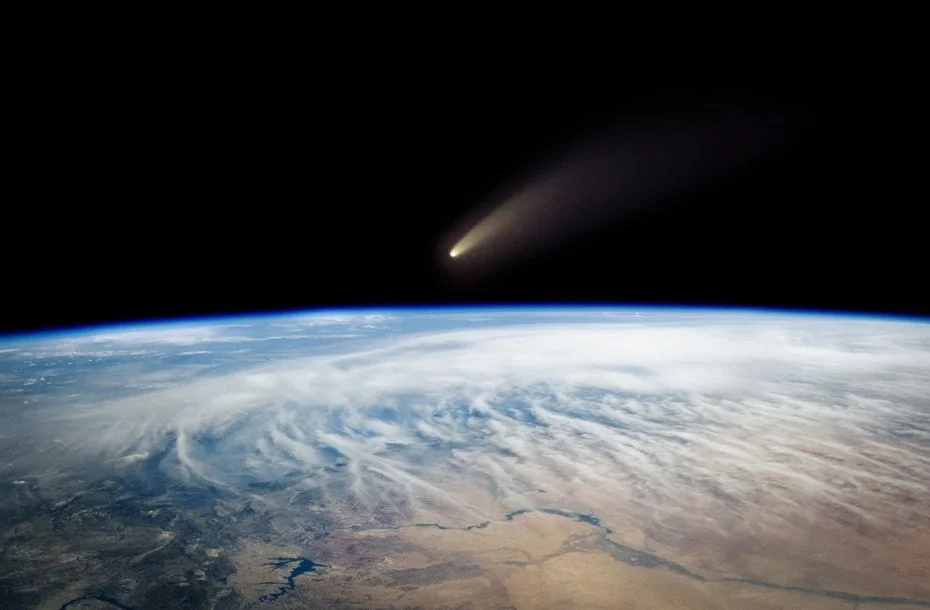
In an exciting development in meteorite tracking, a team of researchers from the Sandia National Laboratories has successfully traced the trajectory of a meteorite using sound waves and ground vibrations. This groundbreaking approach marks a significant advancement in the field, especially after a bright meteor streaked across the Alaskan sky in spring 2025, an event that typically would be captured by satellites and research cameras.
Despite the usual reliability of satellite data, this particular event eluded clear photographic documentation. In response, the research team turned their attention to the sound generated by the meteorite during its flight. They discovered that as the meteorite traveled at high speeds through the atmosphere, it produced a shock wave, similar to a sonic boom, which spread as infrasound over hundreds of kilometers.
A Student's Key Discovery
The phenomenon of meteorites entering the Earth's atmosphere is not uncommon. According to Carrie Nugent, a computer physicist and planetary scientist, the likelihood of a meteorite impact during a person’s lifetime is greater than being struck by lightning. While many meteorite entries go unnoticed, some leave behind spectacular fireballs, like the notable event in 2013 when a meteorite exploded over Chelyabinsk, Russia, capturing the attention of many through mobile and dashboard cameras.
Logan Scamfer, a former research associate at the University of Alaska, was the first to notice something unusual in the recorded data from the Alaskan meteor event. Instead of the typical seismic patterns associated with earthquakes, he identified a distinctive N-shaped wave. His suspicions were confirmed when he learned about the meteorite incident.
Collaborative Research Efforts
The following summer, Scamfer joined Elizabeth Silber's team at Sandia National Laboratories as part of an internship. Together, they aimed to reconstruct the fireball's history using only sound and vibration data. A network of 57 sensors in the region recorded the event, with some sensors located nearly 600 kilometers away. Utilizing this data, they were able to reconstruct the meteorite’s trajectory and estimate where it likely broke apart.
Their findings were shared with NASA colleagues, who employed weather radar to search for fragments of the meteorite. By cross-referencing the data with dashcam and surveillance footage from the public, the team concluded that the meteorite entered the atmosphere at a shallow angle of approximately 19 degrees and traveled at speeds reaching 90,000 kilometers per hour. This velocity would allow it to traverse the entire United States in about three minutes. The trajectory analysis suggested the meteorite originated from the asteroid belt, marking the first instance where researchers successfully guided radar to a debris field solely based on sound and ground vibrations. The researchers believe this method holds great potential for future investigations.