Why the CERN Research Center Will Be Shut Down for 3 Years
On June 29, CERN initiated the Long Shutdown 3 (LS3) to upgrade the LHC, the world's most powerful particle accelerator, for three years at a cost of around one billion euros.
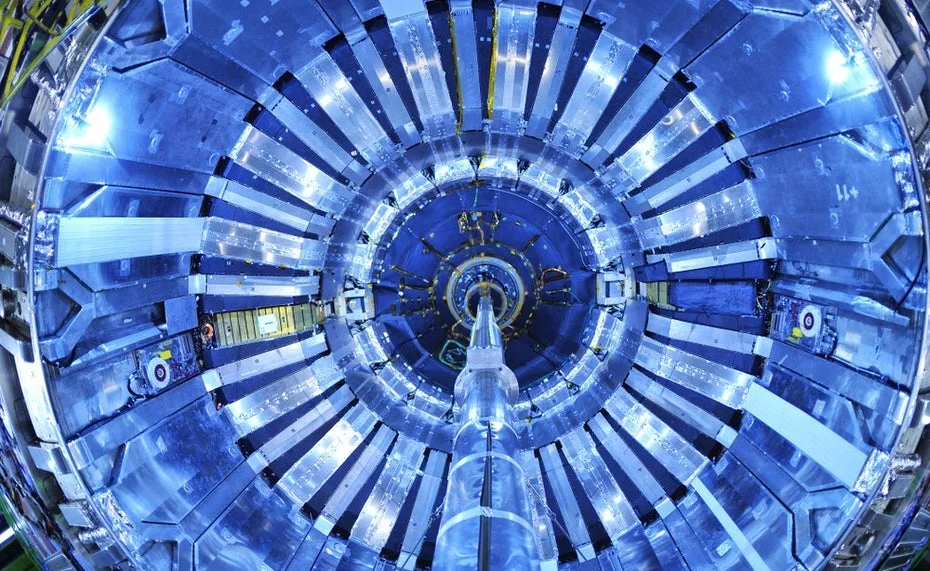
On June 29, the most powerful particle accelerator was shut down, initiating the "Long Shutdown 3" (LS3). This was announced by the CERN nuclear research center in a press release. With extensive renovations expected to last about three years and cost around one billion euros, the next phase in the exploration of fundamental laws of nature will be initiated. What exactly is happening? Why is this necessary? And what questions do researchers hope to answer with the upgraded LHC?
What is Happening at CERN and What is the LHC?
CERN is an international collaboration for the study of atomic nuclei. Officially, the research consortium founded in 1954 aimed to advance science. However, Nobel laureate Robert B. Laughlin suggests it also served "as a kind of insurance policy" to prevent any one nation from developing an even more powerful weapon than the atomic bomb based solely on atomic physics.
A key instrument for nuclear research at CERN is particle accelerators. The last and largest of these accelerators is the LHC – the Large Hadron Collider.
How Does the LHC at CERN Work?
The Large Hadron Collider (LHC) is housed in a 27-kilometer-long tunnel that runs 100 meters below the surface. In this tunnel, protons, which are positively charged elementary particles, are forced into two counter-rotating circular paths by superconducting magnets. At four different locations, these two channels intersect. Here, the streams of protons collide with an energy of 13 tera-electronvolts. In other words, in each of the two beams, the protons have as much energy as if they were accelerated by a voltage of 6,500 billion volts (the actual process is more complicated, but this is the total energy). This makes the LHC the strongest particle accelerator in the world.
When two protons collide, new, high-energy elementary particles are created that are unstable and decay extremely quickly. Researchers record the direction and energy of the decay products in their detectors and compare them with predictions from the Standard Model. New particles can be discovered by measuring appropriate decay patterns.
What Has Been Discovered at the LHC?
Since the first beam operation in September 2008, the LHC has pushed the boundaries of science and technology and has become one of the most ambitious scientific instruments ever built.
Perhaps the most important discovery: On July 4, 2012, CERN announced the discovery of the Higgs boson – also known as the "God particle." The detection of this particle closed a gap in the so-called Standard Model of particle physics.
What is the Standard Model of Particle Physics?
Most of us learned in school that atoms consist of protons and neutrons. However, this notion is scientifically outdated. The components of the atomic nucleus are made up of even smaller elementary constituents. Until the 1960s, nuclear physicists discovered new variants of these elementary particles with stronger accelerators and better detectors. Only the so-called Standard Model of particle physics, developed in the 60s and 70s, brought order to this confusing zoo of particles.
The Standard Model assumes that there are only three families of elementary particles: quarks, leptons, and exchange particles. Quarks, leptons, and exchange particles form the basic building blocks from which all other particles are composed. Different forces act on quarks and leptons. Quarks are influenced by the strong interaction, the weak interaction, and the electromagnetic interaction. Leptons are only affected by the so-called weak interaction.
According to the Standard Model, these interactions between elementary particles are mediated by the exchange of "virtual particles," known as bosons. Each specific force has its own specific exchange particles.
For example, a proton is made up of two up quarks and one down quark ((uud)), while a neutron consists of one up quark and two down quarks ((udd)). Gluons, the exchange particles of the strong interaction, ensure that they do not fly apart.
Why is the LHC Particle Accelerator at CERN Being Upgraded?
While the discovery of the Higgs boson was a significant success for researchers at CERN, it also raised new questions. The mass of the measured particle is smaller than predicted by theory. And this is just one of several unanswered questions in physics.
Regarding the Higgs boson, some researchers suspect that there is not just one type of Higgs boson but a total of five with different masses and decay mechanisms. However, these decays, which researchers want to observe, occur very rarely – the signals are thus obscured by numerous other signatures of "false" events. To separate the sought-after signal from the actual noise, researchers need to collect a lot of data that they can then analyze statistically. The upgrade of the particle accelerator aims to ensure that researchers can gather more data because more particle collisions will take place than before.
How Will the LHC Particle Accelerator at CERN Be Upgraded?
The beams in the particle accelerator are "bunched," meaning the particles travel in packets through the rings. Per bunch, or every 25 nanoseconds, about 60 interesting collisions occur on average – equivalent to 2.4 billion collisions per second. In the next upgrade phase, this number is set to increase to eight billion collisions per second. The technical term for this is increasing the "luminosity" of the LHC. The project is therefore known as HiLumi LHC.
To increase the number of collisions, CERN plans to focus the particle beams more tightly. To achieve this, new so-called quadrupole magnets will be installed, which will generate magnetic fields that are 50 percent stronger than those currently in the LHC. This will be made possible by a new superconducting connection made of niobium and tin.