
Japanese Spacecraft Hayabusa 2 Conducts Test Flight for Asteroid Defense
The Japanese spacecraft Hayabusa 2 has conducted a test flight near asteroid Torifune, gathering crucial data for planetary defense against potential asteroid threats.
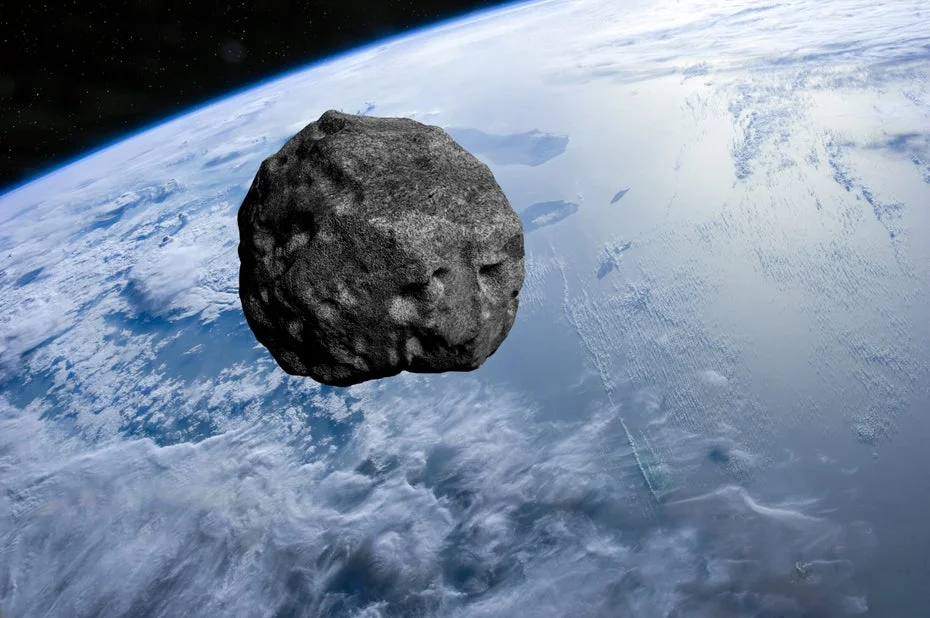
The cosmos harbors numerous large rock formations that pose potential threats to Earth. In a significant step towards planetary defense, the Japanese spacecraft Hayabusa 2 recently completed a test flight designed to gather critical data on such threats.
On Sunday evening, Hayabusa 2 successfully passed close to the near-Earth asteroid Torifune. According to a spokesperson from the Japan Aerospace Exploration Agency (JAXA), the mission aimed to fly within 800 meters of the asteroid, testing the precision of its trajectory control. The insights gained from this flight could be crucial in protecting Earth from potentially hazardous asteroids.
Asteroid impacts are more common than many realize. Just last week, asteroid 1997 NC1 came alarmingly close to Earth. Discovered in 1997 at the Haleakalā Observatory in Hawaii, this asteroid is estimated to measure between 750 and 1,650 meters in diameter. Since its discovery, it has been classified as potentially hazardous, a designation that applies to all asteroids larger than approximately 140 meters that come within 7.5 million kilometers of Earth. Fortunately, ongoing observations indicate that 1997 NC1 poses no immediate threat, as it is not expected to collide with our planet in the foreseeable future.

The entry of space rocks into Earth's atmosphere occurs more frequently than one might think, often going unnoticed unless the objects are sizable. A notable exception occurred in 2013, when a meteor exploded over Chelyabinsk, Russia, capturing widespread attention on video. Research led by computer physicist and planetary scientist Carrie Nugent suggests that the likelihood of an impact occurring in a person’s lifetime is greater than being struck by lightning. In late 2024, another asteroid, 2024 YR4, was initially deemed a potential threat, but astronomers have since reassured the public that this 60-meter rock is expected to miss Earth.
Unlike NASA's DART mission, which aims to divert an asteroid by collision, Hayabusa 2's objective is to enhance our understanding of how to defend against such celestial bodies. The spacecraft, roughly the size of a refrigerator, travels at speeds exceeding 18,000 kilometers per hour. During the recent test flight, it successfully approached within 800 meters of Torifune, gathering vital data on its surface, including geographical features, composition, and temperature. Patrick Michel from the European Space Agency (ESA) emphasized that this information is essential for developing future defense strategies. Understanding whether an asteroid behaves like a sponge or a solid material is critical should the need arise to alter its trajectory. If the success of Hayabusa 2 is confirmed, it would mark one of the closest flybys of a near-Earth asteroid to date.