Late Discovery: How the Tohoku Earthquake of 2011 Turned Japan Upside Down
A recent study reveals that the 2011 Tohoku earthquake shifted Japan's landmass significantly, uncovering new insights into seismic activity and the limitations of current early warning systems.
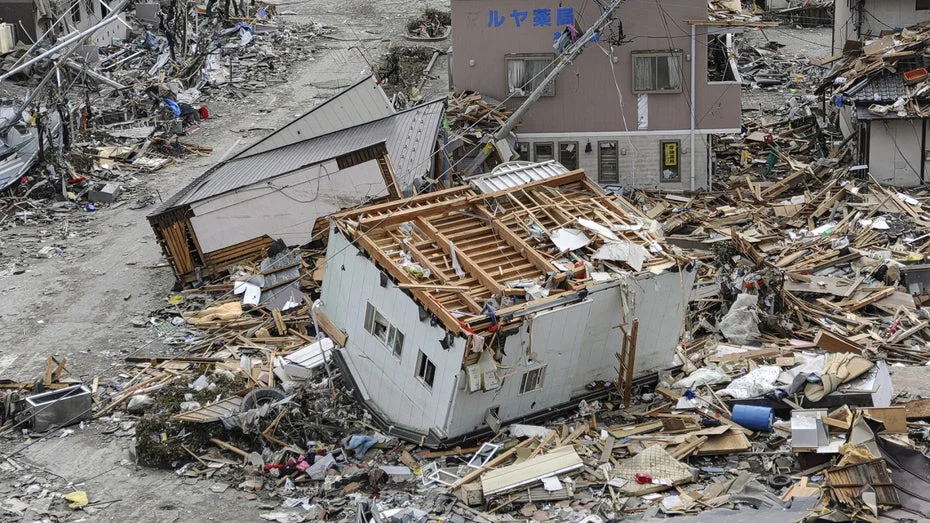
A recent study shows that the catastrophic Tohoku earthquake of magnitude 9.0 in 2011 shifted Japan's landmass by five to six millimeters to the east. This phenomenon has been demonstrated by geophysicist Sunyoung Park from the University of Chicago and her team, as reported in a study published in the scientific journal Science.
The cause of this subsequent and widespread movement was the so-called ScS waves, which traveled deep through the Earth's mantle and bounced off the liquid outer core before returning to the surface. These specific shear waves covered an enormous distance of about 5,800 kilometers and arrived back at the Earth's crust approximately 15 minutes after the initial main quake.
Hidden Danger in Historical Data
The fact that this process was only noticed 15 years later is largely due to the technical nature of established seismic measuring instruments. These systems are primarily designed for fast and high-frequency vibrations, which means they simply overlook slow shifts within the seismic noise.
The slip triggered by the reflected waves occurred extremely slowly over a period of 100 to 200 seconds. As a result, people could not feel the shift, and conventional sensors failed to register any significant anomalies amidst the multitude of aftershock signals.
Only the retrospective analysis of vast datasets from the Global Navigation Satellite System (GNSS) made the extensive displacement of the tectonic plates measurable. During the analysis, researchers noticed that the process extended over a length of nearly 3,000 kilometers, making it the largest recorded seismic event of its kind in terms of area.
To rule out that the measured deviations were merely processing errors in the satellite system, Park's team checked various sources of error. After eliminating all instrumental and statistical inaccuracies, the only plausible explanation left was the mechanical displacement of the entire Japanese landmass due to the impulse from deep within the Earth.
Billiard Ball Effect at the Core-Mantle Boundary
The outer core of our planet consists of extremely hot, liquid iron and nickel, making it physically impenetrable to these specific transverse earthquake waves. Instead of penetrating the core, the waves are abruptly reflected at the core-mantle boundary and behave similarly to a billiard ball bouncing hard off the edge of the table.
Normally, ScS waves lose a significant amount of energy during their long journey through the dense interior of the Earth, so they cannot cause damage upon their return to the surface. However, the Tohoku quake was so massive that the reflected waves still had an unprecedented amplitude of more than one centimeter upon arrival.
This remaining force was sufficient to trigger a phenomenon known as dynamic earthquake triggering. The returning waves hit faults that had already been weakened by the main quake, giving them the crucial impulse for further, albeit slow, rupture.
The researchers calculated that the energy released by this subsequent jolt alone corresponded to the destructive power of an independent earthquake of magnitude 7.5. This enormous value underscores how much tectonic stress can build up at plate boundaries before being finally released by a wave that traveled from afar.
The magnitude of this discovery only becomes tangible when one considers the immense destructive power of the original quake. According to the U.S. National Oceanic and Atmospheric Administration (NOAA), the initial tremor and the subsequent tsunami claimed over 18,000 lives and caused enormous economic damage, which is now expanded by a new physical dimension.
This delayed event dramatically illustrates that the tectonic dangers of a major quake are not necessarily quelled with the subsiding of the initial massive tremors. Study author Park, cited in Scientific American, points out that this dynamic presents a completely new risk, where plate boundaries can still be reactivated many minutes after the main quake.
The Limits of Modern Early Warning Systems
While the new findings expand our scientific understanding of geophysics, they also reveal a glaring conceptual gap in existing early warning systems. While the sensors are continuously improved, the retrospective triggering of plate shifts by core reflections clearly shows that complete predictability of seismic hazards is still not achievable.
Although the precise GNSS data help to better map the tectonic mechanisms retrospectively, this knowledge currently offers no operational advantage for acute disaster protection. Rather, the late discovery demonstrates that there are still immense blind spots in geological hazard mitigation that cannot be easily addressed technologically.