
NASA's Groundbreaking Lunar Fire Experiment Set for 2026
NASA is set to conduct a groundbreaking experiment by igniting a controlled fire on the Moon in 2026. This mission aims to understand how flames behave in low gravity, crucial for future space missions.
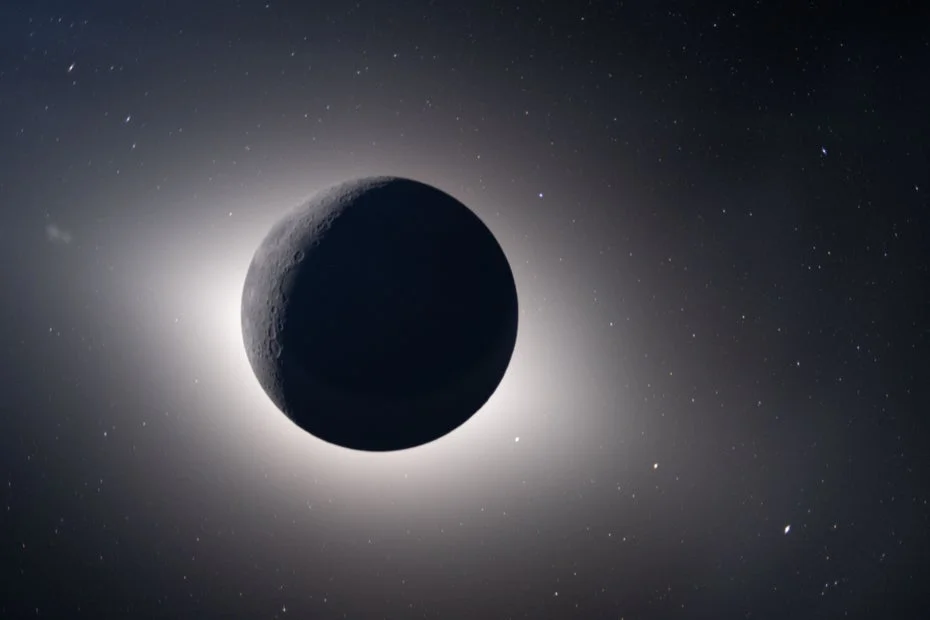
In a strikingly unconventional scientific endeavor, NASA is preparing to ignite a controlled fire on the Moon's surface by the end of 2026. This initiative, known as the FM2 mission, which stands for "Flammability of Materials on the Moon," aims to explore how flames behave in the Moon's unique low-gravity environment.
The primary goal of this experiment is to gather critical data that will enhance the safety of future crewed Artemis missions. As reported by The Independent, understanding flame behavior in conditions where the Moon's gravity is only one-sixth that of Earth's is essential for ensuring the safety of astronauts.
The Paradox of Fire in Lunar Conditions
On Earth, gravity plays a crucial role in shaping flames. Cooler, denser air sinks, creating the characteristic upward-pointing shape of flames. This upward flow continuously draws fresh oxygen to the base of the fire. However, if the airflow is too strong, it can extinguish the flame if the chemical reaction cannot keep pace.
In the Moon's significantly weaker gravitational field, this cooling chimney effect diminishes, leading to serious implications for the flammability of materials. According to a scientific paper from the Universities Space Research Association in Columbia, Maryland, materials that are considered completely non-flammable on Earth could pose serious fire hazards on the Moon.
Furthermore, flames in partial gravity will take on different shapes, becoming more rounded or even spherical due to the lack of strong upward thrust. Emily Johnson, the project manager for the FM2 experiment, noted in a NASA podcast that certain burning materials might release small droplets that could float as fireballs in microgravity, potentially igniting other objects in their vicinity.
The Automated Combustion Chamber
To investigate these theoretical risks, NASA will not create an open fire on the lunar surface. Instead, a robotic lander will transport a cylindrical, hermetically sealed combustion chamber made of solid metal to the Moon.
Inside this specially designed apparatus, four precisely defined test samples will be housed, including ordinary cotton, fine fiberglass, and solid acrylic rods. The chamber will also be equipped with high-resolution cameras, a sensitive oxygen sensor, and instruments for accurately measuring electromagnetic radiation, enabling precise documentation of flame propagation speed and temperature changes.
These detailed data are crucial because future habitats on the Moon or Mars are expected to operate under artificially reduced air pressure but with significantly higher oxygen concentrations of up to 34%. Such conditions could dramatically increase fire risks, indicating that existing Earth-based flammability tests are insufficient to ensure the safety of crews in extraterrestrial environments.
A Critical Look at Existing Testing Methods
While the data from this upcoming experiment is vital for constructing safe extraterrestrial stations, it also highlights a significant gap in previous spaceflight planning. For years, engineers have relied primarily on fire safety tests conducted under Earth's normal gravity, fully aware that these methods do not accurately reflect the physical realities of deep space.
If the FM2 experiment empirically demonstrates that materials previously deemed safe are unsuitable for upcoming Artemis missions, it could lead to extensive and costly redesigns. Therefore, the outcomes of this first-ever extraterrestrial fire experiment will be pivotal in determining the feasibility and timeline of establishing a sustained human presence on the Moon.