
Revolutionary Solar Technology: The End of Batteries in Sight?
Researchers have developed a solar cell that operates using indoor light, potentially eliminating batteries in millions of everyday devices and promoting sustainability.
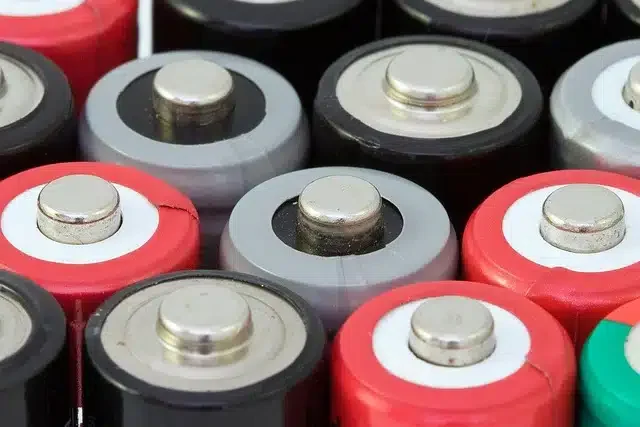
Researchers have developed a groundbreaking solar cell that operates independently of sunlight, utilizing indoor lighting instead. This innovation has the potential to eliminate batteries in millions of everyday devices, leading to cost savings and a significant boost in sustainability.
A Beacon of Hope for Small Device Power Supply
A team of esteemed researchers has created solar cells that can be charged by artificial light found indoors, reducing reliance on environmentally harmful disposable batteries. This technology opens new avenues for small electronic devices, enabling remote controls, wireless keyboards, and smart sensors to function without traditional batteries.
At the core of this advancement is a material that has generated excitement in the solar industry: perovskite. This material surpasses conventional silicon cells in efficiency, particularly under low-light conditions typical in offices, living spaces, and workshops. While silicon cells struggle in dim lighting, the new perovskite variants achieve six times greater performance, bringing us closer to a viable solution for indoor energy supply.
Overcoming Perovskite's Limitations
The remarkable properties of perovskite have captured the attention of researchers worldwide. However, concerns about its stability have hindered widespread application due to its crystal structure, which has defects known as traps that impede electrical flow and accelerate material degradation. A solar cell that loses performance after just a few weeks would be impractical for everyday use.
To address this issue, the team implemented targeted chemical modifications. By incorporating rubidium chloride, they were able to create a more uniform crystal structure, significantly reducing defects. The results are impressive: these cells convert approximately 38 percent of available indoor light into energy and retain over 90 percent of their original performance after three months. This marks a pivotal breakthrough, demonstrating that the technology can reliably operate over extended periods.
Cost-Effective and Versatile Applications
Recent years have seen innovative technologies drive sustainable changes. A prime example is artificial intelligence, which has evolved from gaming applications to becoming integral in various online platforms, including casinos that utilize AI for personalized offers and responsible gaming monitoring.
In contrast to traditional solar cells, which require complex and expensive manufacturing processes, perovskite cells can be produced at a much lower cost. Experts liken this process to newspaper printing, where thin layers are applied on a large scale, dramatically reducing production expenses. Mojtaba Abdi Jalebi, an energy materials specialist, has noted that perovskite cells are not only promising in research labs but also economically attractive.
Research institutions are already in discussions with industry partners to transition this technology into market-ready products. If successful, we could soon see devices that rely solely on ambient light for power, eliminating the need for batteries altogether.
Versatile Features with Significant Potential
The ecological benefits of this technology could be tremendous. Each year, billions of disposable batteries contribute to waste, harming the environment and depleting resources. A solution that addresses this need could play a crucial role in promoting sustainability.
Moreover, perovskite solar cells not only boast high efficiency but are also adaptable in their applications. Their thin and lightweight design allows for uses that rigid silicon cells cannot accommodate. Potential applications include flexible films on building facades, wearable solutions for clothing, and integrated energy sources in electronic devices.
Additionally, these cells can effectively harness available light through a process known as photon recycling, where emitted light particles are reabsorbed and converted back into electricity. When combined with silicon or other materials, tandem cells can be created to maximize overall light yield. With efficiencies exceeding 25 percent and records approaching 34 percent, perovskite-based systems are now clearly leading over traditional silicon cells. Some experts believe that we are on the brink of a fundamental shift in energy supply in the coming years.