The Role of Feces in the Cambrian Explosion: A New Perspective
New research suggests that feces played a crucial role in the Cambrian Explosion, complementing traditional theories about rising oxygen levels and genetic changes.
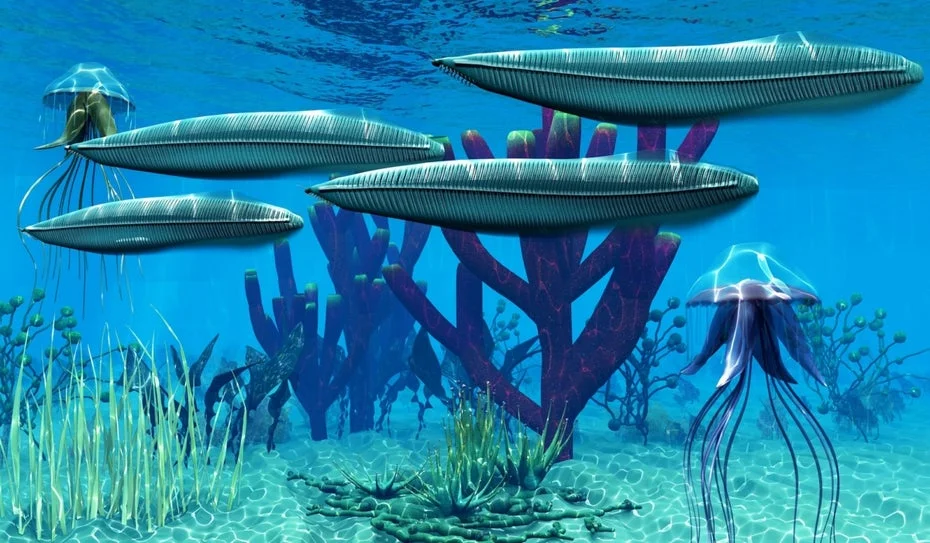
During the Cambrian Explosion, a relatively brief geological period, there was a remarkable increase in biodiversity. Recent research has proposed an unconventional contributor to this phenomenon: feces. Could there have been a "fecal revolution"?
The Cambrian Explosion refers to a short span of several dozen million years, beginning around 540 million years ago, during which life on Earth diversified and complexified at an unprecedented rate.
Feces as an Evolutionary Driver?
Traditionally, scientists have attributed the sudden emergence of more complex life forms to rising oxygen levels in the oceans and atmosphere, along with genetic changes. However, a collaborative research team from Germany and Australia has introduced a new explanation: feces.
In a study published in the journal Trends in Ecology & Evolution, the researchers revealed that the first organisms with intestines appeared at the start of the Cambrian period. Their feces, preserved as coprolites, played a significant role in evolution, according to a statement from the Flinders University in Australia.
The Importance of Feces in Ecosystems
Russell Bicknell, a paleontologist at Flinders University and co-author of the study, noted, "Besides increasing oxygen levels and other factors, the significance of feces in ancient ecosystems is often overlooked." The researchers observed a dramatic change in the fossil record during the Cambrian, with a notable increase in well-preserved fossils containing complex digestive systems.
Bicknell and his team consider the role of feces to be one of the most fundamental yet enigmatic questions in the evolution of animal life. Today, feces are a crucial component of the marine biological pump, which facilitates the circulation of organic carbon and nutrients in the ocean.
Ecological Feedback Loop from Feces
If biological processes over 500 million years ago were not fundamentally different from today, then an increase in biodiversity featuring more complex digestive systems would likely have triggered an ecological feedback loop. More feces would lead to more nutrients, resulting in larger populations that produce even more feces.
The researchers refer to this concept as a "fecal revolution," as reported by Gizmodo. They emphasize that their seemingly provocative hypothesis does not aim to replace existing theories but rather to complement them. Thus, the Cambrian Explosion was likely the result of a combination of various factors that enabled a remarkable rise in biodiversity.