
Chicxulub Impact: How the Dinosaur Killer Enabled New Life
The Chicxulub impact led to the formation of a long-lasting hydrothermal system that provided ideal conditions for microbial life, significantly altering our understanding of post-impact ecosystems.
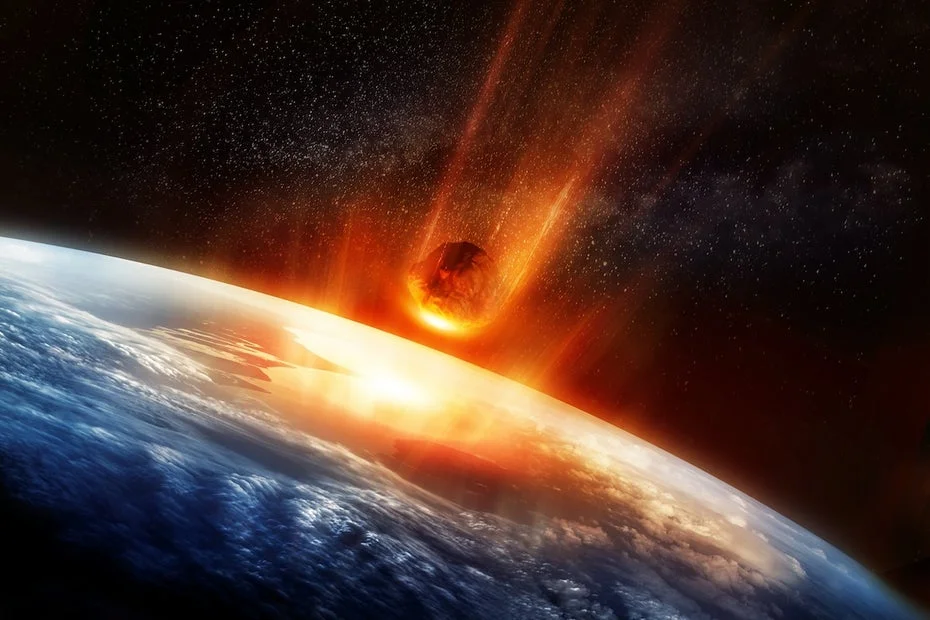
The impact of a celestial body 66 million years ago on what is now the Yucatán Peninsula in Mexico wiped out about 75 percent of life on Earth. At the same time, a gigantic hydrothermal system formed beneath the crater due to seawater seeping into the rock.
This network of hot water and porous rock provided ideal conditions for microbial life, as noted in a study published in the scientific journal Communications, Earth & Environment. Previous computer models estimated the lifespan of this system to be just under two million years, which has now been significantly revised upwards.
Long-lasting Habitat in the Deep Subsurface
A team of researchers from the University of Glasgow in Scotland and other institutions examined core samples from the inner ring of the crater. They found that the hydrothermal system remained active for at least eight million years, thus existing four times longer than previously assumed.
To methodically secure this enormous timespan, a simple look at the rock was not sufficient. Instead, the team combined elaborate isotopic measurements of the recovered samples with new physical computer simulations.
The key to determining the age lay in the so-called Argon-Argon dating of tiny feldspar crystals. These specific minerals did not form during the impact itself but grew later through the circulating hot water in the resulting rock fractures.
Potassium decays over time at a known rate into the noble gas argon, which remains trapped in the crystal lattice. By measuring the exact ratio of these isotopes, the scientists were able to precisely demonstrate that the crystal growth induced by hot water continued for up to eight million years after the impact.
To independently verify these laboratory values, the experts also fed the geology software Hydrotherm with the real porosity data from the core samples. These thermal simulations also clearly showed that it took eight million years for the water temperatures and flow in the crater to return to normal ambient levels.
Implications for the Search for Life
Although the long existence of this system sounds promising, the mere preservation of hydrothermal activity does not necessarily mean that complex life forms thrived there permanently. Nevertheless, such isolated and warm environments provide a potential refuge that can secure the survival of microorganisms after apocalyptic events.
"The porous, fractured rocks created by impacts create microenvironments where microorganisms can be protected from radiation and extreme temperatures," explains co-author Annemarie Pickersgill from the Scottish Universities Environmental Research Centre. These findings have direct relevance for space exploration, as Mars, in its early history, was also exposed to numerous large asteroid impacts.
The craters there could have formed long-lasting hydrothermal networks similar to Chicxulub, where microbial life could have survived long after the loss of surface water. Future missions to explore the red planet could therefore specifically target the remnants of such impact structures to search for fossil traces.