
The Versatile Uses of Black Soap: Tips and Dosages
Discover the versatile applications of black soap, a natural cleaner that can replace multiple chemical products. Learn dosages, steps, and tips for effective cleaning and care.
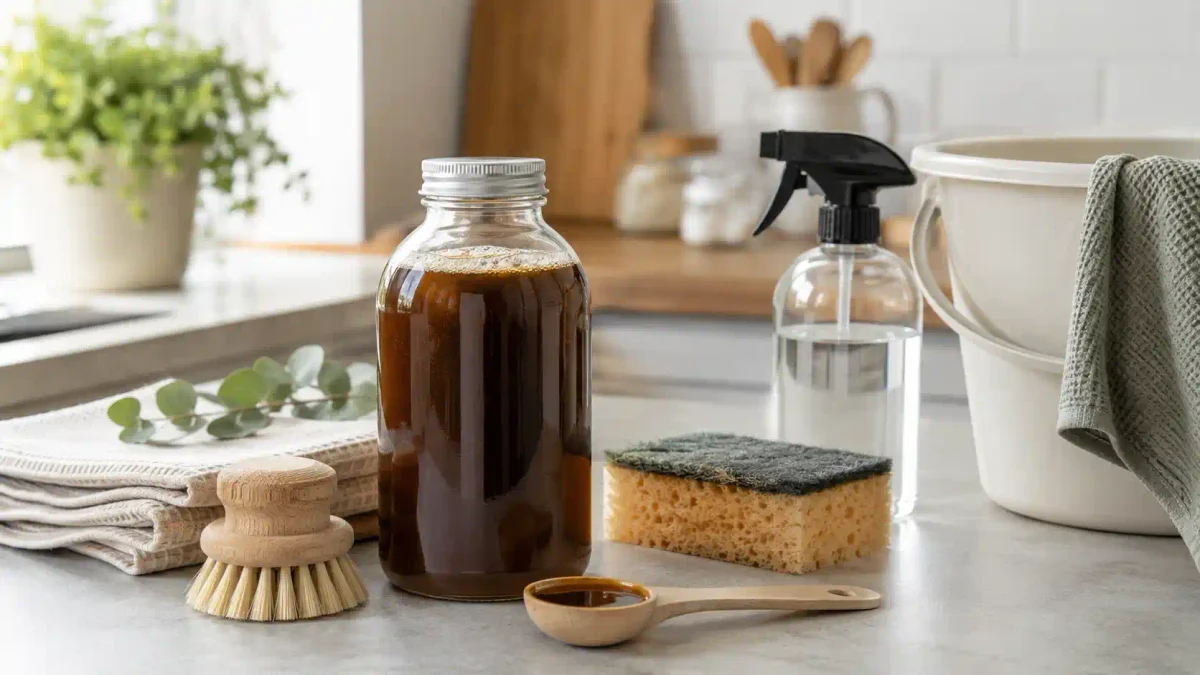
The essentials in three lines
Black soap is a concentrated plant-based cleaner made from olive oil and potash. It can replace several chemical household cleaners. Its three primary uses are cleaning floors (1 teaspoon in 5 liters of water), treating plants against aphids (5 tablespoons in 1 liter of water), and creating a body scrub reminiscent of a hammam experience.
In this guide, you will uncover the 12 best uses for black soap, complete with exact dosages, step-by-step instructions, and practical tips. Say goodbye to multiple cleaning products under your sink – one product is all you need.
What is Black Soap?
Composition and Origin
Black soap is one of the oldest household products still in use today. Its basic recipe has remained unchanged for centuries: vegetable oil (olive, linseed, or sunflower, depending on the version) + potassium hydroxide (potash). The chemical reaction between these two ingredients, known as saponification, results in a soft paste or a thick liquid, which is dark brown to black in color.
The most well-known version in France is made from olive oil, produced in southern soap factories like Marius Fabre (Salon-de-Provence) or Rampal Latour. The Moroccan variant, savon beldi, is also olive oil-based, sometimes enriched with black olive pulp, commonly found in hammams.
What sets it apart from regular soap is its content of potash instead of soda, giving it a soft or liquid texture and a high degreasing power.
Soft vs. Liquid Black Soap: What's the Difference?
Both forms contain the same basic ingredients, but they differ in concentration and texture.
- Soft black soap (in pot): This paste-like, highly concentrated version is ideal for stripping, body scrubs, and powerful occasional uses.
- Liquid black soap (in bottle): Already diluted, this form is more convenient for daily cleaning tasks. It’s what you use in mops or laundry.
For regular household cleaning, the liquid version is more practical, while the paste is better for scrubbing or stripping.
1. Clean Floors (Tiles, Terracotta, Slate)
Black soap is the winning combination for tile cleaning. It degreases, cleans deeply, and leaves a light protective film that makes terracotta shine.
Dosage: 1 teaspoon of liquid black soap in 5 liters of hot water.
Steps:
- Dissolve the soap in hot water while stirring.
- Mop the floor with a well-wrung mop.
- Do not rinse – the film left nourishes and protects the surfaces.
Tip: For old terracotta or slate, add a few drops of linseed oil to the solution to revive the colors.
2. Maintain Parquet Floors
While black soap works well on parquet, it requires more care than on tiles. Excess water on parquet can lead to swelling, detachment, and stains.
Dosage: 1 tablespoon of liquid black soap in 1 liter of water (maximum 5% concentration).
Steps:
- Wring out the mop thoroughly – it should be barely damp.
- Quickly mop in the direction of the floorboards.
- Dry immediately with a clean, dry cloth if necessary.
Tip: Never let water stagnate. On waxed parquet, test first in a discreet corner, as the soap may soften the wax.
3. Clean Windows
Just a few drops will do. Black soap degreases glass without leaving streaks, provided you wipe it properly.
Dosage: 3 to 4 drops of liquid black soap in a 500 ml spray bottle filled with water.
Steps:
- Spray onto the glass.
- Wipe with a clean microfiber cloth in circular motions.
- Finish with a dry cloth to avoid streaks.
Tip: Avoid cleaning windows in direct sunlight – the product dries too quickly and leaves marks.
4. Degrease the Oven and Grills
A dirty oven is the ultimate test for any cleaning product, and soft black soap performs well, even against baked-on grease.
Dosage: Pure soft black soap applied directly to a damp sponge.
Steps:
- Apply pure black soap to the cold walls and grills.
- Let it sit for at least 15 minutes (30 minutes for old deposits).
- Scrub with the sponge, then rinse thoroughly with clear water.
Tip: For heavily soiled grills, soak them in a tub of hot water with 3 tablespoons of black soap for 20 minutes before scrubbing.
5. Do Laundry
Black soap is effective for machine washing and is cost-efficient. It is suitable for everyday fabrics, but avoid using it on silk or fine wool.
Dosage: 3 tablespoons of liquid black soap in the main laundry compartment.
Steps:
- Pour the black soap directly into the laundry compartment (not into the drum).
- Start a normal cycle at 30 or 40 °C.
- For stubborn stains, apply a little pure black soap directly to the stain, let it sit for 15 minutes, then start the wash.
Tip: Black soap doesn’t foam much – this is normal, so don’t double the dose.
6. Clean Leather
Whether it’s a couch, bag, shoes, or jacket, black soap cleans leather gently without drying it out, as long as you don’t use too much.
Dosage: A pea-sized amount of liquid black soap on a damp cloth.
Steps:
- Slightly dampen the cloth.
- Apply the soap while gently rubbing in circular motions.
- Wipe with a clean, dry cloth, then let it air dry.
Tip: After cleaning, nourish the leather with a bit of linseed oil or beeswax to restore its shine.
7. Wash Dishes
For hand washing, black soap serves as a natural dishwashing liquid, effectively degreasing pots and pans.
Dosage: A few drops directly on the sponge or 1 tablespoon in a sink of hot water.
Steps:
- Fill the sink with hot water and add the soap.
- Wash the dishes as usual.
- Rinse with clear water.
Tip: For a homemade dishwashing liquid, mix 100 g of liquid black soap + 400 ml of very hot water + 1 tablespoon of baking soda. Shake well and pour into a bottle.
8. Treat Plants Against Insects
Black soap is the most commonly used natural insecticide in gardens. It works by direct contact, blocking the respiratory pores of aphids, scale insects, and spider mites, eliminating them within 24 hours.
Dosage: 5 tablespoons of liquid black soap in 1 liter of warm water.
Steps:
- Mix well in a spray bottle.
- Spray in the evening or early morning, never in direct sunlight (risk of leaf burns).
- Focus on the undersides of leaves where insects hide.
Tip: Test first on a single leaf and wait 24 hours before treating the entire plant. Avoid using on fuzzy-leaved plants (like saintpaulias or certain sages) as they are more sensitive.
9. Strip Walls and Painted Surfaces
For dirty walls, fingerprints, and greasy stains on washable paint, black soap does the job without damaging the surface.
Dosage: 2 tablespoons of liquid black soap in 1 liter of hot water.
Steps:
- Apply the solution with a sponge or cloth.
- Gently scrub in circular motions.
- Rinse with a clean, damp cloth and dry immediately.
Tip: On matte paint, test in a corner first – matte paints are more fragile than satin or glossy finishes.
10. Body Scrub (Hammam Use)
This is the quintessential beauty use of black soap. The hammam ritual using beldi soap and a kessa glove removes dead skin cells, smooths the skin's texture, and leaves a feeling of renewal.
Dosage: Pure soft black soap applied directly to damp skin.
Steps:
- Soak your skin in a shower or hot bath for 5 to 10 minutes (the heat opens the pores).
- Apply the soft black soap all over the body with your hands.
- Let it sit for 5 minutes, then scrub in circular motions with a kessa glove – dead skin rolls will appear, which is normal.
Tip: Do not perform this scrub more than 1 to 2 times a week to avoid damaging the skin barrier. Hydrate well afterward with a vegetable oil.
11. Natural Shampoo
Black soap can replace shampoo, especially for oily scalps. It cleans deeply but may dry out the lengths on dry hair.
Dosage: 1 teaspoon of liquid black soap diluted in a bit of warm water.
Steps:
- Dilute the soap before application – it’s too concentrated when used pure.
- Massage the scalp for 2 to 3 minutes.
- Rinse thoroughly, then apply a conditioner or diluted white vinegar rinse to close the cuticles.
Tip: Start by using it once a week. Hair needs 2 to 3 weeks to adjust to a natural shampoo.
12. Wash Pets
Black soap is gentle, biodegradable, and free from artificial fragrances, making it suitable for washing short-haired dogs and cats, while also repelling certain parasites.
Dosage: 1 tablespoon of liquid black soap in 1 liter of warm water.
Steps:
- Wet the animal thoroughly.
- Apply the solution with your hands, massaging into the coat.
- Rinse very thoroughly – soap residues can irritate the skin.
Tip: Avoid contact with eyes and mucous membranes. For cats, consult a veterinarian first, as their skin is particularly sensitive.
Summary Table of Dosages
| Use | Form | Dosage | Rinsing | |-------------------------|---------|-----------------------------------|-----------| | Flooring (tiles, etc.) | Liquid | 1 teaspoon / 5 L water | No | | Parquet | Liquid | 1 tablespoon / 1 L water | No (wrung mop) | | Windows | Liquid | 3-4 drops / 500 ml water | No (microfiber) | | Oven & Grills | Soft (pure) | Pure on damp sponge | Yes | | Laundry | Liquid | 3 tablespoons / laundry compartment| – | | Leather | Liquid | Pea-sized on damp cloth | Yes (dry cloth) | | Dishes | Liquid | Few drops / sponge | Yes | | Plants (insecticide) | Liquid | 5 tablespoons / 1 L warm water | No | | Painted Walls | Liquid | 2 tablespoons / 1 L water | Yes | | Body Scrub | Soft (pure) | Pure on damp skin | Yes | | Shampoo | Liquid | 1 teaspoon diluted in water | Yes | | Pets | Liquid | 1 tablespoon / 1 L warm water | Yes (abundant) |
Precautions: Is Black Soap Dangerous?
No, black soap is not chemically dangerous. It is a natural, biodegradable product without preservatives or colorants in its pure form. However, it can be problematic on certain surfaces and in specific situations.
The main danger of black soap is improper dosage: too concentrated, it can leave a greasy film that is difficult to remove or damage sensitive surfaces.
What Not to Do
- Do not mix with white vinegar: the two chemically cancel each other out (acid + base = neutralization). Neither will be effective.
- Do not use pure on plants: always dilute to avoid leaf burns.
- Do not let water stagnate on parquet: it will cause the wood to swell.
- Do not apply in direct sunlight (windows, plants): the product dries too quickly, leaving marks or burning.
- Do not ingest: keep black soap out of reach of young children.
Surfaces to Avoid
Box – Surfaces Incompatible with Black Soap
- Marble and limestone: black soap can leave a greasy film.
- Unsealed wood: it may stain or warp.
- Certain synthetic materials: check compatibility before use.