
Understanding the Hopping Gait on the Moon: A Neurological Adaptation
A new study suggests that the hopping gait on the Moon is a neurological adaptation, ensuring stability in low gravity. This research raises medical concerns for future long-term space missions.
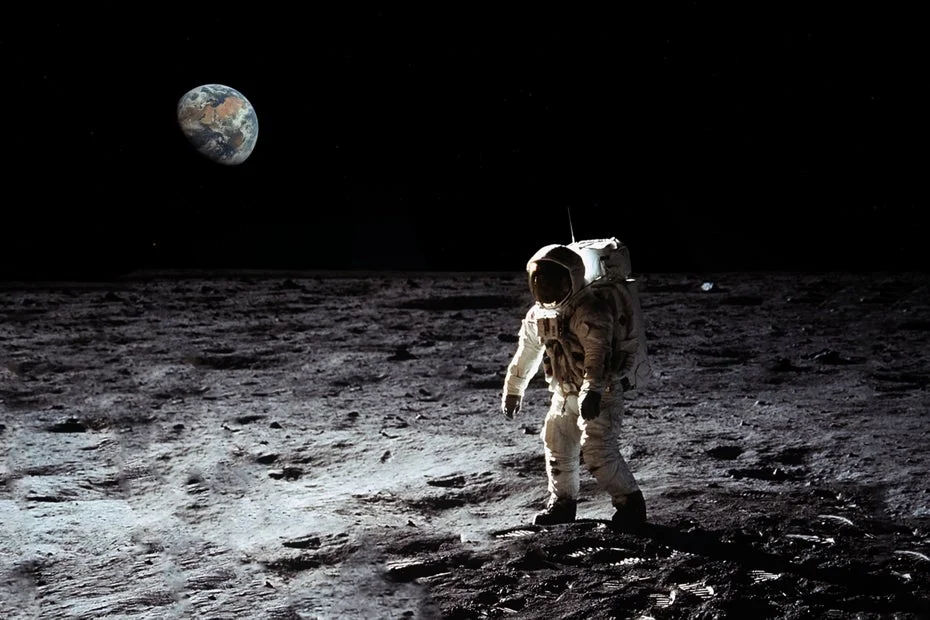
Recent research published as a preprint on Biorxiv suggests that the hopping gait exhibited by astronauts on the Moon is not a conscious choice but rather a fundamental neurological adaptation. This biological reflex appears to ensure stability in a low-gravity environment. The findings from this study not only shed light on the basic mechanics of human motor function but also raise medical concerns for future long-duration space missions where individuals will need to live under such conditions for extended periods.
Bungee Mice at the Max Delbrück Center
A research team led by scientist Alessandro Santuz at the Max Delbrück Center for Molecular Medicine in Berlin has replicated this phenomenon in a laboratory setting. Collaborating with colleagues from a university in Milan, they had human participants run on a treadmill under simulated lunar gravity. The results indicated that the hopping gait is essentially a temporal reorganization of muscle activity typically used in conventional running.
To further investigate the biological foundations, the researchers extended their experiment to mice, which were guided on a treadmill using specialized bungee cords. Under conditions of reduced gravity, these rodents instinctively switched to a hopping, asymmetrical gait.
Following this, the team employed a toxin to selectively deactivate the proprioceptors in the mice. These sensory cells in the muscles are responsible for subconsciously relaying the body's position and movement in space to the brain. Once this proprioception was disabled, the mice could still run normally, but the asymmetrical hopping under simulated lunar conditions completely ceased.
Stability in Weightlessness
This experiment convincingly demonstrates that the transition to the hopping gait is not a deliberate action; rather, it is controlled by continuous sensory feedback from the muscles. The low gravity on the Moon transforms running, which is highly energy-efficient on Earth, into a significant challenge for maintaining bodily stability.
The hopping gait combines a long flight phase to cover distance quickly with a brief moment when both feet touch the ground simultaneously. According to the study’s authors, this dual-foot contact is crucial for providing the necessary stability on the Moon's sandy and uneven surface.
Apollo 17 commander Eugene Cernan noted upon his return in the 1970s that he could cover distances of 2.4 to 3 meters with each jump. "That was my way of moving across the surface without expending much energy," he explained at the time. Edgar Mitchell, who served as the lunar module pilot during the Apollo 14 mission, also found this gait particularly stable, as highlighted in the accompanying coverage by the journal Science. Historical accounts thus validate the mechanical advantages of this gait on the Moon, although this unconscious adaptation comes with its own set of challenges.
Medical Challenges for the Artemis Mission
The Artemis program aims to establish a sustained human presence on the Moon, as planned by NASA. Unlike the Apollo astronauts, who spent only a few days on the lunar surface, future crews are expected to live and work there for several months at a time.
The constant hopping gait could lead to serious medical complications in the musculoskeletal system during such extended stays. Kinesiologists warn that the asymmetrical hopping often places a disproportionate load on one side of the body, leading to uneven muscle wear.
This chronic overuse may significantly increase the risk of orthopedic issues such as plantar fasciitis, a painful inflammation of the tissue on the sole of the foot. Furthermore, the one-sided hopping may exacerbate the inevitable bone loss caused by low gravity.
The insights from Berlin and Milan clearly illustrate that while human physiology can instinctively adapt to extreme environments, these adaptations may carry long-term medical consequences. Space medicine will need to devise targeted strategies to mitigate the strong unilateral stresses on crew members during future lunar missions.