Understanding the Nuances of Akt, Teilakt, Boudoir, and Lingerie Photography
Explore the distinctions between Akt, Teilakt, Boudoir, and Lingerie photography to better understand what to expect from your sensual shoot.
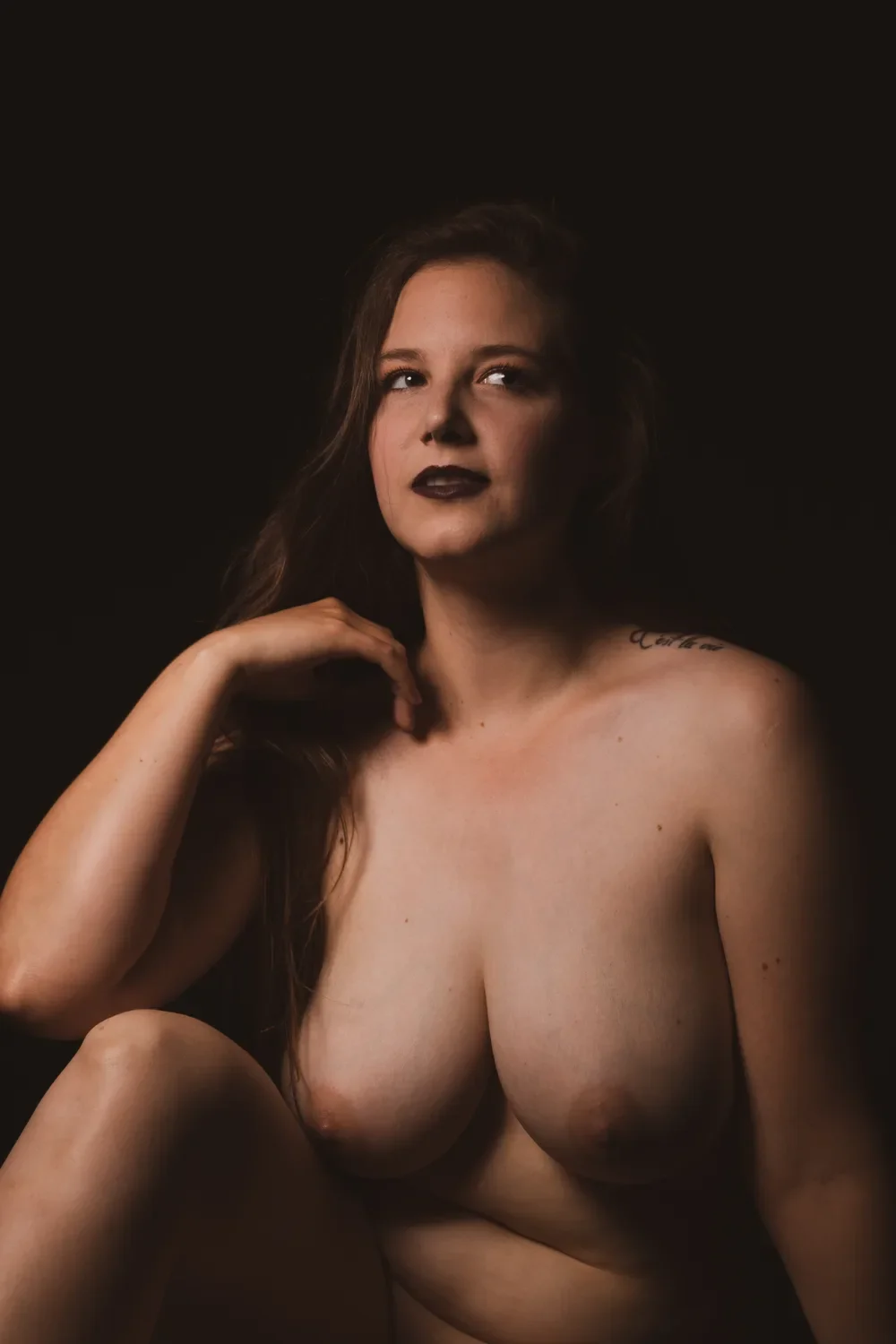
Note: The featured image is a symbol image created with AI.
If you're considering a sensual photoshoot, you will likely encounter four key terms: Akt, Teilakt, Boudoir, and Lingerie. Unfortunately, many websites interchange these terms, leading to significant confusion. A woman who requests a “Boudoir” shoot may actually be looking for Lingerie, while someone asking for “Akt” might be interested in Teilakt. Understanding the distinctions between these terms is crucial to ensure you book the right type of shoot.
In this article, I will clarify these four concepts without embellishment, providing examples from my work in Olching, Munich, and Augsburg. If you’re still unsure about what you want after reading, that’s fine—we can sort it out in a pre-shoot consultation. At least you’ll have the vocabulary to discuss your preferences.
Quick Definitions
Akt refers to a full or largely undraped body, focusing on aesthetic appeal. The emphasis is on line, light, and form, without any clothing or fashion elements.
Teilakt intentionally reveals only parts of the body. This could be a shoulder, back, or a hint of the breast through fabric or light, emphasizing suggestion over exposure.
Boudoir is intimate and atmospheric. It typically involves Lingerie or light clothing, set in a bedroom or similar environment, with a soft photographic style. The body may be shown, but it is not a requirement.
Lingerie is fashion-oriented, where the lingerie itself is the main focus, and the body acts as a complement. Poses tend to be more confident, and the look can be more staged.
With these definitions in mind, let's delve into the practical differences.
Akt — The Body as an Aesthetic Subject
Akt photography is the oldest of the four genres, with a tradition spanning over 150 years and rooted in a painting legacy that dates back more than 2000 years. Today’s photography is a continuation of humanity’s long-standing fascination with the human form.
In Akt, you present yourself fully or mostly undraped. However, the focus is not merely on nudity; it’s about how light, shadow, and composition interact with your body. Classic Akt photography employs lines (such as hips, shoulders, and neck) and negative spaces (the areas between body parts) while utilizing light to sculpt rather than illuminate.
What Akt is not: it is not erotic staging with direct eye contact with the viewer, pin-up poses, or glamour shots with feathers. While Akt can be sensual, it is primarily for the individual being photographed, serving as a gift to oneself rather than a performance for others. This fundamental shift alters the visual language entirely.
Common styles I often work with include classic black-and-white Akt, fine-art Akt, and sensual boudoir Akt (as a transition). More details can be found in the Pillar Guide to Akt Photography.
Teilakt — The Honest Sweet Spot
The reality is that most clients who inquire about “Akt” end up choosing Teilakt. This isn’t due to a lack of confidence; rather, Teilakt feels more honest for them. They desire images that are bold yet retain an element of mystery.
Teilakt involves showcasing a shoulder in light, a back turned to the window, or a breast hinted at through fabric or shadows. The visual language remains as demanding as classic Akt—sometimes even more so, as it requires storytelling with less.
For instance, a client from Fürstenfeldbruck, in her 40s, initially wanted a “classic Akt, fine-art style.” During our pre-shoot conversation, she realized that she preferred Teilakt. We ended up creating a series featuring her back against the light, a shoulder illuminated by the window, and her hands on her chest. Those images now hang in her bedroom, unseen by anyone, not even her husband—and that was precisely what she wanted.
Teilakt is not “less” than Akt; it is simply different. It leans more towards suggestion and subtlety.
Boudoir — Intimate and Atmospheric
Boudoir photography has seen significant growth over the past decade, yet it is often misunderstood. Some envision it as classic 1950s pin-up styles with corsets and garters, while others think of harshly lit lingerie shots. Both interpretations miss the essence of modern Boudoir.
Boudoir photography is fundamentally intimate. You’re not positioned in a studio setting; instead, you’re in an environment that resembles a bedroom or is one. You may wear Lingerie, an open shirt, a blanket, or very little at all—the choice is yours. The lighting is soft, and the imagery is personal. It’s neither fashion editorial nor Akt; it occupies a space in between.
What sets Boudoir apart is its emphasis on atmosphere. A woman posing in a studio with a corset and high heels is not embodying Boudoir. In contrast, a woman sitting on the edge of a bed in a bathrobe, gazing out the window, does. The key difference lies in the attitude—Boudoir is about living a scene rather than performing it.
Common occasions for Boudoir shoots include gifts for partners before weddings (see Bridal Boudoir), post-pregnancy sessions, milestone birthdays, or as a personal closure after a breakup. More details can be found in the article on how Boudoir shoots are conducted.
Lingerie — Fashion with a Woman Inside
Lingerie photography is the fashion-focused variant, where the lingerie itself is the primary subject. In this genre, the set is tailored to highlight the lingerie, and poses are more staged. The lighting is often clearer, resembling editorial spreads in magazines.
Lingerie is more assertive than Boudoir. Direct eye contact with the camera is common, and poses can be more powerful. The goal is not to create an intimate scene but to showcase both the lingerie and the woman wearing it.
Practically speaking, outfit selection is more critical in Lingerie than in the other three genres. A well-fitting set will shine, while a poorly fitting one will detract from the image. A €30 set from a discount store can look stunning if it fits well, while a €200 set that pinches will appear cheap in photos.
If you’re interested in a Lingerie shoot, it’s advisable to check your outfits beforehand. More insights can be found in the section on Lingerie and Underwear in Photoshoots.
The Fluid Transitions — Reality in Practice
While I’ve outlined these four genres distinctly, they often blend in practice. A typical three-hour shoot might touch on three of the four genres. We might start with Boudoir (open shirt, bed, morning light), transition to Lingerie (a clearer set, more confident poses), and conclude with some Teilakt shots (fabric falling, shoulder in light).
This isn’t just “everything in one package”; it’s a deliberate narrative. You ease into the shoot, build trust, and gradually reveal more of yourself. Those who jump straight into Akt often find that the results are not as satisfying.
From my experience, roughly 60% of women ultimately prefer a Boudoir/Teilakt mix, 20% opt for pure Boudoir with some Lingerie, 10% choose classic Akt or fine-art Akt, and another 10% go for pure Lingerie editorial images. These observations stem from around 200 shoots and are not set in stone.
The Key Question to Ask Yourself
Instead of asking, “Which genre do I want?” consider, “What do I want the image to evoke in me later?” This shift in perspective leads to clearer answers.
If you seek images that remind you of your own form (rather than a staged representation), lean towards Akt or Teilakt.
If you desire images that convey a calm, personal atmosphere—like a captured moment rather than a pose—opt for Boudoir.
If your goal is to highlight a particular outfit (your favorite lingerie or a special set), then Lingerie is the way to go.
If you’re uncertain, consider a shoot with mixed elements. We can explore the genres during the session, allowing you to discover what resonates with you, resulting in images from two or three styles.
What to Communicate When Booking
If you’re unsure, it’s best to avoid using specific terms. Saying, “I want Akt” or “I want Boudoir” is acceptable, but describing the image you envision is more effective. For instance, “Reduced black-and-white shots by the window, more body-centric, not overly staged” conveys more than simply saying “Akt shoot” and will lead to better results.
If you have reference images (from Pinterest, books, or magazines), feel free to share them. Three to five examples are sufficient—more can cause confusion. From three strong references, I can derive a visual language that suits you. Too many can complicate matters.
Also, you can mention multiple genres in your inquiry. A request for “Boudoir with a few Teilakt shots at the end” is honest and clear, reflecting a common scenario rather than a strict one.
Where I Conduct These Shoots
I operate from my studio in Olching for classic Akt, fine art, and Lingerie. Boudoir sessions with a personal touch can take place at your home (see Home Shooting for Women). Outdoor sessions along the Amper near Geiselbullach are perfect for softer Teilakt or Boudoir during the summer months. In the Augsburg area, I frequently utilize locations along the Lech and Wertach rivers—outdoor sessions there are as relaxed as those in Olching.
The choice of location for each genre is flexible; we’ll decide based on our pre-shoot discussion. More information can be found in the sections on Studio or Outdoor Shooting.
When You’re Ready
You don’t need to decide on a genre before reaching out. What’s essential is to have a sense of what you want the images to evoke later—whether it’s a reminder of form, an intimate atmosphere, or a confident fashion look. This question can be clarified in a 20-minute pre-shoot consultation.
For a deeper dive, the Pillar Guide to Akt Photography for Women offers an extensive introduction, covering styles, processes, pricing, and discretion in detail. For Boudoir specifics, refer to how Boudoir shoots are conducted, and for Lingerie, check out the section on Lingerie and Underwear in Photoshoots.