
Billion-Dollar Project on the Brink: NASA Delays Next Starliner Flight
A prestigious space project faces an uncertain future. Following a dramatic incident in orbit, the responsible parties are now taking drastic measures that could have far-reaching consequences for the entire industry.
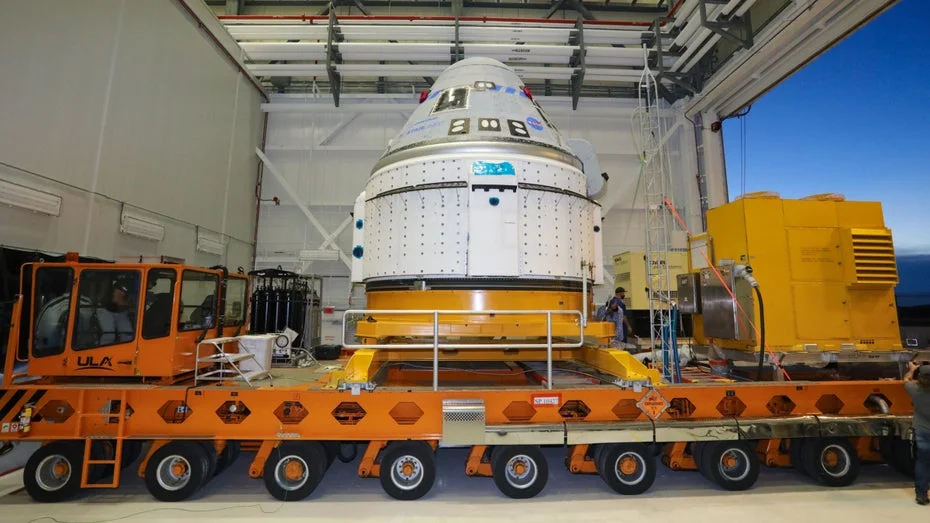
According to the US space portal Spaceflight Now, the US space agency NASA has officially classified the crewed test flight of the Boeing Starliner capsule scheduled for 2024 as a Category A incident. The next planned mission, named Starliner-1, has been postponed indefinitely and will also be conducted entirely uncrewed.
The classification as a serious incident implies, according to internal guidelines, a material damage of at least two million US dollars. The responsible administrator Jared Isaacman made it clear in a statement that no further astronauts will fly with the spacecraft until all issues are unequivocally resolved.
Cultural Deficiencies and Technical Errors
The decision stems from a comprehensive investigation report that identifies deep-rooted deficiencies in the corporate culture at the US aerospace company Boeing. According to the report, inadequate systems engineering and insufficient oversight of subcontractors by the involved project managers led to widespread problems.
The report also criticizes the space agency itself for a too passive management approach in the past. NASA officials often prioritized the economic success of the provider over the necessary technical rigor, which is said to have obscured significant risks in the development process.
During the flight in 2024, five control thrusters of the Starliner capsule failed, forcing astronaut Butch Wilmore to manually take control during the approach to the space station. Additionally, leaks occurred in seven out of eight helium distributors, which ultimately forced Wilmore and astronaut Suni Williams to return with a competitor's capsule.
Ongoing Complex Repairs
Kent Rominger, a member of NASA's safety advisory board, stated at a recent meeting that integrated teams from both organizations are continuing to work on the issues. "The launch target for the uncrewed Starliner-1 mission is currently under review, as work on the final issues of the propulsion system is still pending," Rominger is quoted by Spaceflight Now.
According to Rominger, a specific unresolved issue is the overheating in the so-called doghouse structures that house the engines of the service module. Meanwhile, engineers have managed to close most of the flight observations derived from the test flight, but the final qualification of the propulsion system is still outstanding.
In addition to the purely technical challenges, the responsible parties are increasingly focusing on rebuilding the internal trust that has been severely damaged by the incidents. Boeing's mission leaders are now working much more directly with NASA managers to noticeably shorten communication channels.
During a recent review at the Kennedy Space Center, Boeing's safety chief also sought direct dialogue with the agency's astronauts. This proactive approach to improving the safety culture was explicitly praised by the astronauts.
SpaceX Takes Over Additional Missions
The ongoing technical difficulties have direct implications for the awarding of future transport flights to the International Space Station. NASA has reduced the guaranteed flights for Boeing from six to four and has instead contracted the aerospace company SpaceX from California for six additional missions.
This step was deemed necessary, according to official documents, to ensure the safe operation of the space station through continuous crew rotations. SpaceX must therefore advance a planned mission to September to timely close the acute gaps in the agency's flight schedule.
Aging Space Station Increases Time Pressure
The ongoing delays pose a significant economic risk for the entire Starliner program, into which more than two billion dollars have already been invested. The time window for the regular use of the capsule is rapidly closing, as the International Space Station is expected to be decommissioned by 2030.
NASA's safety advisory board pointed out the shrinking safety reserves in ongoing operations, which are exacerbated by increasing leaks in the Russian segment of the station. Whether the spacecraft can justify its development costs by the end of the station's lifespan remains questionable after recent analyses.
Susan Helms, chair of the safety board, urgently warned during the meeting against emerging political discussions about potential budget cuts for the station. Such temptations must be ignored in light of the complex threat mitigation, as financial margins have already reached an alarming level.
Operational risks, according to Helms, include not only structural problems with the modules but also the over forty-year-old equipment of the astronauts. While there is a robust program for extending the lifespan of the spacesuits, upcoming extravehicular activities in space will become increasingly challenging.
Despite these massive setbacks, both contracting parties continue to emphasize their joint commitment to the safe commissioning of the Starliner. However, the significant shift of missions to the competitor clearly shows that the space agency does not blindly trust the assurances and is securing parallel alternatives.