
Ditch the Gardenias: Discover the Resilient and Fragrant Mock Orange Shrub
Tired of struggling with gardenias? Discover the mock orange, a resilient and fragrant shrub that offers the same beauty without the hassle.
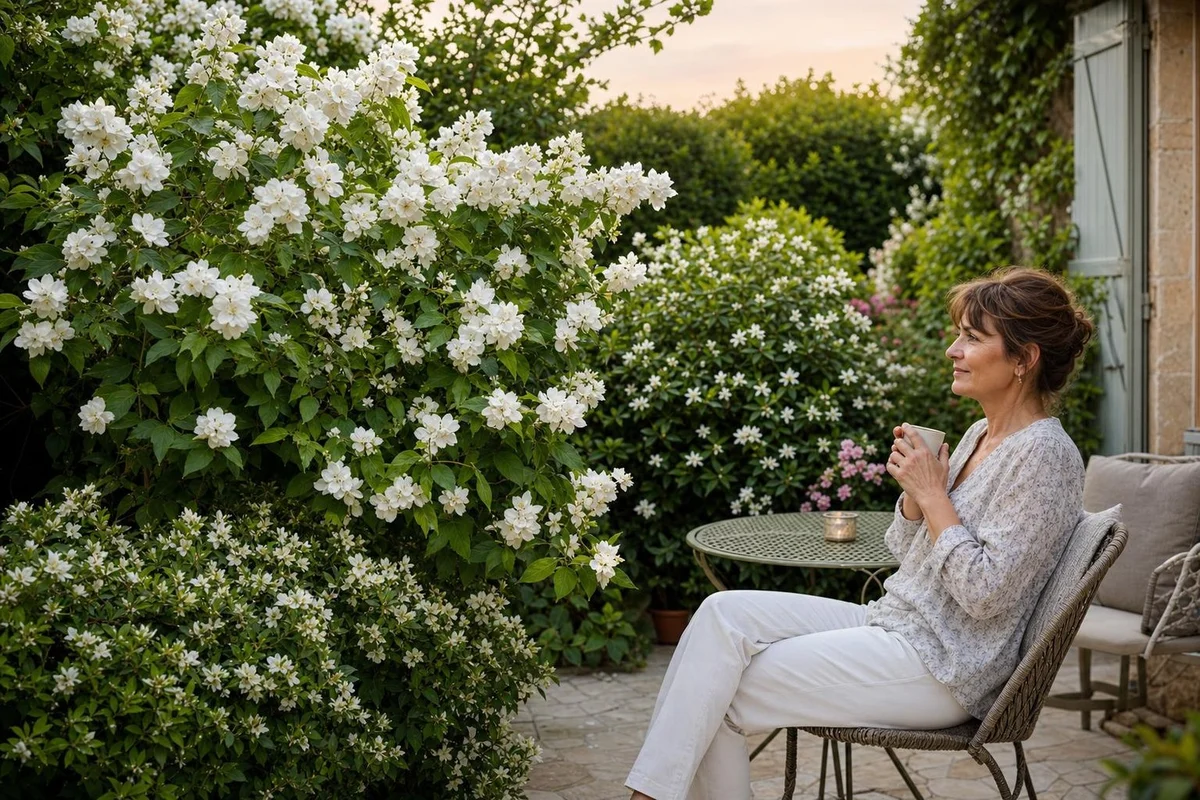
Gardeners often face disappointment with gardenias, dealing with falling buds and yellowing leaves. However, a more robust and fragrant shrub offers the same appeal without the stress.
Have you ever watched a gardenia burst with buds only to shed them before blooming? Many gardeners have relegated the Cape jasmine to the list of letdowns. Yet, the desire for a fragrant, low-maintenance shrub adorned with white flowers near the patio remains strong.
Enter the mock orange, or Philadelphus. This shrub not only produces a cloud of fragrant white blooms but also boasts a resilience that gardenias often lack. In the United States, experts note a growing trend among gardening enthusiasts who are swapping their finicky gardenias for the more dependable mock orange, even if it means making a few compromises.
Gardenias: The Fragrant Dream That Becomes a Headache
The classic gardenia (Gardenia jasminoides) is a dream for many: it features glossy dark green foliage and thick, cream-white flowers from July to September, exuding a delightful fruity and vanilla scent. While it can tolerate temperatures as low as -10 °C in well-drained soil and mild climates, this is often more theoretical than practical. Gardenias demand fertile, loose soil with a neutral to acidic pH, partial shade protected from wind, regular watering, and fertilization, all while being vulnerable to pests like aphids and scale.
Recent hybrids aim to mitigate these challenges. The Gardenia hybrid ‘Leesix’, marketed as ‘Fool Proof’, remains compact (around 90 cm wide and 90 to 120 cm high) and produces double white flowers from spring to autumn, demonstrating good drought tolerance once established. Another variety, ‘Celestial Star’, focuses on improved frost resistance and offers over two months of highly fragrant blooms. However, these options still cater to mild climates (USDA zones 7 to 10) and acidic soil, making them more forgiving but not entirely hassle-free.
Mock Orange: The Fragrant Shrub Without the Fuss
The mock orange presents a different aesthetic while meeting the essential criteria for any garden: abundant white flowers in early summer with a strong scent reminiscent of orange blossoms. Designer Rebecka Dykstra aptly captures the desired effect: “When we think of mock orange, we think of its fragrance.” Positioned near a walkway, window, or patio, the scent wafts gently during warm evenings.
One of the mock orange’s greatest strengths is its adaptability. Horticulturist Stacey Hirvela points out that the hardiest gardenias thrive only up to USDA zone 7, whereas the mock orange can survive in zone 4, making it suitable for harsher winter climates. It tolerates a variety of soil pH levels as long as drainage is adequate and shows some drought resistance once well-established. Consultant Tommy Ogren has even observed it thriving in tough, dry clay soils, where a gardenia would likely struggle.
Embracing the Mock Orange (or Its Relatives) for a Stress-Free Fragrant Garden
From a practical standpoint, the mock orange thrives in ordinary, well-drained soil enriched with compost. It can be planted in full sun or partial shade, requiring regular watering only during its first year and then only during prolonged dry spells. A light pruning right after flowering is all that's needed to keep it in check. Compact varieties like ‘Illuminati Sparks’, with its shiny variegated foliage, or ‘Illuminati Spice’, featuring double flowers, are ideal for small gardens and beds close to the home.
The main compromise is that the Philadelphus is deciduous, and its flowering period is concentrated over just a few weeks. To maintain greenery year-round without reverting to gardenias, gardeners might consider other fragrant, evergreen shrubs such as Choisya ternata (Mexican orange), osmanthus, or common myrtle, which provide robust options for those seeking fragrance without the weekend upkeep.