
Fans and Air Conditioners in Heat: What You Should Pay Attention To
When Germany is once again groaning under a heatwave, one can feel the limits of one's body: Sweat pours from every pore and the cardiovascular system works at full throttle to maintain our ideal temperature.
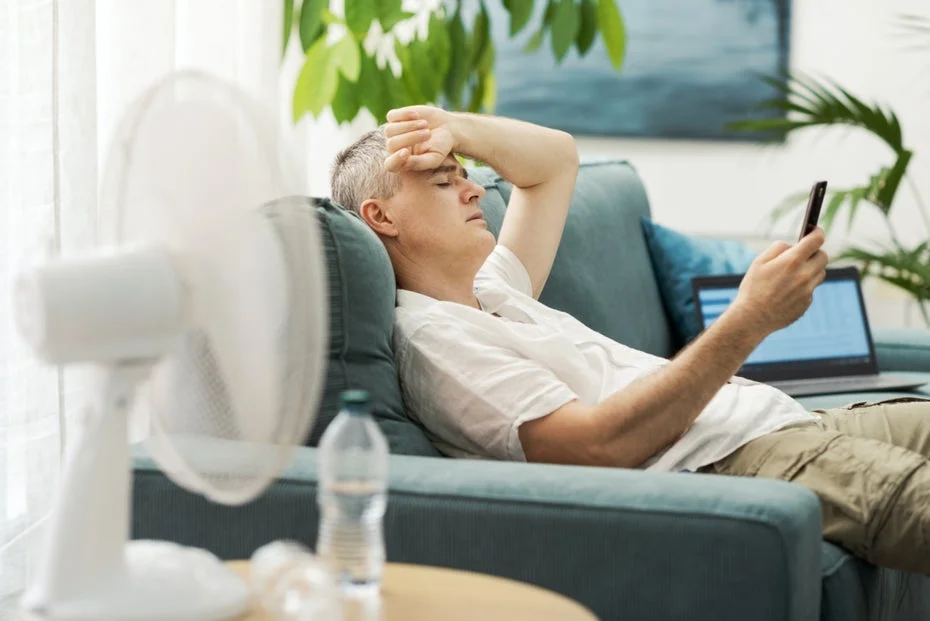
When Germany is once again groaning under a heatwave, one can feel the limits of one's body: Sweat pours from every pore, and internally, the cardiovascular system works at full throttle to maintain our ideal temperature of 37 degrees. However, the hotter it gets, the harder it becomes to hit this sweet spot. For example, a trip to the supermarket during the height of summer can become a torment.
What the Market for Cooling Devices Shows
Quickly back home, where – ideally – fans are waiting or possibly an air conditioner. The increasing popularity of air conditioners in homes is reflected in a survey by the comparison portal Verivox. According to it, 19 percent of respondents in 2024 reported owning an air conditioner, up from 13 percent the previous year. In contrast, the use of fans is naturally more flexible and cost-effective.
However, there are some health considerations to keep in mind when operating fans and air conditioners. Because side effects can occur that we – just like the heat itself – can feel in our bodies.
It Feels Cool: Fans Create Airflow
Fans provide cooling by circulating the room air, making it feel cooler at home. The sweat on our skin can evaporate more quickly in the airflow, cooling the body.
However, the airflow can lead to dry eyes. A targeted, static airflow could also cause muscle tension, especially in the head, neck, and shoulders. Therefore, it is advisable to primarily use the oscillation function of the device and occasionally turn off the fan. This allows us to relax, as the more or less strong humming also represents a noise burden.
When the Fan Harms Your Health
However, if the body is not supplied with enough fluids, this can have serious consequences when combined with the use of a fan. U.S. researchers exposed participants to heat in a climate chamber for three hours at various intervals. This chamber was set to 39 degrees Celsius with a humidity of 49 percent.
In one test, participants were required to hydrate with a prescribed amount of fluids during their stay. In the other variant, they were not allowed to consume any fluids before or during their stay in the climate chamber. In this dehydrated variant, the activated fan had significant effects on cardiovascular strain and an increase in body temperature. In contrast, the setting with fluid intake showed no abnormalities with the use of the fan. While the study highlights an important threshold for fan use at temperature, it also emphasizes that adequate hydration is crucial.
Air Conditioners as Virus Spreaders?
Unlike fans, air conditioners actually lower the room temperature. However, they bring drier air, which has similar side effects on the areas also affected by fans: dry eyes, headaches, and muscle pain. Constant use can also impact the mucous membranes of the upper respiratory tract. If they become dry, pathogens can thrive, and one may end up suffering from flu-like symptoms in the worst case during the height of summer.
There is a belief that pathogens introduced by air conditioners spread across multiple rooms, leading to further infections. This question was particularly significant during the COVID-19 pandemic, and a study of a windowless Chinese restaurant with air conditioning is cited as evidence for airborne transmission.
At that time, the Federal Environment Agency commented on the role of air conditioners: "Regular maintenance and monitoring of systems are important to avoid, for example, incorrect airflow within a building. If the supply and exhaust air are consistently kept separate and exhaust air from one room cannot enter other rooms, there is no risk of virus transmission within the building." Although the coronavirus has somewhat faded from focus today, it still matters how the system is installed and whether and how pathogens are distributed. Pure recirculation systems are tricky, but modern devices with special filters reduce the spread of a virus.
However, with old and poorly maintained devices, the AOK warns against air conditioners with automatic air humidification due to contamination with legionella. Infection via the respiratory tract can lead to "febrile infections or pneumonia."
Tips for Hot Days
Regardless of which cooling device you have in your offices or at home during high temperatures: An optimal room temperature between 20 and 24 degrees Celsius is recommended. The difference between the outside and inside temperature should not exceed six degrees Celsius. If you have one or more fans, keep them on oscillation mode if possible, and avoid sitting directly in the airflow, no matter how tempting it may be. If you have an air conditioner providing cooling, ensure regular maintenance and that no condensation water is formed.
Avoid so-called air coolers. What sounds refreshing in the description due to misted water in the air results in a constantly damp desk in practice – and in the worst case, mold formation, which can affect not only your hardware but also your health.
The easiest method is cross-ventilation in the cool morning and late evening hours. And the most important thing to keep your body fit in high temperatures: Always drink plenty of fluids!