How to Protect Your Garden from Pests: The Right Watering Strategy
Adjusting your watering routine can help protect your garden from slugs, snails, and squirrels. Discover effective strategies to keep your plants safe and healthy.
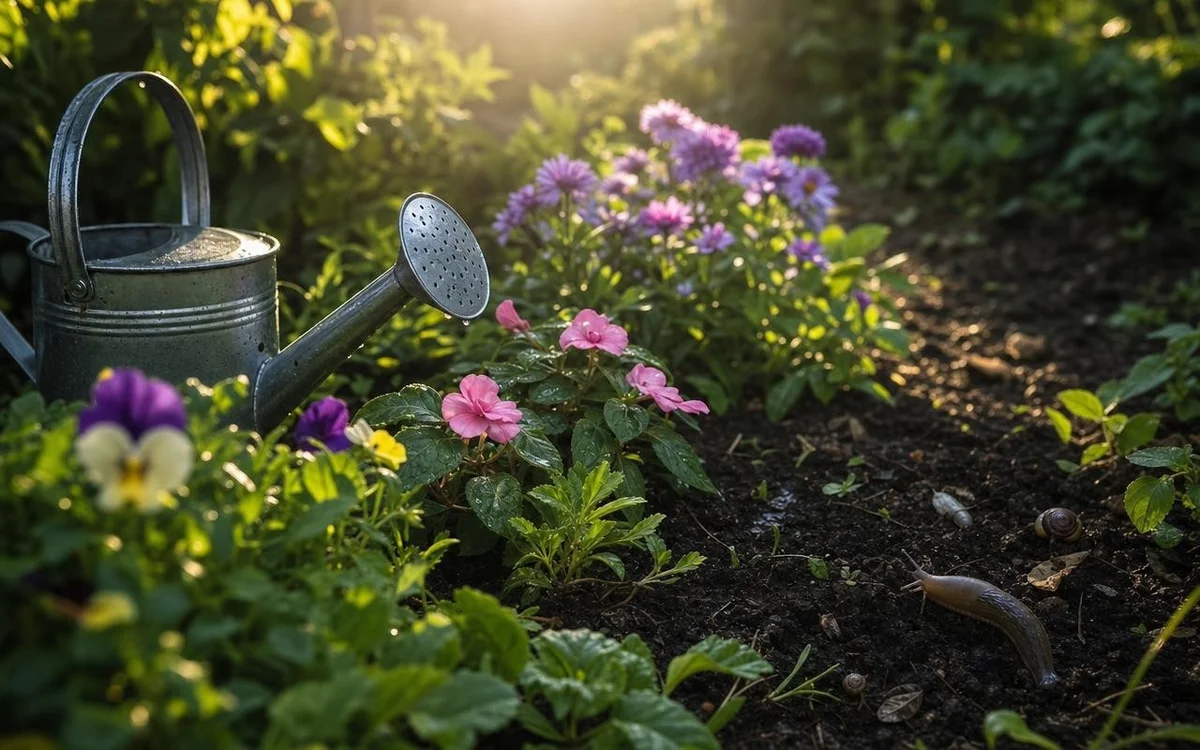
Garden pests like slugs, snails, and squirrels can wreak havoc on your plants, particularly when you water them in the evening. Adjusting the timing and frequency of your watering routine can significantly alter this dynamic.
Imagine waking up to a flourishing garden: intact dahlias and healthy salads, free from the signs of slug damage. This idyllic scene can quickly change after a late evening watering, which invites slugs, snails, and even squirrels to feast on your plants.
The common thread in these nighttime raids often lies in your watering habits. Watering in the evening creates a damp environment that serves as a highway for slugs, weakens plant roots, and provides tender shoots that squirrels love to dig up. Switching to morning watering can transform the situation without the need for chemicals or traps.
Watering in the Morning: A Simple Change to Deter Slugs and Snails
Slugs are composed of over 80% water, and when temperatures rise above 30°C, they burrow beneath dry soil to avoid desiccation, entering a state known as "estivation." From 8 PM to 4 AM, evening watering turns your garden into an all-you-can-eat buffet, with a layer of water on the ground and succulent leaves making it easy for these pests to move around.
According to gardening expert Kayleigh Dray, "it is always better to water plants early in the morning" after a hot spell. Watering between 6 AM and 9 AM allows moisture to penetrate deeply into the soil, leaving the surface dry throughout the day. By nighttime, slugs and snails must cross a dry barrier, making it more difficult for them to reach your young plants.
Space Out Watering: Stronger Plants and a Less Attractive Garden
Professional gardener Jane Dobbs emphasizes that established plants typically require watering every 2 to 3 days during hot weather. In a standard garden soil, this can extend to every 4 to 5 days, and even 6 to 8 days for clay soils. Watering every evening keeps the soil saturated, weakens root systems, and provides slugs with a constant source of moisture.
Before reaching for the watering can, Kayleigh Dray recommends a simple test: insert your finger into the soil up to the first knuckle. If it’s dry almost everywhere, it’s time to water deeply at the base of the plants; otherwise, wait. A light, dry mulch on the surface can help retain moisture below while preventing slugs from accessing damp mulch that clings to plant stems.
What About Squirrels? Small Adjustments That Make a Big Difference
During the summer months, squirrels often raise a second litter and are on the lookout for food. They can dig up bulbs and seedlings or rummage through freshly planted pots. Watering more deeply and less frequently reduces the stress on young plants, minimizing the areas that attract these critters. However, implementing a few targeted barriers can also be beneficial.
Garden furniture specialists Chic Teak suggest placing fine mesh under bulbs and young plants, then covering pots with a layer of gravel or stones to deter digging. Regularly sweeping away fallen seeds and nuts, moving feeders away from garden beds, and providing water sources and piles of wood can also attract beneficial wildlife like hedgehogs, frogs, and birds that will happily snack on slugs and snails.