Mars as a Misstep: Why Saturn's Moon Titan is the Better Spacecraft Base
The media coverage regarding the future of manned spaceflight currently focuses almost exclusively on one target. However, a completely different celestial body offers far better physical and chemical conditions for a settlement.
Verpasse keine News mehr!
The media coverage regarding the future of manned spaceflight currently focuses almost exclusively on one target. However, a completely different celestial body offers far better physical and chemical conditions for a settlement.
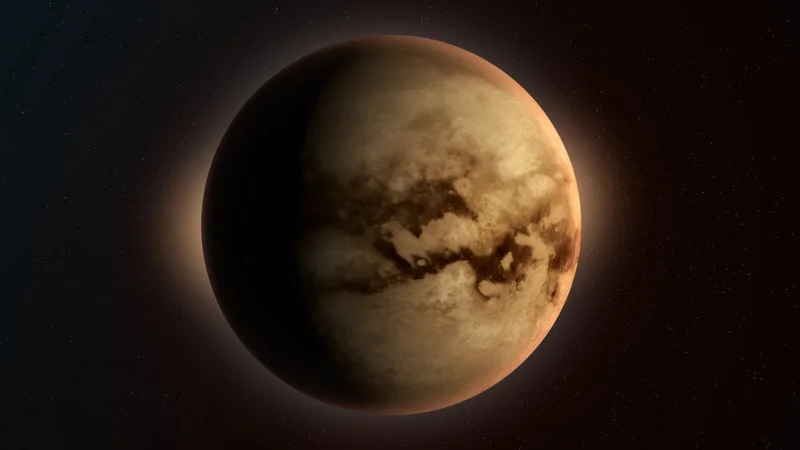
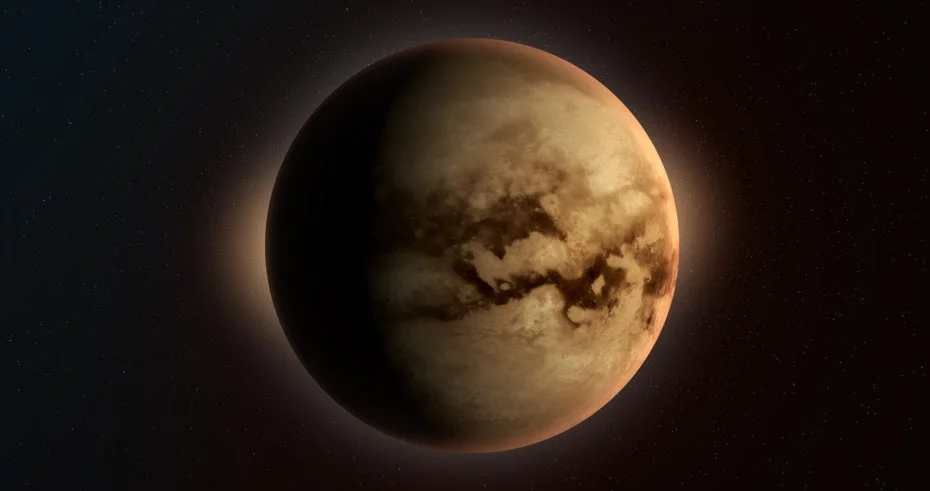
Researchers are increasingly focusing on Saturn's moon Titan as a base for deep-space missions. According to a study published on the Arxiv platform, this celestial body offers fundamental logistical advantages over Mars. The team led by astronomer Conor A. Nixon from NASA's Goddard Space Flight Center compares the direct usability of local resources for future space missions.
This concept of local utilization is referred to in space exploration as In-Situ Resource Utilization. Astronauts do not need to transport every kilogram of fuel, water, or building materials extremely expensively from Earth. Instead, they establish an infrastructure that primarily uses the resources available at the destination. The efficiency of this approach is crucial for the long-term feasibility of planetary settlements.
Titan Outperforms Mars in Chemistry
Mars requires enormously complex chemical intermediate steps for local resource extraction. To produce methane for rocket fuels from the existing carbon dioxide in its thin atmosphere, complex and energy-intensive processes must be applied. On Titan, these process steps are almost entirely eliminated, as the necessary chemical building blocks already exist on the surface.
Titan is, alongside Earth, the only known celestial body in the solar system that has stable liquids on its surface. At the poles, there are vast lakes of liquid hydrocarbons, primarily methane and ethane. "Titan is bubbling with hydrocarbons – what we call oil and natural gas on Earth," Nixon explained according to Universe Today.
Building Materials and Breathing Air On-Site
From these natural hydrocarbon reservoirs, not only fuels can be extracted, but also essential raw materials for industry. These materials serve as the basis for the production of plastics, solvents, and synthetic rubbers. Researchers Ye Lu from Worcester Polytechnic Institute and Jennifer E. Ruliffson from the University of Florida have outlined corresponding processing chains in the study. Future astronauts could use these raw materials directly for 3D printing spare parts or tools.
Another key element for human survival is access to oxygen. The hard crust of Titan consists largely of frozen water. This ice can be split into hydrogen and the urgently needed oxygen through simple electrolysis. The produced oxygen serves not only as breathing air for the crew but also works in conjunction with the extracted hydrocarbons as a highly efficient rocket fuel for return flights or missions deeper into the solar system.
The Logistical and Physical Hurdles
Despite these immense resource advantages, Saturn's moon presents massive engineering challenges. The average surface temperatures are around minus 180 degrees Celsius, which imposes extreme requirements on any hardware and life support systems. All materials must permanently withstand this cryogenic cold without becoming brittle or losing their structural integrity. Additionally, the moon provides hardly any usable solar energy due to its dense atmosphere and great distance from the sun, necessitating the transport of nuclear energy sources.
A fundamental logistical disadvantage is also the absolute lack of heavy elements. Currently, there are no accessible ores or metallic deposits on Titan's surface that could be mined and smelted. Every metal component, every copper wire, and every control board must necessarily be imported from Earth or from passing, metal-rich asteroids.
Any settlements on Titan would therefore need to establish an extremely strict recycling infrastructure for these imported metals to compensate for failures. Nevertheless, the study shows that the chemical advantages of local hydrocarbons make this celestial body a highly relevant outpost. Mars may serve as the first stepping stone for manned spaceflight, but the foundation for a permanent industrial city in space seems to be offered much more readily by Saturn's moon.