
NASA's Hybrid Aircraft Sets Altitude Record
NASA's hybrid aircraft achieves a significant altitude record, showcasing advancements in eco-friendly aviation technology.
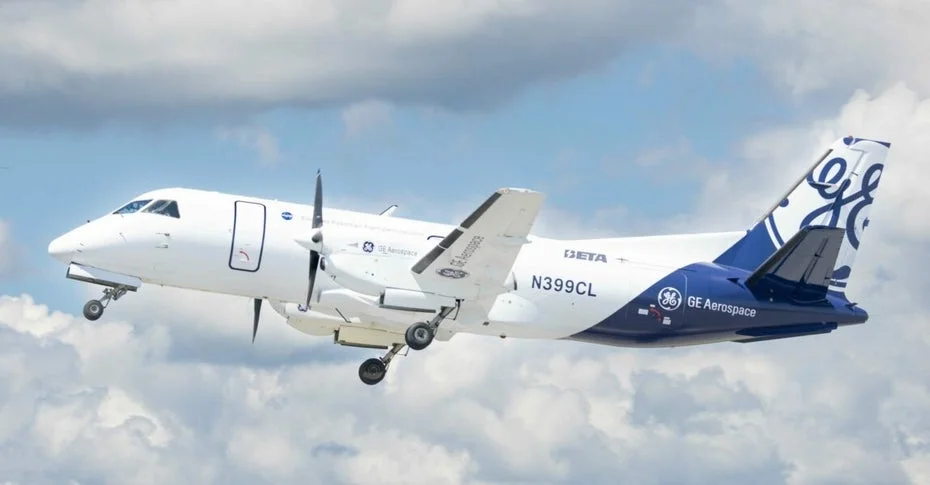
The aviation industry is a significant contributor to carbon dioxide emissions, prompting a search for innovative propulsion methods. The United States space agency, NASA, has recently unveiled a remarkable aircraft aimed at addressing this issue.
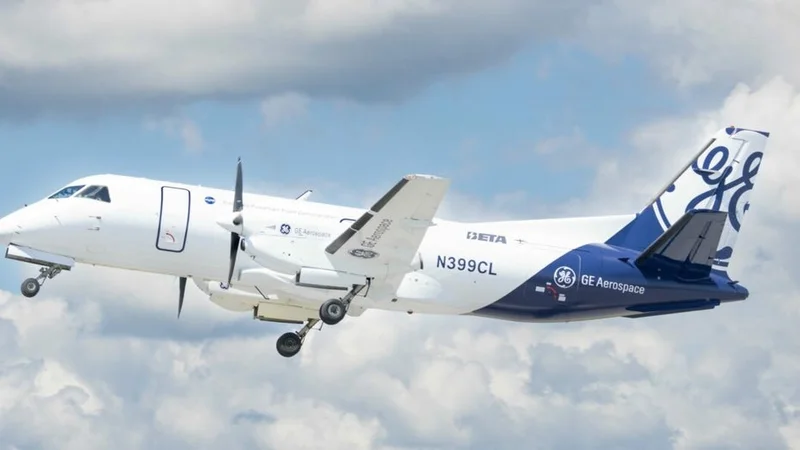
In collaboration with GE Aerospace, NASA has successfully elevated a regional aircraft equipped with a hybrid propulsion system to an altitude of 9,100 meters, equivalent to the standard cruising altitude of 30,000 feet. This achievement marks a significant milestone as it is the first time a hybrid-electric aircraft has reached the operational altitude typical for commercial flights.
The aircraft, a Saab 340B, was modified by NASA in partnership with GE Aerospace. While the exact date of the record flight has not been disclosed, the aircraft is currently on display at the Farnborough International Air Show, which concludes on July 28.
Regional Jet Serving as a Test Platform
The choice of the Saab 340B as a test platform was strategic. This regional jet can accommodate 33 to 37 passengers, making it suitable for connecting smaller airports and providing feeder services. Originally developed by Saab and Fairchild, production of the aircraft spanned from 1984 to 2005. Typically, it is powered by two turboprop engines, which are gas turbines that deliver their power through a propeller.
In a groundbreaking modification, engineers from GE and NASA replaced one of the two engines with a hybrid system composed of three main components: a gas turbine, an electric motor, and an energy storage unit. The gas turbine generates electricity, which powers the electric motor while simultaneously charging the battery, achieving performance levels in the megawatt range.
Reducing Fuel Consumption Without Sacrificing Performance
Initiated in 2021, this project involves collaboration among NASA, GE Aerospace, Boeing, and Beta Technologies. NASA aims to demonstrate that hybrid propulsion can provide sufficient power for an aircraft of regional jet size. The goals are to reduce fuel consumption and operational costs without compromising performance.
The agency anticipates that the advancements in this hybrid propulsion technology will inform the design of future commercial aircraft hybrid systems, potentially lowering airline operating costs and serving as a transitional solution until fully electric propulsion systems are viable.