New Humanoid Robots Aim to Enter Homes but Face Significant Challenges
Ubtech's Uworld U1 humanoid robots are designed for home use but face significant challenges in emotional support and practical application. Learn more about their features and limitations.
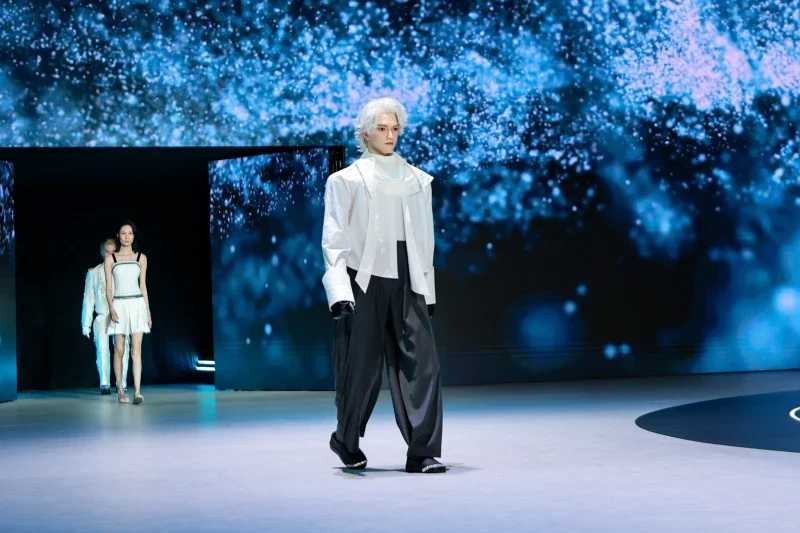
The robotics company Ubtech, based in Shenzhen, China, has launched the Uworld U1 series, introducing humanoid robots designed specifically for home use. According to reports from New Atlas, these robots are marketed as the world’s first mass-produced "ultrabionic" companions. While China has been a leader in humanoid robotics, its previous focus has primarily been on industrial applications. With this new product line, Ubtech aims to break into the consumer market by bringing robots directly into living rooms.
These robots feature human-like facial characteristics and silicone skin, which the manufacturer claims includes realistic details such as pores and wrinkles. To enhance the illusion of a genuine interaction, the robots can blink and utilize 88 integrated servomotors to express up to 300 different micro-expressions. However, a closer look at their specifications reveals that these machines still fall short of truly mimicking human presence.
Emotional Support as a Primary Function
Initially, Ubtech made ambitious claims about the capabilities of these robots, suggesting they could assist in elderly care, perform tasks like dog walking, and handle various household chores. These promises, which were said to be fully supported by artificial intelligence, painted a picture of a loyal and versatile helper for everyday life. However, at the official launch, these practical applications were removed, and the focus shifted entirely to providing emotional support and companionship for lonely individuals. This approach raises significant ethical questions about fulfilling basic human needs for interaction through machines.
Potential buyers can choose between male and female models, as well as various technical configurations—marketed as U1 Lite, U1 Pro, and U1 Ultra. The Lite version consists only of an upper body, while the Pro and Ultra models are designed as full-body systems with varying capabilities. The male version stands at 1.83 meters tall and weighs 42 kilograms, while the female model is slightly smaller at 1.63 meters and 35 kilograms.
Limitations in AI Response and Practical Use
To appropriately respond to human emotions, integrated AI systems in the robots detect eye contact, tone of voice, and facial expressions. Although Ubtech claims that the delay in lip synchronization is under 20 milliseconds, the AI exhibits significant weaknesses in processing speed when answering questions. The time taken to generate an appropriate response is excessive, making natural conversation nearly impossible.
During a demonstration, a woman told the robot she was feeling depressed, and the machine stared silently for several dozen seconds before responding verbally. Such delays lead to uncomfortable pauses in conversation, undermining the impression of an advanced companion. Additionally, the robots' walking movements appear slow and unnatural, causing observers to liken them more to life-sized dolls than agile robots.
Pre-Orders and Market Reception
Despite these evident technical limitations and a battery life of only two to four hours, the manufacturer reported over 13,000 orders on the day of the launch. However, this figure quickly loses significance upon closer inspection, as many of the early purchases appear to be from government procurement programs and commercial exhibition halls rather than individual consumers. Thus, the widespread adoption of these companion robots in private homes remains a distant prospect.
The cost of these robots varies significantly depending on the desired features, which limits their potential audience. Prices start at 119,800 Renminbi (approximately $17,655) and can reach up to 990,000 Renminbi (nearly $146,000) for the top model. Investing the equivalent of a luxury car into a machine that needs to be recharged after a few hours and struggles with complex conversations may not seem like a rational choice for most people.
Beyond financial considerations, these systems raise fundamental questions about whether machines can genuinely address the growing societal issue of loneliness. The attempt to replace human interactions with programmable, always-agreeable companions could alter the way people form real relationships and resolve conflicts. It is likely to be many years of technological research before humanoid robots can conduct truly seamless and natural conversations.