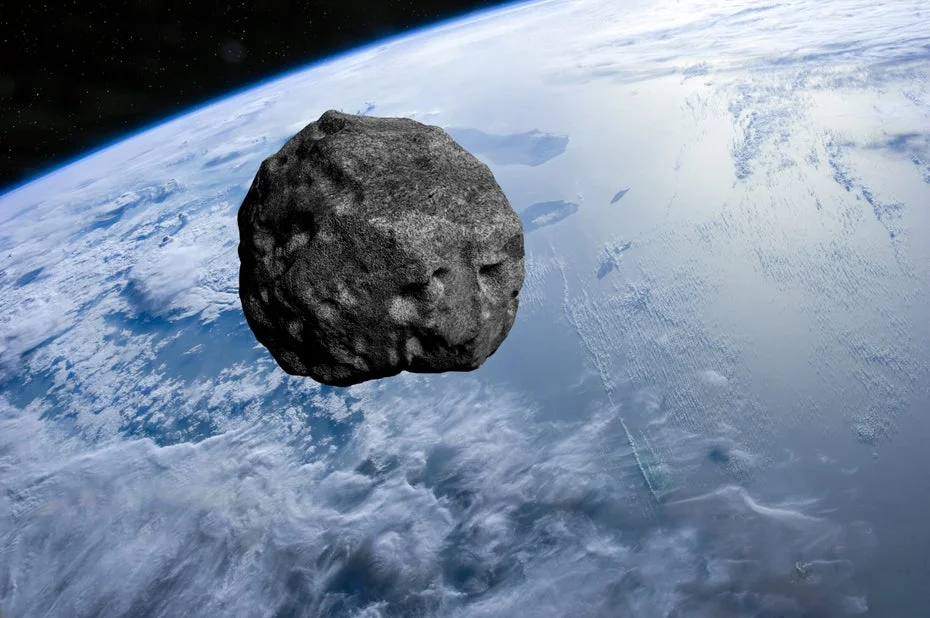
New Measurements Suggest Nearby Super-Earth May Support Life
Recent discoveries suggest that the exoplanet GJ 3378b, located 25 light-years away, may be a rocky super-Earth in the habitable zone, raising hopes for the search for extraterrestrial life.
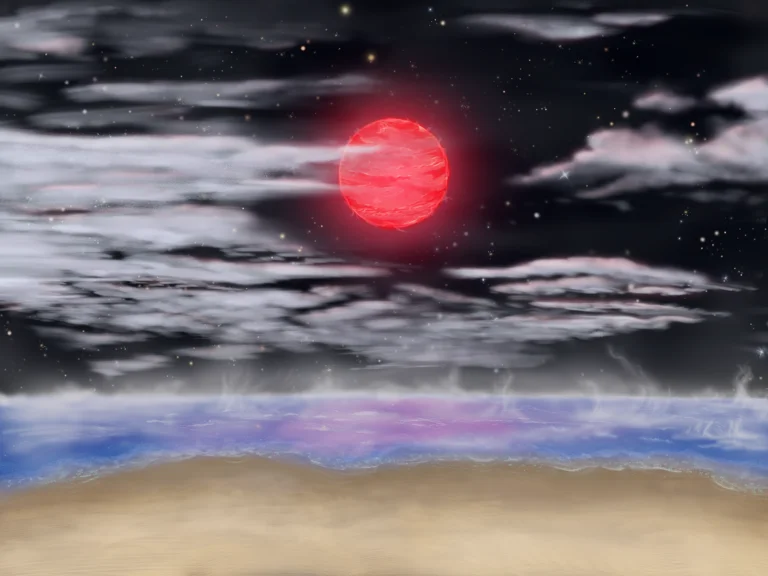
In 2024, a team of scientists utilizing the Canada-France-Hawaii Telescope on Mauna Kea, Hawaii, made a significant discovery by identifying the exoplanet GJ 3378b, located approximately 25 light-years away. Initially, astronomers estimated its mass to be five times that of Earth, indicating it could be a hostile gas giant. This assumption was based on the belief that the planet possessed a dense gaseous envelope, which would create immense pressure, making it impossible for biological life to thrive on any potential surface. {{img:123}}
However, a recent study published in The Astrophysical Journal reveals a dramatic revision of these earlier findings. Paul Robertson, an astronomer from the University of California, and his team have determined that GJ 3378b actually has a mass of just 2.3 Earth masses. This classification places it within the category of rocky super-Earths located in the habitable zone of a central red dwarf star, elevating this system as one of the most promising candidates in the search for extraterrestrial life in our galactic neighborhood.
The breakthrough in understanding the planet's characteristics stemmed from the use of the Habitable-zone Planet Finder, a highly precise infrared spectrometer at the Hobby-Eberly Telescope in Texas. These infrared measurements were complemented by data from the NEID spectrometer at the WIYN Telescope in Arizona. These advanced optical instruments are capable of measuring the radial velocity of stars with unprecedented accuracy, detecting minute variations as small as one meter per second. {{img:123}}
According to Paul Robertson, red dwarfs constitute about 70% of all stars in our galaxy and primarily emit energy in the infrared spectrum. The combination of a ten-meter telescope and the specialized infrared spectrometer provided the necessary precision to accurately interpret the subtle wobble of the star, leading to a correction of the planet's orbital period from nearly 25 days to approximately 21 days. This closer proximity to the star means that GJ 3378b receives a radiation level similar to what our Earth gets from the Sun.
Despite the rocky composition and the theoretical possibility of liquid water, these factors alone do not guarantee the persistence of life on the surface of an exoplanet. Red dwarfs are known for extreme radiation bursts during their early planetary phases, which can strip the atmospheres of nearby planets through aggressive X-ray and ultraviolet light. This lengthy physical process, known as radiative stripping, often results in barren surfaces across many worlds. {{img:123}}
Current calculations by Robertson and his team position GJ 3378b precisely on what is termed the cosmic coastline, a critical physical threshold. At this juncture, the gravitational escape velocity of the planet balances against the destructive, high-energy radiation from the star, making the retention of a protective atmosphere physically plausible, although definitive proof is still necessary.
Despite these scientifically robust findings, a particular astronomical detail tempers hopes for immediate evidence of potential biological activity. From Earth, the planet does not transit directly in front of its host star, which means the James Webb Space Telescope cannot conduct transit spectroscopy. As a result, the starlight does not pass through the planet's atmosphere during its transit, rendering conventional analysis methods ineffective for this celestial body. {{img:123}}
To analyze the atmosphere of GJ 3378b directly in the future, scientists will need optical instruments with significantly larger and more powerful mirrors to be able to image the planet directly. While the upcoming Nancy Grace Roman Space Telescope is expected to provide valuable insights in the coming years, direct atmospheric analysis will require even larger telescope generations. Massive observatories, such as NASA's planned Habitable Worlds Observatory or ground-based telescopes in the 30-meter class, will need to take on this task, which will likely not occur until the next decade.
Until this infrastructure is in place, the meticulous groundwork laid by instruments like the Habitable-zone Planet Finder will serve as a fundamental basis for future space missions. The systematic cataloging of habitable planets in the immediate solar neighborhood ensures that the expensive observatories of tomorrow can focus their limited observation time on the most promising targets. GJ 3378b has now undeniably ascended to the top of this target list. {{img:123}}