Satya Nadella Warns Companies of Hidden Costs in AI Usage
Satya Nadella highlights the hidden costs of AI for businesses, warning that companies may unknowingly share valuable insights with AI providers, benefiting the tech giant through the 'Reverse Information Paradox.'
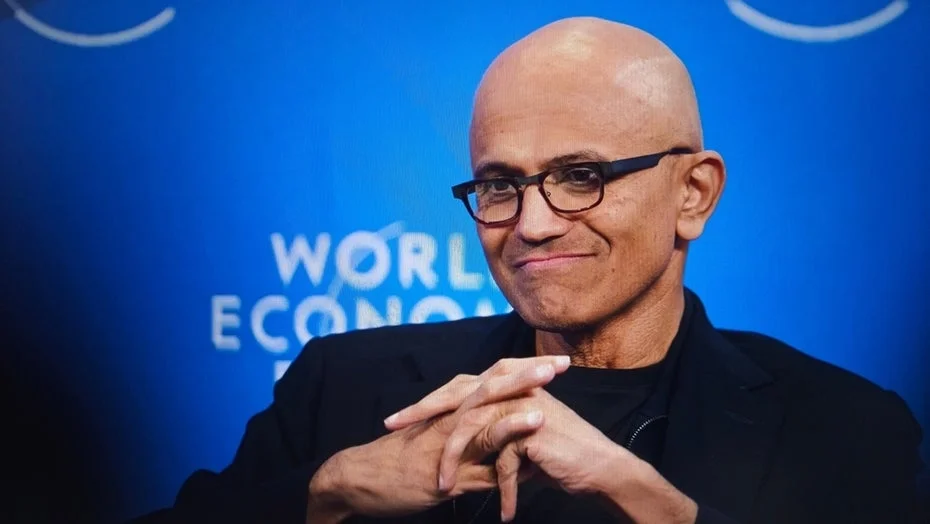
In a thought-provoking post, Microsoft CEO Satya Nadella has raised alarms about the often-overlooked expenses associated with artificial intelligence (AI) for businesses. He argues that companies may be unintentionally surrendering their most valuable insights to AI providers, a situation he terms the "Reverse Information Paradox."
Nadella, who has previously expressed skepticism about the AI hype, cautioned last year that excessive enthusiasm could lead to a crash reminiscent of the Dotcom bubble. Now, he highlights the dual costs of AI adoption: organizations pay not only for the AI tools themselves but also with their proprietary data and insights, which they must input to make the AI systems effective.
His insights, shared in a widely viewed post on X, have garnered over eleven million views as of July 14, 2026. The "Reverse Information Paradox" draws from a concept introduced by Nobel laureate Kenneth Arrow, who noted that sellers must disclose information to sell it, thus diminishing its value. Nadella flips this idea, stating that in today's AI landscape, the buyer bears the risk. To derive value from an AI model, firms must feed it their confidential knowledge, increasing the amount of data shared as the model's capability grows. He writes, "The seller learns more about you while you use what you bought, but you learn very little about what the seller is learning in return."
As companies provide input to the AI systems, they inadvertently train these models, which Nadella describes as a subtle yet significant loss of competitive advantage. He explains that this knowledge is not leaked through security breaches but rather through what he calls "Exhaust," referring to the prompts users enter, the tools they utilize, and the corrections they make when the model produces errors. Each correction further trains the AI, creating a feedback loop that benefits the provider. Nadella states, "It’s the kind of knowledge a competitor could never buy, hint by hint, correction by correction, evaluation by evaluation." His conclusion is stark: if learning flows in only one direction, so does the financial benefit, ultimately favoring AI providers over the companies that own the knowledge.
Interestingly, Nadella himself is at the helm of a tech giant that profits from this very dynamic. Microsoft has invested billions in OpenAI and offers Copilot, an AI assistant that delves deeply into corporate data—precisely the scenario Nadella warns against. He acknowledges this contradiction in his post, suggesting that a strict "trust boundary" should be established around a company's data, assessments, and storage, a service that Microsoft also markets.
This duality in communication is not unique to Microsoft. Other AI leaders, such as OpenAI's Sam Altman, have also faced scrutiny for their remarks and actions, with Altman comparing the development of advanced AI models to constructing an atomic bomb, yet proceeding with their release. Similarly, Anthropic co-founder Christopher Olah has been criticized for aligning with calls for ethical AI development while simultaneously facing backlash for perceived hypocrisy.