
The Milky Way's Cosmic Tilt: Insights from New Research
New research reveals that a collision with a neighboring galaxy may have caused the Milky Way to tilt, providing insights into its structure and evolution.
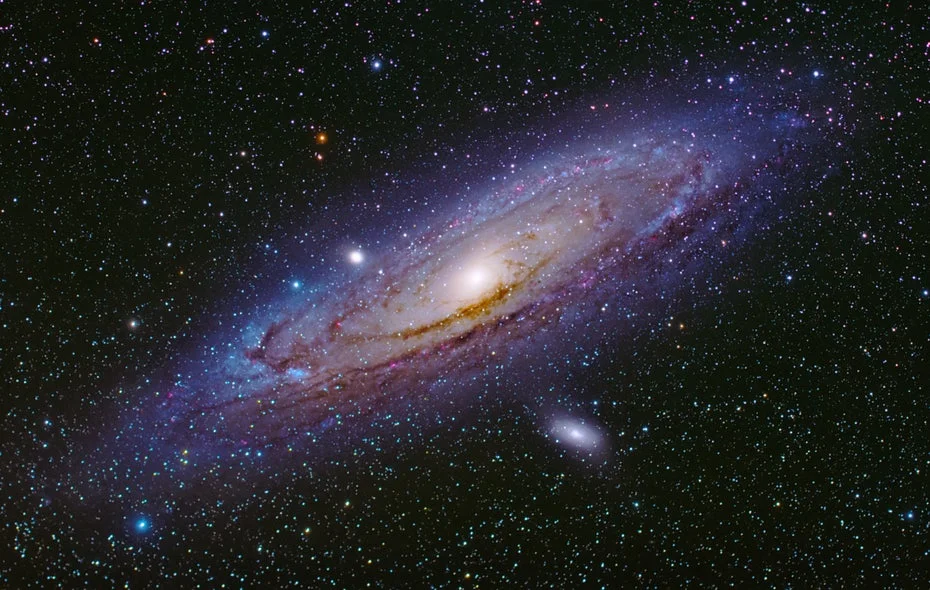
Recent calculations by British researchers suggest that a significant collision with a neighboring galaxy may have caused the Milky Way to "tilt" billions of years ago, shedding light on several mysteries surrounding our home galaxy.
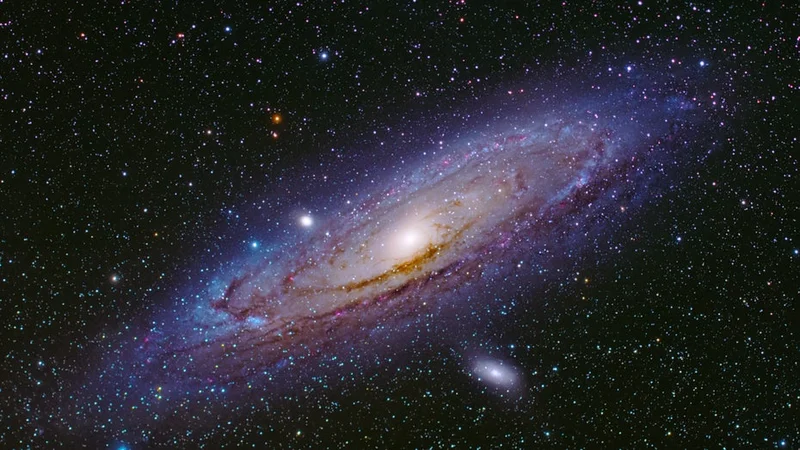
Since its formation approximately 13 billion years ago, the Milky Way has been repeatedly shaken by mergers and collisions with other galaxies. A particularly violent encounter with the nearby Gaia-Enceladus galaxy, occurring between eight to eleven billion years ago, is believed to have had a profound impact.
The dwarf galaxy likely experienced complete disintegration, as reported by Bild der Wissenschaft. The remnants of this galaxy contributed to the formation of the central bulge in the Milky Way.
According to a study led by astrophysicist Kirill Batrakov from Durham University, this catastrophic event did not merely alter the structure of the Milky Way but also caused the galaxy to tilt significantly. "In such a disk-flip event, the stellar disk changes its rotation axis by more than 90 degrees," Batrakov explained.
Interestingly, the researchers initially set out to investigate a different phenomenon: the slow rotation of the Milky Way's halo. This gas-rich outer region, populated with ancient stars, rotates at a mere ten to twenty kilometers per second.
To unravel the mystery of this sluggish rotation, the team utilized simulations from the Auriga project, which tracks the evolution of 25 Milky Way-like galaxies over billions of years.
During their research, Batrakov and his team discovered that galaxies with slowly rotating stellar halos had all undergone frontal collisions with neighboring galaxies and subsequently tilted. This leads them to conclude that the Milky Way's stellar disk was also "knocked out of its original orientation" due to the violent encounter with Gaia-Enceladus.
Moreover, this finding could help clarify another mystery regarding the Milky Way's satellite galaxies, which orbit the galaxy but not in the same plane as the stellar disk; many have inclined orbits. This characteristic was frequently observed in simulations of galaxies that experienced a disk flip, as noted by Bild der Wissenschaft.
Batrakov emphasized that the potential tilting of the Milky Way should alter our perspective on other features of our galaxy. "We should consider this when viewing the Milky Way in the broader context of galaxy evolution," he stated.