Mysterious Ghost Particle: Researchers Find Origin in Distant Star Factory
An international team has identified the origin of a high-energy neutrino from a distant starburst galaxy, challenging existing astrophysical assumptions.
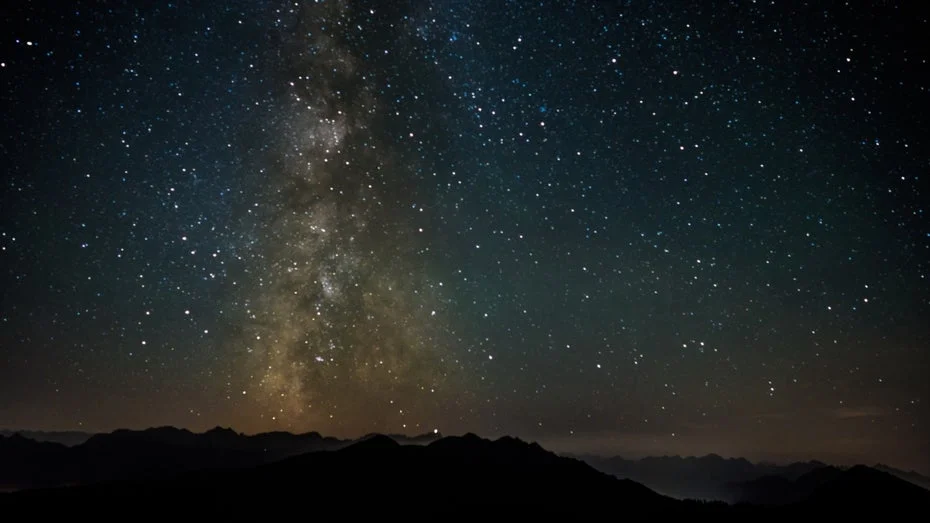
An international team led by scientist Yuji Urata from Mitos Science in New Taipei City, Taiwan, has identified the origin of an extremely high-energy neutrino. According to a study published in the journal Nature Astronomy, the particle originates from a distant galaxy where new stars are forming at a rapid pace.
This neutrino, scientifically identified as IC 210922A, was registered by the IceCube Observatory in Antarctica in the fall of 2021. These elementary particles are often referred to as ghost particles because they possess almost no mass and can penetrate matter almost unhindered. The researchers traced the particle's path back over eleven billion light-years to a galaxy named JCMT0402−0424, which has been aptly nicknamed "Shadow Blaster."
A Massive Natural Particle Accelerator
Until now, astronomers firmly believed that primarily supermassive black holes in active galactic nuclei provide enough energy to accelerate neutrinos to nearly the speed of light. However, the galaxy under detailed investigation does not have such an active center and derives its energy from a completely different source.
It is a so-called starburst galaxy, where massive new stars are formed at an enormous rate. The extremely dust- and gas-rich core of this cosmic star factory acts as a natural particle accelerator: when cosmic rays collide with dense gas clouds with immense force, the observed neutrinos are produced.
It is also noteworthy that telescopes have received no gamma or X-ray radiation from this direction. This, however, supports the researchers' findings: the star factory is so densely packed in cosmic dust that this light cannot escape. The dense clouds simply absorb the radiation, while the neutrinos pass through the dust effortlessly.
Cosmic Lens Enables Detailed Observation
The precise analysis of this distant galaxy was made possible by an extreme gravitational lensing effect. A massive foreground galaxy bends space and amplifies the light from the behind "Shadow Blaster" like a giant cosmic magnifying glass.
To locate it, the scientists used powerful instruments such as the James Clerk Maxwell Telescope on Mauna Kea in Hawaii. Additionally, the Atacama Large Millimeter/submillimeter Array in the Chilean Atacama Desert was employed, capturing the galaxy in enormous resolution. Only the combination of this collected data revealed that the cosmic lens splits the light from the distant star factory into four distinctly recognizable images.
Such intensely star-forming galaxies were very common in the early universe and could, according to current calculations, explain up to 20 percent of the diffuse neutrino background in the cosmos. This was reported by Space.com in a complementary editorial assessment of the research findings.
Promising Insights with Clear Limitations
Despite the compelling data, this specific direct connection currently relies on a single confirmed neutrino event. To unequivocally prove that this class of galaxies indeed makes such a massive contribution, significantly more such systems would need to be identified in the future.
However, this poses significant practical challenges for astronomy, as most of these galaxies are not "randomly" magnified by a gravitational lens. They are simply too far away for today's telescopes and emit too weakly to be systematically studied in comparable depth.