
Up to 1,000 Meters Deep: What Real Data Reveals About the Mystery of the Cold Spot in the Atlantic
As the world's oceans warm, a region south of Iceland shows persistent cooling. New data reveals the Cold Spot in the North Atlantic is linked to reduced ocean heat transport, impacting global circulation.
- Home
- News
- Future & Science
Don’t miss any news!
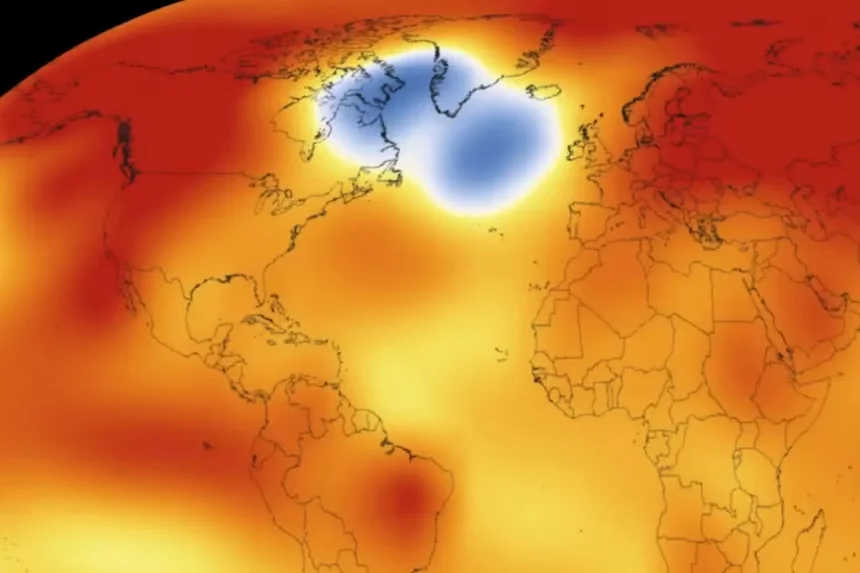
As the world's oceans continuously warm, one region has puzzled scientists for years. South of Iceland, temperatures are persistently dropping. New data now sheds light on a potentially significant physical dynamic.
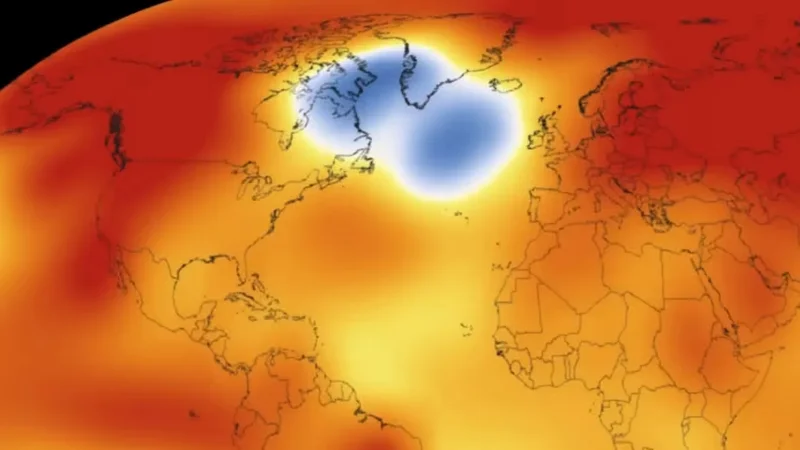
According to a study published in the journal Geophysical Research Letters, the so-called Cold Spot in the North Atlantic is caused by a reduced ocean heat transport. A team of scientists from the Potsdam Institute for Climate Impact Research used meticulously combined satellite and reanalysis data to reach this conclusion.
Until now, the prevailing hypothesis in the scientific community was that purely atmospheric conditions, such as altered winds or clouds, could be responsible for the local cooling. However, current analyses show that the temperature drop extends to a depth of 1,000 meters, where winds have little direct influence on water temperature.
The Role of the Atlantic Meridional Overturning Circulation
The measured temperature decline of about one degree Celsius since 1900 is closely linked to the Atlantic Meridional Overturning Circulation, commonly abbreviated as AMOC. This vast system of ocean currents continuously transports large amounts of warm water from the tropics to the northern hemisphere.
Due to the ongoing warming of the Earth, the Greenland ice sheet is melting significantly. The fresh water flowing into the ocean reduces local salinity. Because this less salty water is lighter, it no longer sinks as effectively, causing the engine of the entire current to noticeably stall.
Consequences for Global Infrastructure
Climatologist Stefan Rahmstorf, who participated in the study, sees the reduced heat transport as an unmistakable signal of a weakening global circulation. Independent measurements already indicate, according to Rahmstorf, that the current is as weak as it has been in 1,000 years.
A complete standstill of the circulation would have far-reaching consequences for global infrastructure and economic systems. As reported by CNN, such a scenario threatens, among other things, a significantly accelerated sea-level rise along the U.S. East Coast and extreme cold snaps in Europe.
Data Availability Remains a Challenge
Marine researcher René van Westen from Utrecht University in the Netherlands emphasizes the robustness of the new study results due to the consistent historical datasets. However, he cautions that earlier simulations showed that atmospheric conditions alone could also produce such a temperature anomaly.
Other researchers, such as David Thornally from University College London, consider the current study to be an extremely valuable indication but warn against a definitive interpretation. The sparse data in the real marine environment leads him to believe that the available datasets represent approximations rather than perfect reflections of reality.
Ultimately, the publication joins a growing number of studies evaluating and documenting systematic changes in the oceans. However, it remains uncertain when and if a definitive tipping point of the circulation will be reached based on current models.