
Homemade Marseille Soap Laundry Detergent: A Simple Guide
A comprehensive guide to making homemade laundry detergent using Marseille soap, featuring easy recipes, tips, and precautions for effective use.
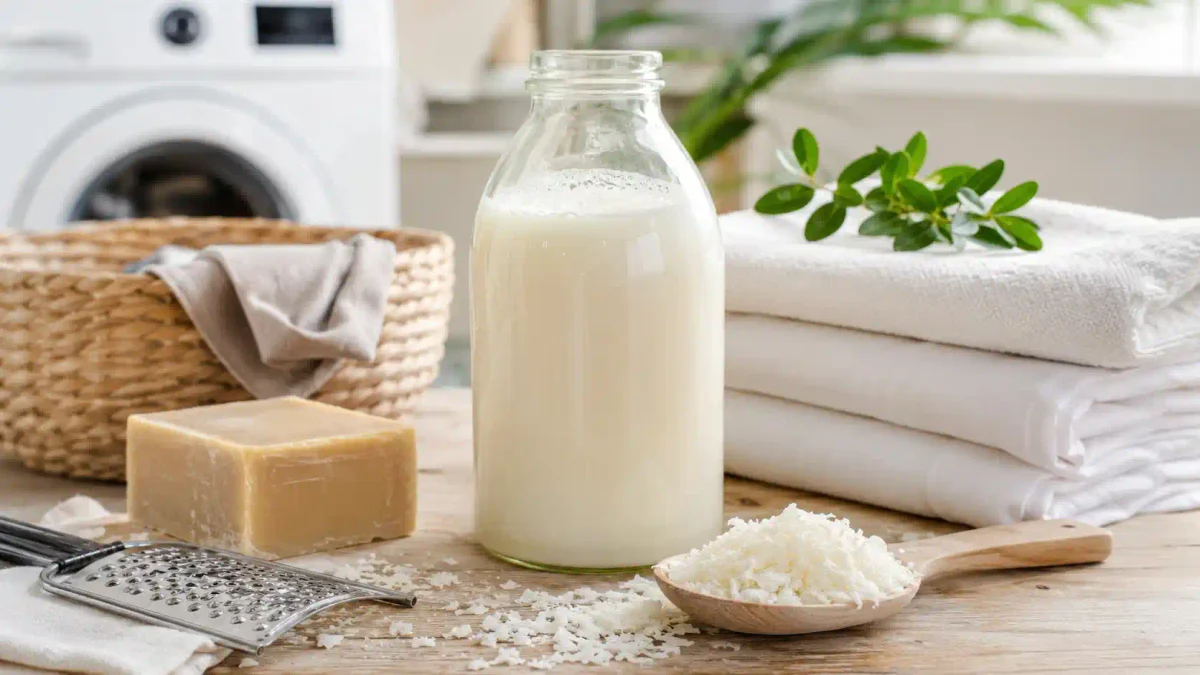
Homemade Marseille Soap Laundry Detergent: A Simple Guide
If you've ever scrutinized the ingredient list on commercial laundry detergents and found yourself puzzled by the multitude of unpronounceable names, you're not alone. Making your own laundry detergent with Marseille soap is a straightforward solution that requires just three ingredients and about 15 minutes of your time. This homemade alternative cleans as effectively as store-bought options but at a fraction of the cost. Plus, it avoids potential endocrine disruptors and reduces plastic waste, all while providing several weeks' worth of detergent for just a few euros.
In this guide, you will find precise measurements, step-by-step instructions, a variation using black soap for those who prefer it, and essential precautions to keep in mind, particularly if you have a new washing machine or sensitive skin.
Why Switch to Homemade Laundry Detergent?
Three compelling reasons, no fluff.
- Cost-effective: A 2-liter bottle costs around €1.50 compared to €4 to €6 for a similar product in stores.
- Eco-friendly: Less packaging, biodegradable ingredients, and a reduced impact on wastewater treatment facilities.
- Free from suspected endocrine disruptors: Unlike some industrial formulas, you have complete control over what goes into your detergent, eliminating controversial preservatives and synthetic fragrances.
However, keep in mind that this homemade detergent may not be as effective on very greasy stains or heavily soiled laundry. For regular use, it performs excellently.
Ingredients You Need
Three simple ingredients.
To create a 2-liter batch of liquid laundry detergent using Marseille soap, you will need:
- 50 g of genuine Marseille soap flakes (72% vegetable oil, no added glycerin or synthetic fragrance) – you can either grate a bar yourself or buy pre-made flakes.
- 11 g of washing soda (sodium carbonate), approximately 1 heaping tablespoon.
- 42 g of baking soda, about 2 heaping tablespoons.
- 2 liters of water, with at least 1 liter being hot.
- Optional: 20 to 40 drops of essential oil (like lavender or tea tree) for fragrance and a slight disinfecting effect. Avoid using essential oils if you are pregnant, nursing, or if the laundry is for a baby.
Be cautious with the soap you choose: ensure it contains only vegetable oils (olive, palm, or coconut), soda, and water. Many supermarket brands labeled as "Marseille soap" are actually perfumed soaps that dissolve poorly in laundry and do not clean effectively.
Step-by-Step Recipe for Marseille Soap Detergent
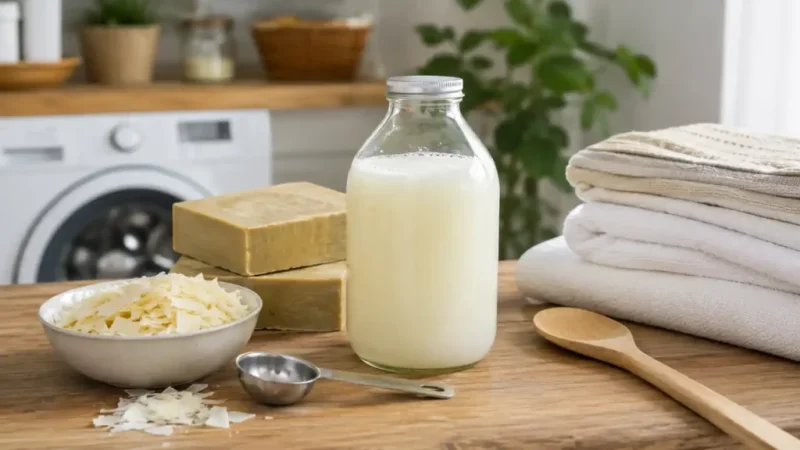
A method that prevents clumping.
- Heat 1 liter of water to boiling, then remove from heat.
- Add the 50 g of soap flakes to the hot water, stirring regularly for 5 to 10 minutes until fully dissolved – no floating pieces should remain.
- Pour this mixture into a 2-liter bottle or bucket.
- Add the washing soda and baking soda, stirring well to prevent clumping at the bottom.
- Complete with the second liter of hot water until you reach the 2-liter mark.
- Add the essential oil if using, and mix vigorously.
- Let it sit for 15 to 24 hours before the first use to allow the powders to fully dissolve and the mixture to stabilize.
This method also works well with a basic Marseille soap recipe if you prefer a simpler version without washing soda, suitable for lightly soiled or delicate fabrics.
Tip: The texture may slightly gel as it cools, resembling a thick liquid soap. This is normal and does not affect its cleaning power – just shake the bottle before each use.
Black Soap Variation – An Effective Alternative
For those who prefer a liquid texture from the start.
Black soap, made from olive oil and potash, is already liquid or paste-like, simplifying the preparation while providing excellent grease-cutting properties.
Here’s a black soap laundry detergent recipe for 1 liter:
- 150 ml of liquid black soap
- 1 liter of hot water (heated without boiling)
- 3 tablespoons of baking soda
- 1 tablespoon of washing soda (optional, to enhance anti-limescale action)
Preparation:
- Heat the water without boiling (50-80 °C is sufficient).
- Remove from heat, add the black soap, and mix until well dissolved.
- Incorporate the baking soda and the washing soda if using.
- Let it cool, transfer to a bottle, and shake before each wash.
Black soap has a slight advantage on greasy stains and sports laundry due to its high fatty acid content. It also has numerous other household uses – for floors, countertops, and plants. If you want to maximize its utility beyond laundry, our guide on black soap usage provides detailed dosages for various applications.
Storage and Shelf Life of Your Homemade Detergent
It doesn’t last indefinitely.
- Shelf life: 4 to 6 weeks at room temperature in a closed bottle, away from direct light.
- Signs of spoilage: rancid smell, visible mold, persistent separation that doesn’t resolve with shaking.
- To extend shelf life: add a few drops of essential oil with preservative properties (like tea tree or lavender) and avoid storing the bottle near a heat source.
- Texture changes: a slight gel formation in the cold is normal; sediment at the bottom is acceptable as long as shaking it homogenizes the mixture.
Make small batches if you don’t use your washing machine often – it’s better to prepare a new bottle every three weeks than to keep a questionable detergent for two months.
Dosage by Machine and Fabric Type
Avoid over-dosing: this detergent is concentrated.
| Type of Fabric | Machine Capacity | Recommended Dosage | |----------------|------------------|--------------------| | Lightly soiled, everyday laundry | 5-6 kg | 100 ml | | Regular laundry | 5-6 kg | 100-150 ml | | Heavily soiled or sports laundry | 7-8 kg | 150-180 ml | | Very hard water | All sizes | +30 ml approximately | | Delicate fabrics (wool, silk) | All sizes | Avoid this detergent, prefer a gentle soap without soda |
Pour the detergent directly into the drum or the liquid product drawer, never into the powder compartment – the thick texture can clog the drainage channels.
Precautions to Consider – Sensitive Skin and New Machines
Two important points to keep in mind.
For sensitive skin and babies:
- Perform an additional rinse if the laundry is intended for an infant or someone with atopic skin.
- Avoid essential oils on laundry for babies under 3 months.
- Test on a small load before general use, especially the first time.
For washing soda:
- It can irritate skin and eyes when concentrated – wear gloves during preparation.
- Always pour the soda into the water, never the water onto the soda.
- Store the bottle out of reach of children, like any household product.
For new machines:
- Modern models use very little water, which can lead to grease buildup if you overdose.
- It’s better to under-dose than over-dose: start with 80-100 ml and adjust based on results.
- Run an empty cycle at 60-90 °C once a month to dissolve any deposits.
- Leave the product drawer slightly open after each wash to prevent stagnant moisture.
Common Mistakes to Avoid
Frequent pitfalls and how to sidestep them.
- Using a fake perfumed or superfat Marseille soap: it dissolves poorly and leaves marks on dark laundry.
- Pouring detergent into the powder compartment: it clogs and blocks the intake channels.
- Over-dosing "to be sure": this doesn’t improve washing and can clog the machine, leaving white residues.
- Using this detergent on wool or silk: the soda is too harsh for these fibers.
- Skipping the resting time: without the 15-24 hours of rest, the powders aren’t fully dissolved, reducing cleaning effectiveness.
- Neglecting drum maintenance: without regular descaling, even the best recipe can lead to a musty smell.
Summary Table
| Ingredient | Dosage (for 2 L) | Estimated Cost | Recommended Fabric Type | |------------|------------------|----------------|-------------------------| | Marseille soap flakes | 50 g | ~€0.60 | Everyday laundry, cotton, linen | | Washing soda | 11 g | ~€0.10 | Soiled, white laundry | | Baking soda | 42 g | ~€0.30 | All types, deodorizing effect | | Black soap (variation) | 150 ml for 1 L | ~€1 | Sports laundry, greasy stains | | Essential oil (optional) | 20-40 drops | ~€0.50 | All types, except for babies < 3 months |
Total for 2 L bottle (Marseille soap)
–
~€1.50
–
Going Further: Make Your Own Soap
Once you’ve mastered making laundry detergent, the next logical step is to create your own soap instead of buying pre-made flakes. This ensures 100% control over the composition and is even cheaper in the long run. Our guide on homemade soap details the cold process method, necessary sodium dosages, and essential safety precautions.
Frequently Asked Questions
How long does homemade laundry detergent last? Between 4 and 6 weeks at room temperature in a closed bottle away from light. Beyond that, check the smell and appearance before use.
Can this detergent be used on baby laundry? Yes, but without essential oils before 3 months, and with an extra rinse if skin is sensitive. Conduct a first test on a small piece of laundry.
Does homemade detergent damage new machines? Not if you follow the dosage guidelines and perform monthly descaling at 60-90 °C. The real risk comes from over-dosing, not the recipe itself.
Can Marseille soap be replaced with black soap? Yes, completely: the black soap recipe yields comparable results and may be more effective on greasy stains due to its fatty acid content.
Is this detergent suitable for cold washing machines? It functions well at 30-40 °C for regular laundry. Below that, the dissolution of washing soda is less complete, so aim for at least 30 °C.