60 Million Stars in One Image: Euclid's New Perspective on the Milky Way
A new telescope provides unprecedented insights into our home galaxy. The massive data set reveals details that established observatories would find challenging. The hunt for new worlds reaches a new level.
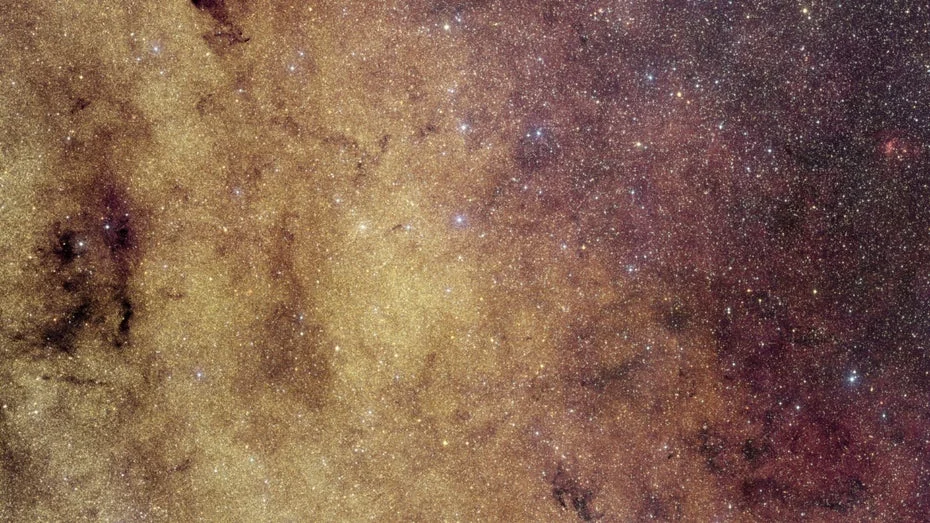
The European Space Agency (ESA) has released an impressive new image of the Milky Way. The space telescope Euclid directed its instruments at the so-called galactic bulge, the densely populated central region of our home galaxy.
This resulted in a mosaic that shows more than 60 million stars as well as numerous nebulae and star clusters in visible light. For this immense level of detail, the telescope required only 26 hours of observation time, which is considered extremely short in professional astronomy.
Enormous Efficiency Compared to Other Instruments
As reported by the US magazine Wired, the overall image consists of nine individual pictures. Each of these images covers an area of the sky larger than that of the full moon visible from Earth.
Although the sharpness of Euclid's images in visible light is comparable to that of the famous Hubble Space Telescope, Euclid offers a field of view that is 270 times larger. A ground-based telescope like the Keck Observatory in the US Hawaiian Islands would have needed around 2000 observation hours for an identical mosaic.
The Search for Exoplanets as the Main Goal
The actual purpose of this observation campaign is to prepare for the discovery of new exoplanets. Astronomy uses the so-called gravitational microlensing effect, where a foreground star amplifies the light of a background star like a cosmic magnifying glass.
If a planet orbits the foreground star, it reveals itself through a specific, tiny fluctuation in brightness in the optical instrument. To observe this rare phenomenon, densely packed star fields like the center of the Milky Way must be monitored continuously.
A Data Archive for Future Missions
According to scientist Jean-Philippe Beaulieu, who led the current ESA observation campaign, nearly 300 exoplanets have been discovered using this special technique over the past two decades. The newly released image from Euclid already hides 51 known planetary systems that have been identified in this way in the past.
However, a 26-hour observation is not enough to fully capture the microlensing effect, as it often lasts several weeks. The true strength of the data collected by Euclid lies in its function as an exact historical reference for future observation campaigns.
The massive mosaic, with an estimated six gigapixels of raw data, also places enormous demands on processing and storage. The scientists involved had to build a complex pipeline to filter the vast amounts of information and prepare it for further analysis. Such a data deluge is not a trivial task even in the age of modern computing technology and requires massive computing capacities.
Downsides and Limitations of the Current Mission
Scientist Natalia Rektsini explains that the current images will help to determine the masses of planets more accurately, which will be discovered by other instruments like NASA's Nancy Grace Roman Space Telescope in the coming years. Although Euclid was originally designed for the study of dark matter and energy in distant galaxies, as emphasized by a team of researchers from the Ruhr University Bochum in North Rhine-Westphalia, this excursion into our own galaxy provides essential foundations. "In just 24 hours, Euclid delivered unique data about the center of the Milky Way, with a large and sharp view of this region," adds ESA scientist Valeria Pettorino, according to Wired.
Nevertheless, it should not be overlooked that Euclid could not detect any new planets with this short campaign, as the time window was simply too small. Additionally, the originally captured image in pure black and white had to be painstakingly enriched with color data from the Canada-France-Hawaii Telescope based in Hawaii to visually differentiate the various astrophysical processes. This circumstance clearly shows that even a state-of-the-art space telescope cannot solve all astronomical challenges alone but requires cooperation with ground-based observatories.