
Revised Findings on Nearby Exoplanet Suggest Potential for Life
A recent study has revised the mass of exoplanet GJ 3378b, suggesting it may be a rocky super-Earth in the habitable zone, raising hopes for the search for extraterrestrial life.
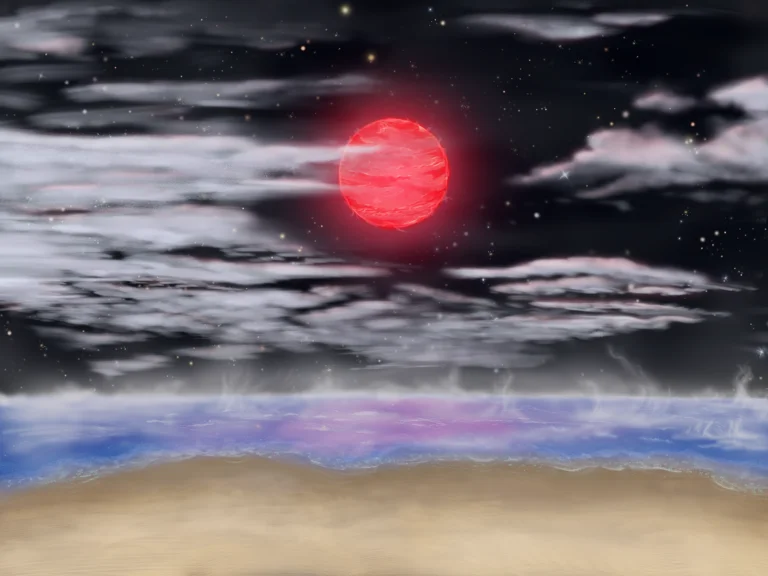
In 2024, astronomers using the Canada-France-Hawaii Telescope atop Mauna Kea in Hawaii made a groundbreaking discovery when they identified the exoplanet GJ 3378b, located approximately 25 light-years away. Initially, the researchers estimated the planet's mass to be five times that of Earth, leading to the assumption that it was a hostile gas giant. This mass suggested a dense atmosphere that would create immense pressure, making the possibility of biological life on any potential surface seem unlikely.
However, a significant correction has emerged from a study published in The Astrophysical Journal. Paul Robertson, an astronomer at the University of California, and his team have revised the planet's mass to just 2.3 times that of Earth, indicating that GJ 3378b is a rocky super-Earth situated in the habitable zone of a central red dwarf star. This new classification places the system among the most promising candidates in the ongoing search for extraterrestrial life within our galactic neighborhood.
The breakthrough was achieved through the use of the Habitable-zone Planet Finder, a high-precision infrared spectrometer located at the Hobby-Eberly Telescope in Texas. This was supplemented by data from the NEID spectrometer at the WIYN Telescope in Arizona. These advanced optical instruments are capable of measuring the radial velocity of stars with unprecedented accuracy, detecting minute fluctuations as small as one meter per second.
According to Paul Robertson in a press release from the McDonald Observatory, red dwarfs, which constitute about 70% of all stars in our galaxy, emit most of their energy in the infrared spectrum. The combination of a ten-meter telescope and the specialized infrared spectrometer provided the precision needed to accurately interpret the subtle movements of the star, resulting in a correction of the planet's orbital period from nearly 25 days to around 21 days. This closer proximity to the star allows GJ 3378b to receive nearly the same amount of radiation that Earth gets from the Sun.
While a rocky composition and the theoretical presence of liquid water are promising, they alone do not guarantee that life could thrive on the surface of an exoplanet. Red dwarfs are known to exhibit extreme radiation bursts during their early stages, which can strip away the atmospheres of nearby planets through intense X-ray and ultraviolet light. This prolonged physical process, known as radiative stripping, can lead to barren surfaces on many worlds.
Current calculations indicate that GJ 3378b lies precisely on what scientists refer to as the cosmic coastline, a crucial physical threshold. At this point, the planet's gravitational escape velocity balances the destructive radiation from the star. This balance makes the retention of a protective atmosphere physically plausible, although definitive proof is still pending.
Despite these scientifically robust findings, an astronomical detail tempers hopes for immediate evidence of potential biological activity. From Earth's perspective, the planet does not transit directly in front of its host star, preventing the James Webb Space Telescope from conducting transit spectroscopy. As the starlight does not pass through the planet's atmosphere during these transits, traditional analysis methods in contemporary astronomy remain ineffective for this celestial body.
To analyze the atmosphere of GJ 3378b directly in the future, scientists will require optical instruments with much larger and more powerful mirrors to capture images of the planet. Although the upcoming Nancy Grace Roman Space Telescope is expected to provide valuable insights, the direct atmospheric analysis will necessitate even larger telescope generations. Massive telescopes like NASA's planned Habitable Worlds Observatory or ground-based telescopes in the 30-meter class will need to undertake this task, which is likely to happen no sooner than the next decade.
Until such infrastructure is available, the meticulous groundwork laid by instruments like the Habitable-zone Planet Finder will form the essential foundation for future space missions. The systematic cataloging of habitable planets in our immediate solar neighborhood will ensure that the expensive observatories of the future can focus their limited observation time on the most promising targets. GJ 3378b is now undoubtedly at the top of this target list.