Hidden Trap in Your Washing Machine: The Key to Dry Laundry
Discover how a hidden trap in your washing machine could be causing your laundry to come out soaked. Learn about the drain filter and maintenance tips to keep your clothes dry.
Is your laundry coming out soaked, despite your efforts to clean the detergent drawer and the door? Often overlooked, a hidden trap at the bottom of your washing machine holds the key to resolving this issue.
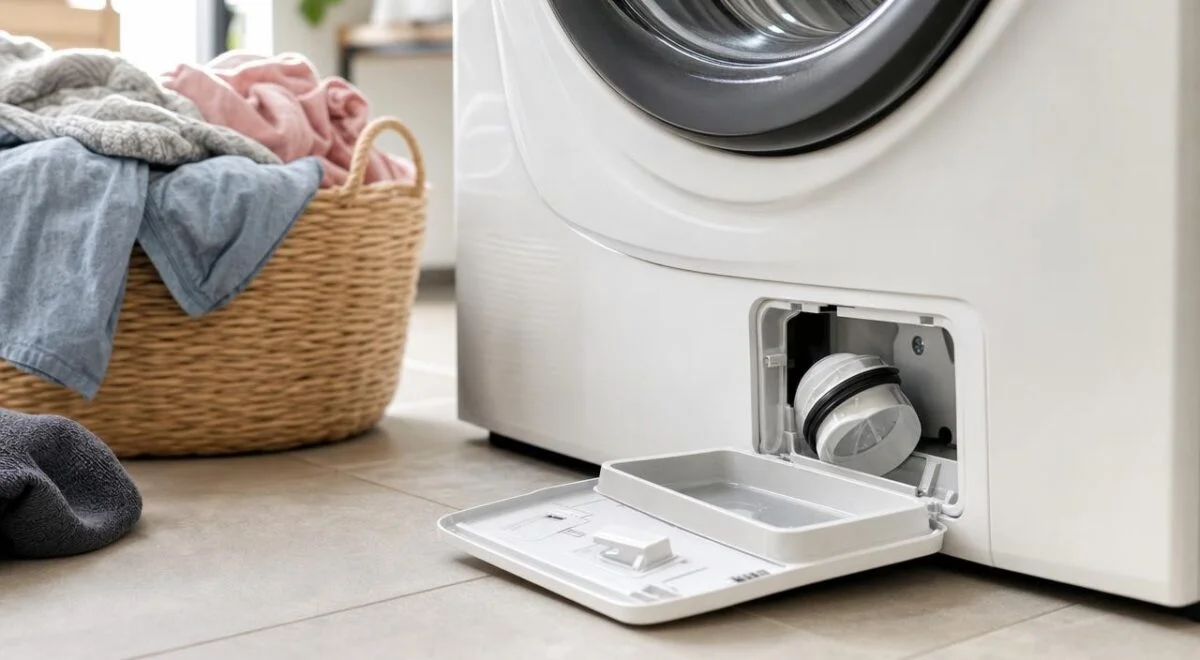
When you open the door, you might find soggy towels and curse the spin cycle. The instinctive reaction is to remove the small filter from the door or rinse the detergent compartment, hoping for a miracle. Meanwhile, the true culprit lies quietly behind a small trap at the front of the washing machine. This is where the drain filter is located, which ultimately determines whether your laundry emerges dry or drenched.
Behind this low trap, a compartment filled with debris and a small amount of stagnant water can turn into a blockage over time. Lint, hair, coins, bra wires, detergent residues, and limescale accumulate here for months. A quick ten-minute cleaning can restore the efficiency of the spin cycle. However, as long as this trap remains closed, the problem will persist, cycle after cycle.
Focusing on the Wrong Filter When Laundry Comes Out Wet
The small filter in the door mainly captures visible lint. The detergent drawer, on the other hand, tends to harbor mold and dried detergent, affecting odors and cleanliness but not the spin efficiency. The real issue lies deeper: the drain pump and its dedicated filter, often referred to as the washing machine drain filter.
When this filter becomes clogged, water cannot drain quickly enough. In response, the machine’s electronics reduce the spin speed to prevent an overloaded drum from spinning out of control. Consequently, sheets and towels emerge heavy, sometimes accompanied by gurgling sounds at the end of the cycle, error codes, or interrupted programs. The pump struggles, consumes more energy, and may eventually fail, costing between €30 to €50 for the part, excluding labor.
The Little Trap at the Bottom of the Washing Machine: The Heart of Drainage
On a front-loading washing machine, this trap is typically located at the bottom of the front panel, usually on the right side. Before opening it, ensure the machine is unplugged and place a towel or basin nearby, as 0.5 to 1 liter of stagnant water may spill out. You might also need to remove the small emergency drain hose before slowly unscrewing the cap of the drain filter, rinsing it with warm water using a soft brush. A flashlight can help check that the drain pump impeller spins freely.
Even when thoroughly cleaned, this area will retain some water, which is normal and by design. This stagnant water, mixed with fibers and products, is often the source of musty odors if maintenance is infrequent. For top-loading washing machines, which account for about 30% of households, there is no front trap; the filter is usually hidden under a drum paddle or at the bottom of the tub. In such cases, the manual becomes essential to locate the correct cover without damaging any plastic parts.
Regular Maintenance of the Drain Filter to Avoid Soaked Laundry
Manufacturers recommend routine maintenance: some, like Samsung, suggest cleaning at least once a month or every 40 washes, while others recommend intervals between 1 to 3 months. In practice, a small household might aim for a quarterly check, while families with children or pets should consider opening the trap monthly. For certain newer models with self-cleaning pumps, no trap is accessible; instead, focus on monitoring the drain hose and wall siphon for any drainage issues.
A clean filter leads to more effective spinning, resulting in less time spent in the dryer and a machine that wears out more slowly. To maintain a healthy interior, complement the trap cleaning with a few additional steps: leave the door and detergent drawer slightly ajar, quickly wipe down the seal, and occasionally run a cycle at 60 or 90 °C to rinse the system. Once you establish a routine for tending to this hidden area, the notorious soaked laundry at the end of the wash cycle will become a rare occurrence.