
How to Protect Garden Birds from Cats: Tips from David Attenborough
David Attenborough warns cat owners about the dangers to birds in gardens and offers practical tips to protect wildlife while allowing cats outdoor freedom.
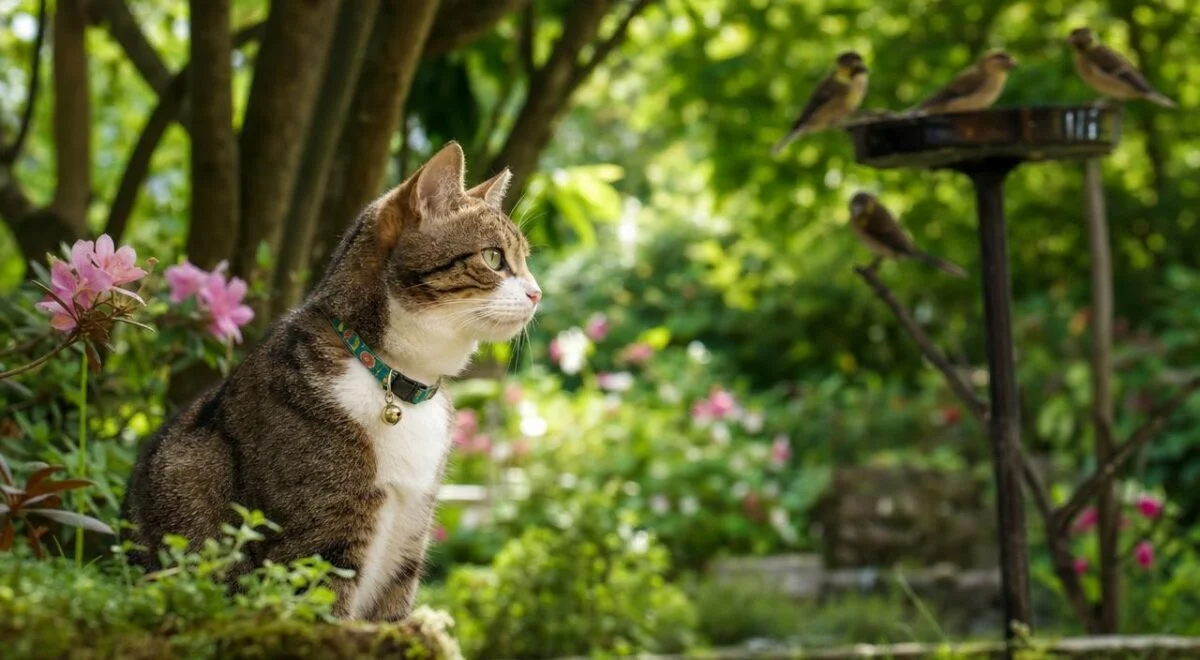
This summer, David Attenborough has a critical message for cat owners with gardens: approximately 55 million birds are lost annually. His urgent advice could make a significant difference in your outdoor space.
In his BBC series Secret Garden, Attenborough emphasizes that gardens have become vital sanctuaries for wildlife, yet they also serve as ideal hunting grounds for domestic cats. His message is straightforward, yet it’s one that often goes overlooked.
He urges cat owners to take specific actions to mitigate the impact on garden birds. Simple measures such as adding a bell to your cat's collar, adjusting outdoor times, and repositioning feeders can lead to a positive change. In the UK, it is estimated that cats kill around 55 million birds each year. Ignoring this issue means allowing your garden to contribute to the problem.
Cats: A Significant Threat to Summer Birds
In the UK, around 10 million domestic cats live in homes, with most having outdoor access. According to Attenborough, “our gardens are magical places, each home to remarkable wildlife.” He also notes that “some British gardens are nearly as diverse as a tropical rainforest” and collectively cover an area larger than the nation’s nature reserves.
Whether in a small suburban garden or a large rural property, there is a wealth of life hidden within hedges, leaf piles, and flower beds. Robins, blue tits, sparrows, and blackbirds utilize these shelters to nest and raise their young. During summer, fledglings emerge from their nests, often clumsily.
Attenborough's Simple Solution: A Bell on the Cat's Collar
To help reduce the impact without restricting your cat's freedom, the British naturalist suggests a very simple action: adding a bell to the cat's collar. This small jingle alerts birds a few seconds in advance, often allowing them to escape. Research indicates that a bell can decrease a cat's hunting success by about one-third.
It’s essential to ensure the collar is well-fitted—neither too tight nor too loose—and to choose a flat, lightweight collar with a safety release mechanism that opens if snagged. Gradually acclimating your cat to the collar by associating it with enjoyable activities, like playtime or cuddling, can help.
Additional Simple Measures to Protect Robins and Tits
Another effective strategy involves adjusting outdoor timings. Birds are most active at dawn and dusk, which coincides with the times when cats are typically out and about. Keeping your cat indoors during these sensitive periods significantly reduces the likelihood of unfortunate encounters, especially in summer when young birds are learning to fly. If your cat insists on going outside, consider providing indoor play options to channel its energy.
Lastly, garden layout plays a crucial role. Position bird feeders and baths at a height, away from dense hedges, walls, or patios, ideally more than two meters from vegetation. Enclosed feeders, surrounded by cages, further complicate access for cats. This way, your garden transforms into a shared refuge rather than merely a hunting ground.