
The Challenges of Securing Startup Capital: Lessons from Jeff Bezos
Exploring Jeff Bezos's early struggles to secure funding for Amazon, this article highlights the challenges of presenting digital business concepts in the 90s and the lessons for today's entrepreneurs.
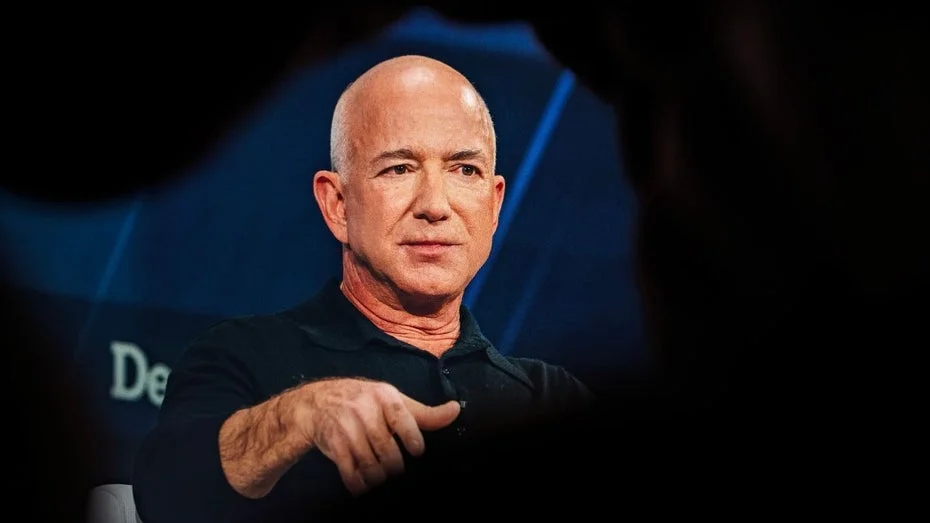
In the 1990s, presenting a digital business concept often met with skepticism from potential investors. This was notably the case for Jeff Bezos when he sought initial funding for Amazon, his online bookstore based in Seattle.
Bezos recently shared his experiences during an interview at the DealBook Summit hosted by The New York Times. He recounted the arduous journey to secure his first significant round of financing, revealing that he had to attend around 60 meetings with investors to raise one million dollars.
Approximately 40 of these discussions ended in rejection, a process Bezos described as particularly challenging. Many of the refusals came after multiple follow-up meetings and extensive debates.
Out of those 60 meetings, only about 22 angel investors decided to invest in 1995, contributing roughly 50,000 dollars each for a one percent stake in the fledgling company, which was valued at five million dollars at the time.
A central hurdle in these negotiations was the audience's lack of understanding of the then-nascent technology. Bezos recalled that the first question he faced was invariably about what the Internet actually was.
Compounding the difficulty in securing capital was Bezos's candidness about the significant risks associated with his unproven business model. He estimated the chances of investors losing their entire investment at 70 percent during these discussions.
Reflecting on this now, Bezos acknowledged that this prediction might have been somewhat naive, as he may have overestimated his own likelihood of success. Nevertheless, he attributes his journey to a broader observation he has made throughout his career: people tend to overestimate risks while underestimating opportunities. Therefore, he advises aspiring entrepreneurs to actively counteract this cognitive bias.
Bezos identified the American venture capital system as a crucial advantage for projects with high failure rates. In the U.S., it is indeed possible to raise funds for ideas with only a ten percent chance of success. This willingness to take on highly uncertain bets has been a key factor in the success of the technology sector in the country. Other regions struggle to replicate such a culture of tolerance for failure.
For the few investors who took the plunge with Amazon, the gamble paid off handsomely. A one percent stake in the company would be worth around 25 billion dollars today, based on its current market capitalization. However, this simplified calculation overlooks significant developments, such as the company's IPO in 1997, which would have diluted the original shares significantly, reducing their current value for early backers.
The example underscores that extraordinary returns often come with equally extraordinary uncertainties in the early stages. Those who chose not to invest at the time acted rationally, as they were evaluating a concept that was difficult to grasp.
Today, Bezos sees parallels with the challenges facing emerging technologies like artificial intelligence and robotics, which prompt similar questions among investors as the young Internet did back in 1995.